
Topic
Regional ISP Economics
Within the Topic facet, Regional ISP Economics topic intelligence connects articles that share a specific subject, signal focus, or monitoring theme. The page gives readers a richer path through related reporting, source evidence, market actors, and infrastructure implications, with enough context to understand why the topic matters across company movements, governance decisions, regional exposure, and operational risk. Readers can compare recurring signals, affected organisations, public evidence, market context, service continuity, procurement, competition, compliance, and strategic planning questions behind the subject instead of stopping at a thin list of matching articles. It explains what the topic covers, which infrastructure actors or policies are involved, what evidence supports the coverage, and why the subject may matter for operators, customers, investors, and policy readers.
Leaders
Ahmed Bakhat Masood and the PKIX Coordination Record Behind Pakistan Internet Exchange Growth
Ahmed Bakhat Masood’s public record is not a conventional founder story. It is a narrower account of how a regulator-linked coordinator helped make Pakistan’s internet-exchange work legible to operators, technical communities and an oversight board without claiming personal…

Europe and Middle East Regional ISP
Moscow Energy Communication Node must make utility fibre earn beyond the grid it protects
One kilometre of fibre on a power line is not the same economic entity as one kilometre of fibre in a retail broadband build. Moscow Energy Communication Node's public problem is to turn communications assets built for electricity-system reliability into outside revenue without…

Europe and Middle East Regional ISP
Smartkom Must Make Local Network Density Pay Before Renewal Capital Arrives
Joint Stock Company Smartkom has the public shape of a serious local operator: a routed network, a B2B-first service catalogue, corporate access products, residential fibre offers, Wi-Fi authorization, video, telephony, IT support and a small data-centre proposition in Omsk. The…

Europe and Middle East Regional ISP
Telega must turn an observable network footprint into defensible customer economics
Telega's public record does not support a simple regional ISP story. It supports a narrower, more fragile one: a Kazan software company tried to turn a Telegram client, proxy capacity, app-store distribution and a newly visible internet number footprint into a paid reliability…

Europe and Middle East Regional ISP
Tyvasviazinform must make sparse-territory reliability carry its full cost
Joint Stock Company Tyvasviazinform operates in one of the hardest telecom markets a regional fixed operator can inherit: a large Siberian republic, a small and unevenly distributed population, public institutions that need dependable links, and households whose monthly broadband…

Europe and Middle East Regional ISP
Compnet must convert regional reach into contribution margin, not just routed traffic
JS Company Compnet has enough network evidence to be more than a directory name, but not enough scale evidence to be treated like a national carrier. Its business case depends on a narrower question: can each office circuit, routed block, voice line and support relationship…

Europe and Middle East Regional ISP
The National Satellite Company must keep contracted capacity ahead of orbital fixed costs
JSC National satellite company, better known through the Tricolor brand, looks like a mass-market pay-TV operator until the economics are pulled apart. Its household base is vast, but the cash machine depends on scarce orbital capacity, set-top-box replacement, dealer discipline…

Europe and Middle East Regional ISP
Convey Plus must make regional service accountability worth more than commodity bandwidth
Convey Plus must make regional service accountability worth more than commodity bandwidth intelligence summary explains the development, the public evidence available to readers, the organisations involved, the regional context, market exposure, and the infrastructure…
Latin America and Caribbean Regional ISP
Radar Internet and the missing map between a fibre offer and a repaired connection
Radar Internet and the missing map between a fibre offer and a repaired connection intelligence summary explains the development, the public evidence available to readers, the organisations involved, the regional context, market exposure, and the infrastructure consequences that…
Leaders
Emmanuel Gonzalez Candelario and the Puerto Rico Fiber Network Record
Emmanuel Gonzalez Candelario's public record connects 4Net's Arecibo origins and a 2017 commercial-network continuity account with later documented roles at 4Net, FiberX and SunX, while keeping ownership, entity and performance claims time-bounded.
Global Cloud Services
RelAix Networks and the discipline behind regional infrastructure promises
RelAix Networks and the discipline behind regional infrastructure promises intelligence summary explains the development, the public evidence available to readers, the organisations involved, the regional context, market exposure, and the infrastructure consequences that may…

Europe and Middle East Regional ISP
ForestNet must make local network density pay beyond cheap access
ForestNet LLC is not trying to win the whole Russian broadband market. Its real test is narrower and harsher: whether a small St. Petersburg-area fibre operator can turn garden associations and cottage settlements into enough recurring cash to pay for upstream capacity…

Europe and Middle East Regional ISP
GeoTelecommunications must turn route control into durable customer cash flow
GeoTelecommunications still has the public signs of a specialist Russian communications operator: a long-lived legal shell, a RIPE LIR identity, an announced IPv4 block, a broadcast and satellite-service history, and traces of public-sector and media customers. The harder…

Europe and Middle East Regional ISP
GIBIRNET must make cheap 100 Mbps broadband pay after the access bill
GIBIRNET sells Turkish fixed broadband on a simple promise: fast, unlimited, no long lock-in and a headline price below many visible alternatives. The economic question is whether that promise leaves enough cash after wholesale access, installation, support, equipment, churn and…

Europe and Middle East Regional ISP
GalaxyStar must make a small routed footprint produce paid local density
GalaxyStar must make a small routed footprint produce paid local density intelligence summary explains the development, the public evidence available to readers, the organisations involved, the regional context, market exposure, and the infrastructure consequences that may…
Europe and Middle East Regional ISP
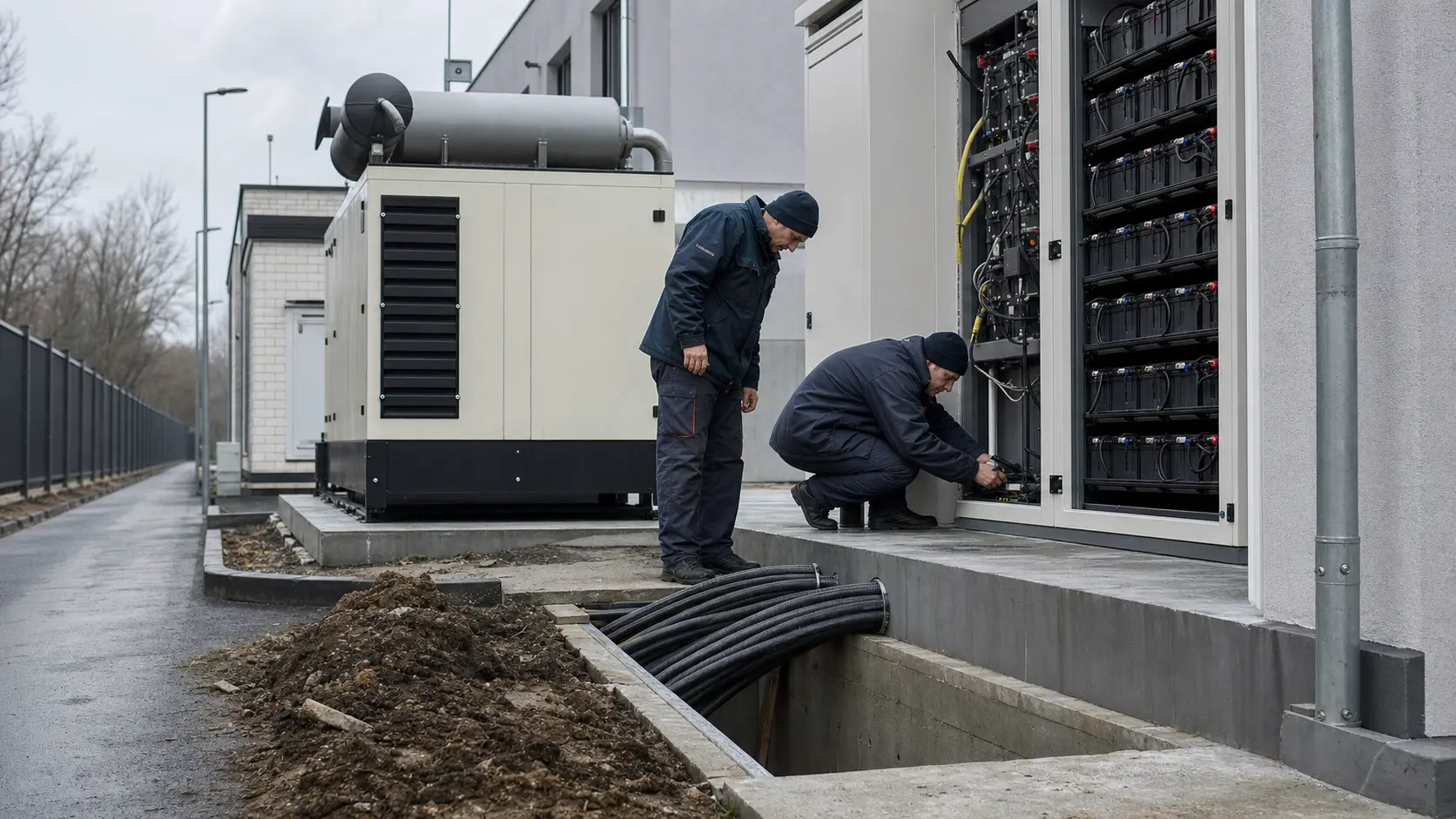
GIGATRANS Ukraine can sell continuity, but it has to price every route and battery into the contract
An enterprise that stays online during outages is not buying a commodity megabit. It is buying route diversity, backup power, repair labour, local data-centre adjacency and a provider willing to keep Ukrainian business systems reachable when electricity, transport and…

Europe and Middle East Regional ISP
Gelicon-Apple Must Prove Its Network Resources Still Support an Operating Franchise
Gelicon-Apple Limited liability company has the markings of a real local ISP: tariffs, office contact points, subscriber payment paths, RIPE membership, two ASNs, IPv4 and IPv6 resources, and a long operating history in north-east Moscow and Khimki. The harder question is whether…

Europe and Middle East Regional ISP
Information Centre Elektronni Visti LLC must price continuity, not just legacy trust
A Ukrainian customer pays Information Centre Elektronni Visti LLC for a practical promise: keep the message flow, domain, server, address block or network path usable when normal conditions fail. The judgment is that ElVisti has enough technical control and contract surface to…

Europe and Middle East Regional ISP
Informational-measuring systems must prove a routed footprint has paying industrial demand
The economic incentive is simple: MOSNET can earn recurring revenue only if a narrow local access footprint turns building control, routing credibility and service labor into customers who stay long enough to cover upkeep. The record shows a real Russian regional ISP with…

Europe and Middle East Regional ISP
Vilna Ukraina Must Make River Mall's Reach Pay for Resilience
River Mall can charge tenants, shoppers and promotion partners only if the destination remains reachable, powered and commercially alive. The company's small autonomous network footprint is useful, but the investment case still turns on whether mall revenue can cover power…