
Leaders
Leaders
Leaders people intelligence profiles the leaders, operators, researchers, creators, investors, and policy actors shaping internet infrastructure strategy. The category connects interviews, public profiles, company links, role changes, governance exposure, affiliation context, and related articles so readers can follow decision-makers by operating role rather than by isolated article chronology.

Latest Coverage
Latest from Leaders
473 articles

Leaders
John Curran and ARIN’s 2019 Resilience Test
ARIN’s December 2019 outage exposed a gap between a high-availability design and a recovery path that could survive a shared-storage failure. The public record shows how the registry restored its website and customer application on separate clocks, then made remediation and…

Leaders
Ching-Heng Ku and the Gap Between a Signed Route and a Filtered Route
In Taiwan’s routing-security programme, the distance between publishing an authorization and acting on a route is the point that matters. Ching-Heng Ku’s public record spans both sides of that gap, but the available numbers are snapshots with different denominators—not a simple…

Leaders
Gaurav Kansal and the Limits of a Public DNS Scorecard
A 91-day RIPE Atlas comparison put NIC’s public resolver beside three global alternatives. Its strongest contribution is not a simple ranking, but a measurable result with visible boundaries: cached lookups, uneven sample counts and a data package that does not fully reproduce…

Leaders
Amrita Choudhury and the Different Gates of Internet Governance
A constituency bid, a later At-Large certification and a co-authored APNIC policy change can all put the same advocate in view. They do not confer the same authority. Amrita Choudhury’s record shows why Internet governance must be read institution by institution: each forum…

Leaders
Bill Woodcock, PCH and the Two Layers of Internet Authority
Bill Woodcock’s public record puts two arguments about Internet institutions side by side: his 2015 case for contractual accountability in the IANA transition, and Packet Clearing House’s later report that it had become an intergovernmental treaty organization. The difference is…

Leaders
Aftab Siddiqui and a Routing-Security Survey That Could Not Order an API
At APNIC, Aftab Siddiqui appears in two different routes from operator concern to institutional action: a policy proposal with public decision milestones, and a routing-security survey meant to inform service design. The contrast shows what each record can—and cannot—prove.

Leaders
Remco van Mook and the IPv4 Gateway That Has No IPv4 Neighbour
An IPv4 default gateway normally looks like an address that a host can find with ARP. Remco van Mook's current IETF proposal turns that expectation inside out: `192.0.0.11` is not a neighbour to discover, but an instruction to reuse a neighbour that IPv6 has already discovered.…

Leaders
Noor Helmi's API-Driven Interconnection Argument, Tested Against IX-API's Public Record
The IX Telecom co-founder and chief executive has argued publicly that telecom interconnection must become automated and API-driven. The industry's open interconnection standard, IX-API, is a concrete test of that direction — and the documents reviewed for this briefing do not…

Leaders
Adrian Farrel and the Path That Exists Only on the Controller
A positive PCEP reply can put a clean route on an operator's screen before any router has accepted it. Adrian Farrel's PCE architecture matters because it lets us say exactly what has happened—and what has not.

Leaders
Cristiano Amon and the Missing Receipt in Qualcomm's Oryon Story
Qualcomm closed its Nuvia acquisition in March 2021, put Oryon inside Snapdragon X Elite in October 2023 and reached retail shelves with a multi-OEM PC wave in June 2024. A court ruling arrived later. Each event strengthens Cristiano Amon's strategic case, but none proves the…

Leaders
Cristiano Amon and the Two FY2029 Clocks Behind Qualcomm's Expansion
Qualcomm put FY2029 on two investor-day charts, twenty months apart. The date stayed fixed; the businesses inside the target did not. Reading that change as accomplished growth would turn a management plan into a historical result.
Leaders
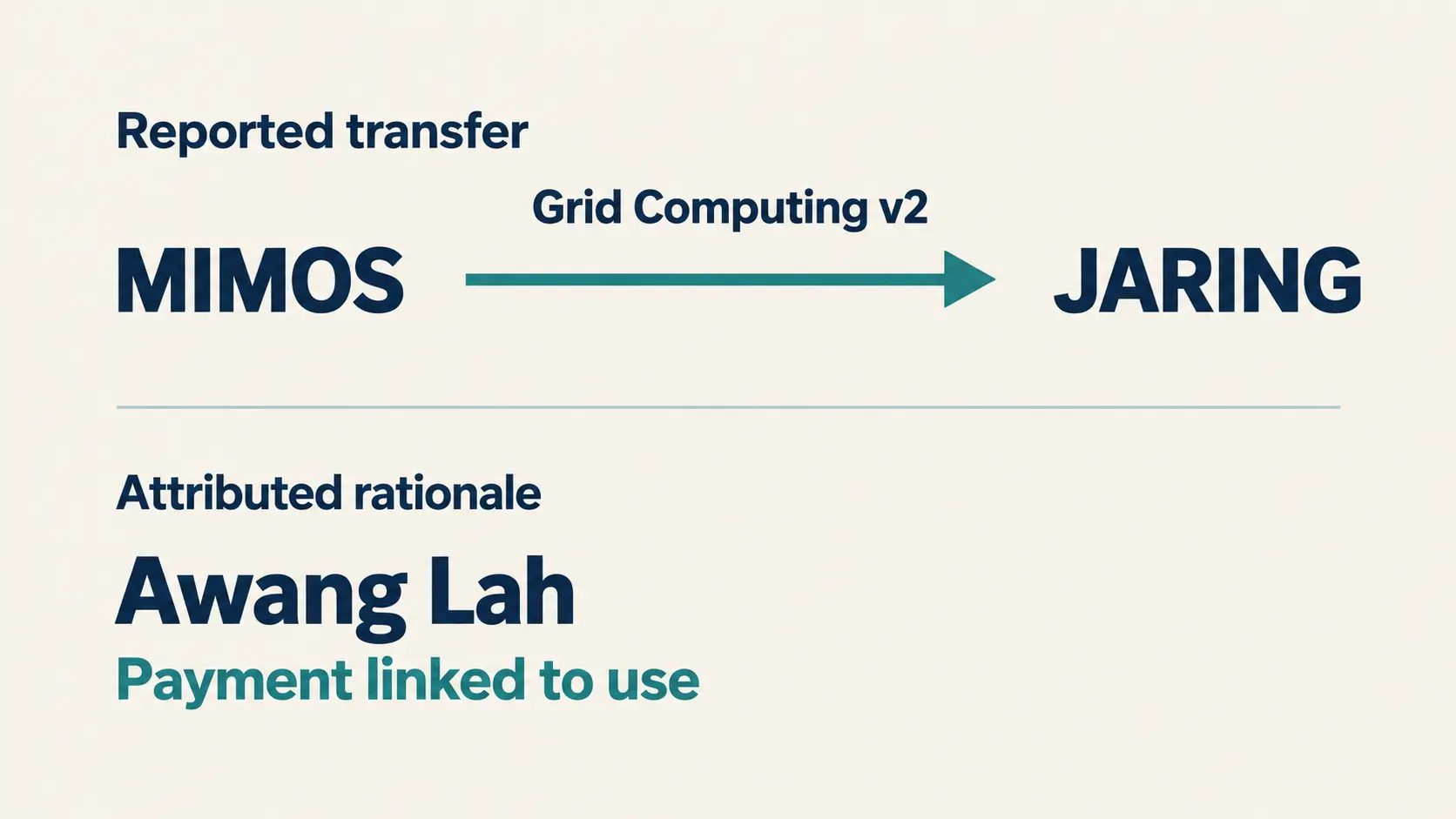
Mohamed Awang Lah and JARING’s pay-for-use proposition
The relevant leadership question is what an executive argued a technology would do for customers—and what would establish that the benefit reached them.

Leaders
The missing handoff: What Malaysia’s internet history can prove about Mohamed Awang Lah
Malaysia’s early internet history contains two institutional stories that are often placed too close together: the development of public connectivity around RangKom and JARING, and the later organization of national incident response through MyCERT, NISER and CyberSecurity…

Leaders
Noor Helmi’s Decision Surface: What IX Telecom’s Public Record Can—and Cannot—Attribute
A people-and-leadership investigation of the boundary between Noor Helmi’s observable executive role, IX Telecom’s institutional operating model and the evidence required to show that capability survived beyond the founder.

Leaders
What AFRINIC’s Registry Records Can—and Cannot—Attribute to Maina Mukhangu Noah
A public registry listing connects Maina Mukhangu Noah to ORG-BITL1-AFRINIC, but the available record does not establish that he held institutional authority inside AFRINIC. The distinction matters because a contact field can guide operational communication without identifying…

Leaders
Noor Helmi’s Control Surface—and the Missing Transfer Record
A closer look at what can be attributed to IX Telecom’s co-founder and CEO, and what the public record still cannot show about capability surviving beyond the individual.

Leaders
Mohamed Awang Lah and the Institutional Continuity of MyCERT
Malaysia’s MyCERT is best understood not as a personal possession that moved from one job to another, but as an incident-response function that survived changes in institutional placement. Dr. Mohamed Awang Lah can be connected to the security initiatives associated with MyCERT’s…

Leaders
From Registry Association to Operational Authority: What AS211867 Records Can—and Cannot—Show
From Registry Association to Operational Authority: What AS211867 Records Can—and Cannot—Show intelligence summary explains the development, the public evidence available to readers, the organisations involved, the regional context, market exposure, and the infrastructure…

Leaders
Osipenko Alexander Nikolaevich: The Control Question the Public Record Still Cannot Answer
Osipenko Alexander Nikolaevich: The Control Question the Public Record Still Cannot Answer intelligence summary explains the development, the public evidence available to readers, the organisations involved, the regional context, market exposure, and the infrastructure…

Leaders
Osipenko Alexander Nikolaevich: What the Registry Shows—and What It Does Not
Osipenko Alexander Nikolaevich: What the Registry Shows—and What It Does Not intelligence summary explains the development, the public evidence available to readers, the organisations involved, the regional context, market exposure, and the infrastructure consequences that may…