
North America Institutional Trends
North America Institutional Trends
Institutional trend intelligence tracks institutional market trends, regulatory pressure, standards activity, public-sector digital policy, governance reform, and infrastructure funding in North America, giving readers a fuller view of the demand shifts, capacity constraints, platform strategies, capital timing, regulatory pressure, and operating assumptions behind the market.

Latest Coverage
Latest from North America Institutional Trends
324 articles
North America Institutional
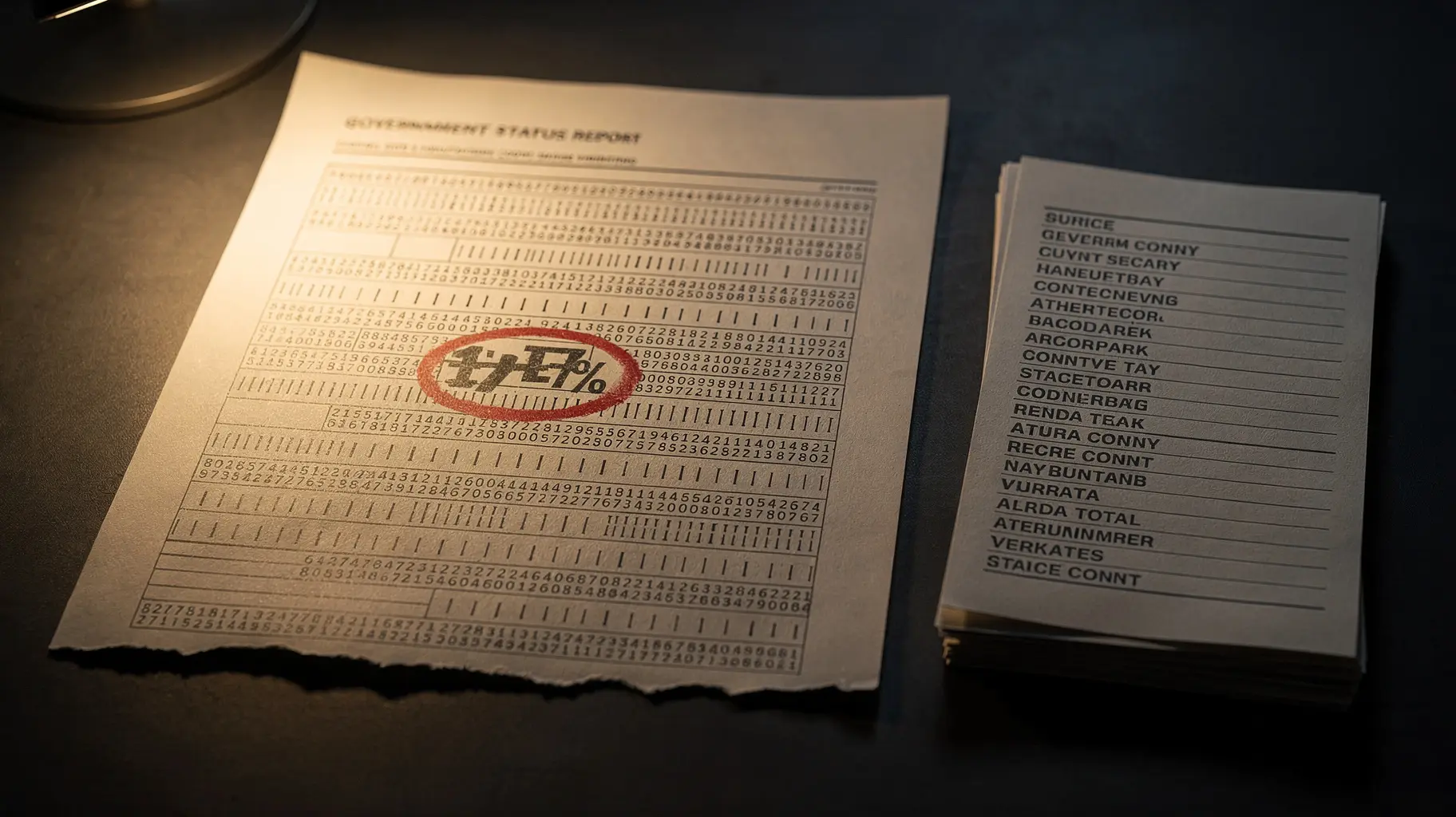
The FCC publishes the outage share and withholds the guest list
A Tennessee county row in the Commission's own daily disaster report reads 0.8%. The cell sites inside that percentage are the ones a provider chose to describe. The rest of the network is not a number in the file — and on the same reading day, the Commission's DIRS page still…
North America Institutional
ARIN fulfilled 483 requests from 577 blocks. No unit joins them.
On 7 October 2026 ARIN cleared its IPv4 waiting list again and printed two numbers in one sentence. One counts requests. The other counts blocks. The notice never says what a block is, and six weeks later a policy proposal arrived that exists precisely because those blocks cannot…
North America Institutional
Seattle Internet Exchange's price list multiplies to $2,060,800; its accounts show $303,525
One number is a stock of one-time port fees across every installed port the exchange prints. The other is a year of total income from the exchange's own cash-basis management statement, published 13 April 2026. Both are SIX's own arithmetic, and neither one confirms the other.
North America Institutional
NVD Counts the Queue to the Record and Never Dates the Wait
The National Vulnerability Database grades every vulnerability record and prints the grade in a word. Read its definitions, its dashboard and its API documentation side by side and the same seven states appear under thirteen different names, a total that reconciles to the record…

North America Institutional
The FCC prints the outage arithmetic and seals the outage rows
Part 4 turns a network failure into a reportable fact with four different counted entities, two of which are multipliers rather than people. Then 47 CFR 4.2 presumes the result confidential and hands the only route to a public aggregate to somebody else.
North America Institutional
Two Clauses, Three Clocks, and a Tally That Stops in 2011
ARIN writes the power to revoke number resources into the contract a holder signs, then writes it again into the policy manual the community amends. The two texts do not agree on the trigger, on the clock, or on what the word means. The last dated count of that power being used…
North America Institutional
CISA prints 1,790 deadlines to the day. The receipt goes into a dashboard.
The Known Exploited Vulnerabilities catalog dates every entry it publishes and records an outcome for none of them. The directive that now sets those dates revoked the one before it, computes each deadline from four variables, and prints no penalty for missing one.
North America Institutional
ReliabilityFirst prints the share and withholds the case
ReliabilityFirst's own 2025 report says over 80% of the noncompliances it found were self-reported or self-logged. Its enforcement commentary on vegetation management names the standards, the requirement numbers and the count. On critical infrastructure protection the case record…
North America Institutional
CISA's new patch clock has four inputs, two start buttons and no receipt
On 20 November 2026 CISA's catalog of exploited vulnerabilities gave an Apache Roller deserialization flaw three days to be fixed. The directive behind that number is harder to audit than a deadline: it lets the agency being timed write the input that sets the timer, and it…
North America Institutional
The Spill Line Is the Security Desk
A breach of security at a port, or a suspicious activity on a vessel, is reported to a call centre that describes its own intake as pollution and railroad incidents: "without delay", with no hour printed anywhere in the text. The duty is written down to its fourth data field. The…

North America Institutional
Three buildings, one fabric, and the fibre bill no price list shows
Seattle Internet Exchange sells a port once and states that it charges no recurring fee. Between its three switch sites runs a span its own contributors page records as a gift, and none of the nine documents that describe the fabric states the gift's term, its upkeep, or who is…

North America Institutional
New York makes its banks and insurers sign a cybersecurity pass every April. You never see the pass.
A senior executive and a security chief put their names to one of two boxes once a year, and the regulator has charged the wrong box three times at $2.0 million, $2.05 million and $2.7 million — while printing the year, the filing date, and never the filing itself.

North America Institutional
Four business days from a date the filing never prints
UnitedHealth Group's 2024 Change Healthcare filings carry every date a securities form ordinarily prints: the day the incident began, the day the report arrived, the day each amendment arrived, the name of the deputy corporate secretary who signed them. They do not carry the one…
North America Institutional Trends
The four-day clock that starts on a date nobody prints
Item 1.05 of Form 8-K gives a company four business days to report a material cyber incident, counted from a materiality judgment the company makes privately and no form field asks it to date. Three filings read at their EDGAR addresses show what the record actually keeps…
North America Institutional
The KEV Catalog Prints One Deadline. Sixteen Rows Decide What It Means.
Every entry in CISA's Known Exploited Vulnerabilities Catalog carries a Due Date stamped "per BOD 26-04." The directive sets no single deadline. It sets four variables and sixteen rows, and it starts the clock at whichever of two events comes first — only one of which the row…
North America Institutional
The NRC Timestamps the Alarm and the Call. Not the Moment Someone Noticed.
Two timestamps sit five lines apart in the Commission's own report on one reactor trip. Subtract them and you have a receipt — until you read a third report, where the same subtraction changes sign.
North America Institutional
Four Filing Clocks, One Ticked Box, and No Column for When It Arrived
A federal electric disturbance report gives an operator four filing deadlines in one sentence and lets it choose which one applies by classifying its own event. Two of the four anchors are acts of the filer. The annual table then publishes the classification and never the…

North America Institutional
HHS asks for the discovery date. Its register prints the receipt.
The public breach register at the Department of Health and Human Services shows seven columns, and exactly one of them is a date. The rule counts its deadline from the day of discovery. The government's own form asks for a Discovery Start Date. The published row carries only the…

North America Institutional
The outage is official at a number the operator types in
A network failure becomes a federal filing at 900,000 user minutes of telephony service or 667 OC3 minutes — two products of duration and affected users that only the carrier which lost the service can compute, on a clock that starts when that carrier says it noticed. Then 47 CFR…

North America Institutional
The only oath in PJM's data-centre registry is about distance
A registry is a list that other arithmetic is allowed to trust. [PJM Interconnection](https://btw.media/en/directory/pjm-interconnection-llc)'s Large Load Registry was accepted by the Federal Energy Regulatory Commission on 9 October 2026 and took effect on 12 October, and almost…