
Africa Institutional Trends
Africa Institutional Trends
Institutional trend intelligence tracks institutional market trends, regulatory pressure, standards activity, public-sector digital policy, governance reform, and infrastructure funding in Africa, giving readers a fuller view of the demand shifts, capacity constraints, platform strategies, capital timing, regulatory pressure, and operating assumptions behind the market.

Latest Coverage
Latest from Africa Institutional Trends
60 articles

Africa Institutional Trends
Mozambique’s Digital Plan Has 2030 Targets. Its Approval Date Says “XX”.
Six implementation pillars, fourteen flagship commitments and a preliminary US$1.5–2.0 billion funding estimate give Mozambique’s digital strategy a serious scale. The official draft’s cover still leaves the Cabinet approval date as “xx”; the harder test is whether its proposed…

Africa Institutional Trends
Nigeria’s US$750m cloud bet has one big customer: the government
Abuja wants private capital to build a regional cloud market. Its plan starts with something the state already controls: what federal agencies buy, how they buy it and whether those contracts are predictable enough to finance new capacity.

Africa Institutional Trends
Nigeria’s new Internet Governance Working Group needs a public remit
The Nigerian Communications Commission ties its new forum to online fraud, privacy and vulnerable users. The launch announcement leaves the group’s membership, remit and path into regulatory decisions unstated.

Africa Institutional Trends
East Africa has revised its e-commerce baseline. What, exactly, is being counted?
A regional meeting has refreshed the starting numbers for the EAC's online-trade strategy. The next useful publication would let a reader follow a figure back to a country, a definition and the institution that supplied it.

Africa Institutional
GARNET: Ghana's research network documents its mandate, not its operations
Ghana's national research and education network can be named, dated and mapped to seven public universities. What it cannot yet be is checked: neither its own site nor the regional body that recognises it publishes governance, funding, contracted capacity or the address resources…

Africa Institutional Trends
ReuNION's cable reaches the shore. The buyer still needs a way out
A new submarine route could widen Réunion's choices. The harder commercial question begins where the ocean ends: which connections, premises and repair commitments come with the capacity?

Africa Institutional Trends
Senegal’s New ARTP Chief Faces a Statutory Test for His Data Agenda
Cheikh Tidiane Sarr has paired real-time telecom oversight with postal-sector reform. Senegal’s communications code already requires a time-bound performance contract and annual independent evaluation, so the governance question is how that broad agenda becomes measurable.

Africa Institutional
South African Post Office: the rescue is ending, the statutory bill is not
On 12 June 2026 the Post Office's business rescue practitioners asked the Pretoria High Court to terminate the rescue, reporting a balance sheet returned to a positive R840 million and a loss cut from R514 million to R71 million. No order had been granted by 17 August 2026, the…

Africa Institutional Trends
Ghana's spectrum result reveals three different markets
A US$100.9 million result for Scancom sits beside spare lots in one band and excess demand in another. The allocation rules matter as much as the headline fee.

Africa Institutional Trends
AfPIF opens in Kigali with interconnection on the table
The 15th African Peering and Interconnection Forum is under way in Rwanda with operators, exchanges and infrastructure providers facing a practical test: a meeting can lower the cost of finding partners, but only new sessions, routes and capacity can change how traffic moves.
Africa Institutional
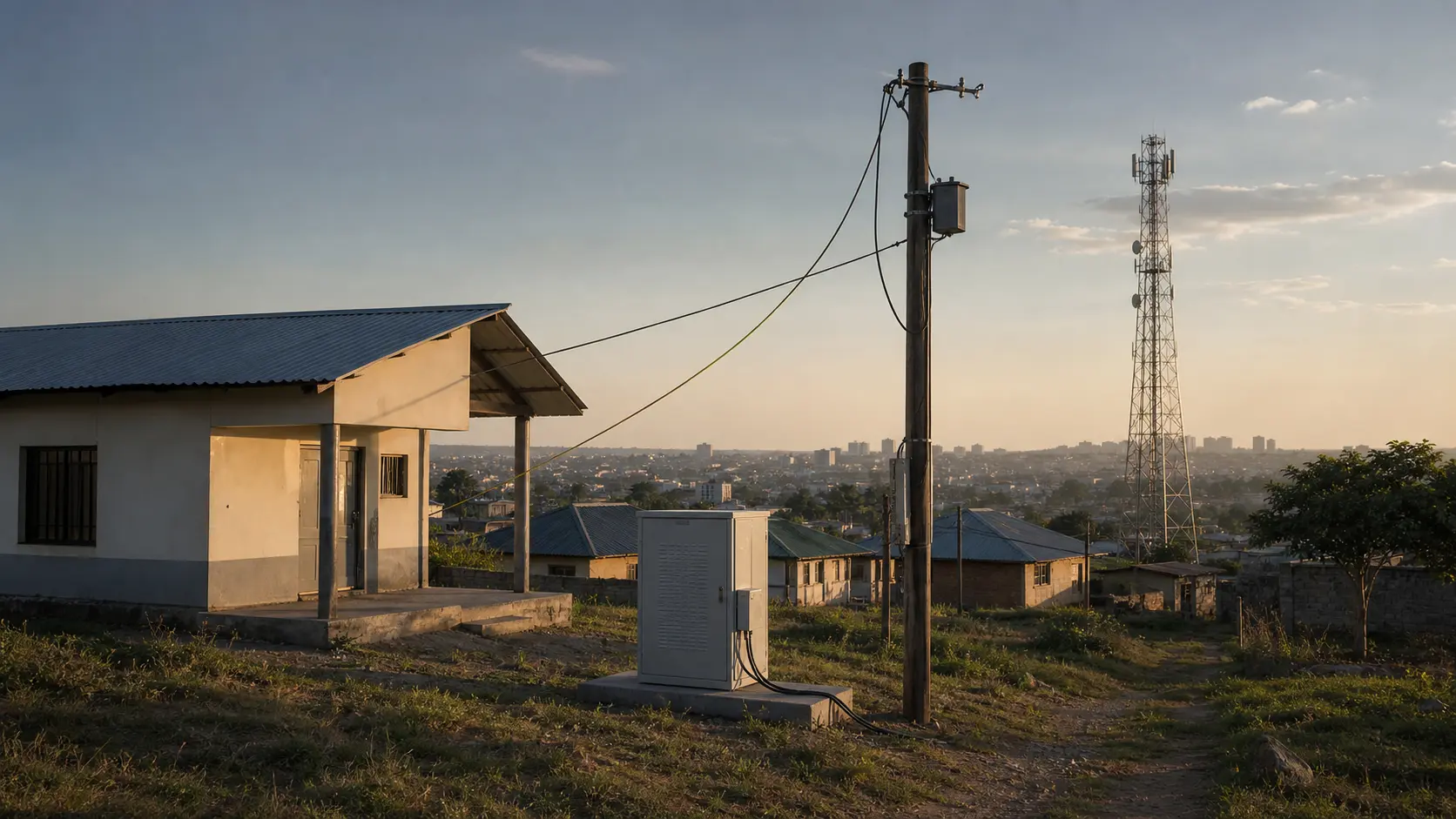
The campus edge is UbuntuNet’s service floor
A 10 Gbps regional core cannot improve research sessions that terminate behind a constrained campus circuit, firewall, Wi-Fi network or power supply.

Africa Institutional
Campus capacity needs a renewal clock
UbuntuNet’s 10 Gbit/s core can outlive campus routers, optics, firewalls, batteries and support contracts. Capacity erodes when replacement dates remain implicit.
Africa Institutional
Backbone capacity needs an adoption ledger
UbuntuNet’s move from roughly 2.5 to 10 Gbps is a regional input. Its value depends on which universities can actually use the added capacity and keep paying for it.
Africa Institutional
Regional support needs an incident-authority map
UbuntuNet can observe and coordinate a regional path, but a campus, national network or carrier may hold the change right needed to restore it.

Africa Institutional
Rwanda sets 30 June 2027 date for 3G shutdown
Rwanda will retire 3G in June 2027, subject to 4G coverage, reliable voice service and the migration of devices and critical systems.

Africa Institutional Trends
Zenith’s contact-data breach moves risk from the vault to the inbox
Zenith Bank says its core systems and digital channels remain operational after unauthorised access exposed a limited set of customer information, including email addresses and phone numbers. That distinction matters, but it is not closure: contact data can turn ordinary messages…

Africa National Telecom Trends
Chad deploys real-time telecom monitoring platform
Chad launches ARCEP real-time telecom oversight platform enabling continuous monitoring of networks, spectrum, and performance.

Africa National Telecom Trends
Burkina Faso inspects national fibre to close reliability gaps
Burkina Faso launches a national fibre inspection mission to strengthen telecom infrastructure oversight and service reliability.

Africa Institutional Trends
Republic of the Congo election shutdown cut Internet traffic for 50.5 hours
Measurements put Republic of the Congo connectivity near 3% of normal during the 15 March vote; the public record identifies no order or enforcement method.

Africa Institutional Trends
CAIGA rewrites Africa’s IP rules without its resource holders
CAIGA proposals raise concerns over who controls IPv4 and IPv6 policy in Africa as AFRINIC’s governance crisis deepens.