
Multi-year governance and legal crisis under monitoring.
Governance / Case File / AFRINIC Saga
Afrinic SAGA
AFRINIC Saga governance intelligence tracks institutions, policy processes, standards activity, registry operations, accountability disputes, and implementation signals that affect internet infrastructure. BTW.
Board LegitimacyLegal ProcessElection IntegrityInstitutional Continuity

Board legitimacy, election integrity, and legal process.
Legal proceedings and regulatory intervention context.
Precedent-setting for RIR governance accountability.
Latest Coverage
Latest from Afrinic SAGA
49 articles

Afrinic SAGA
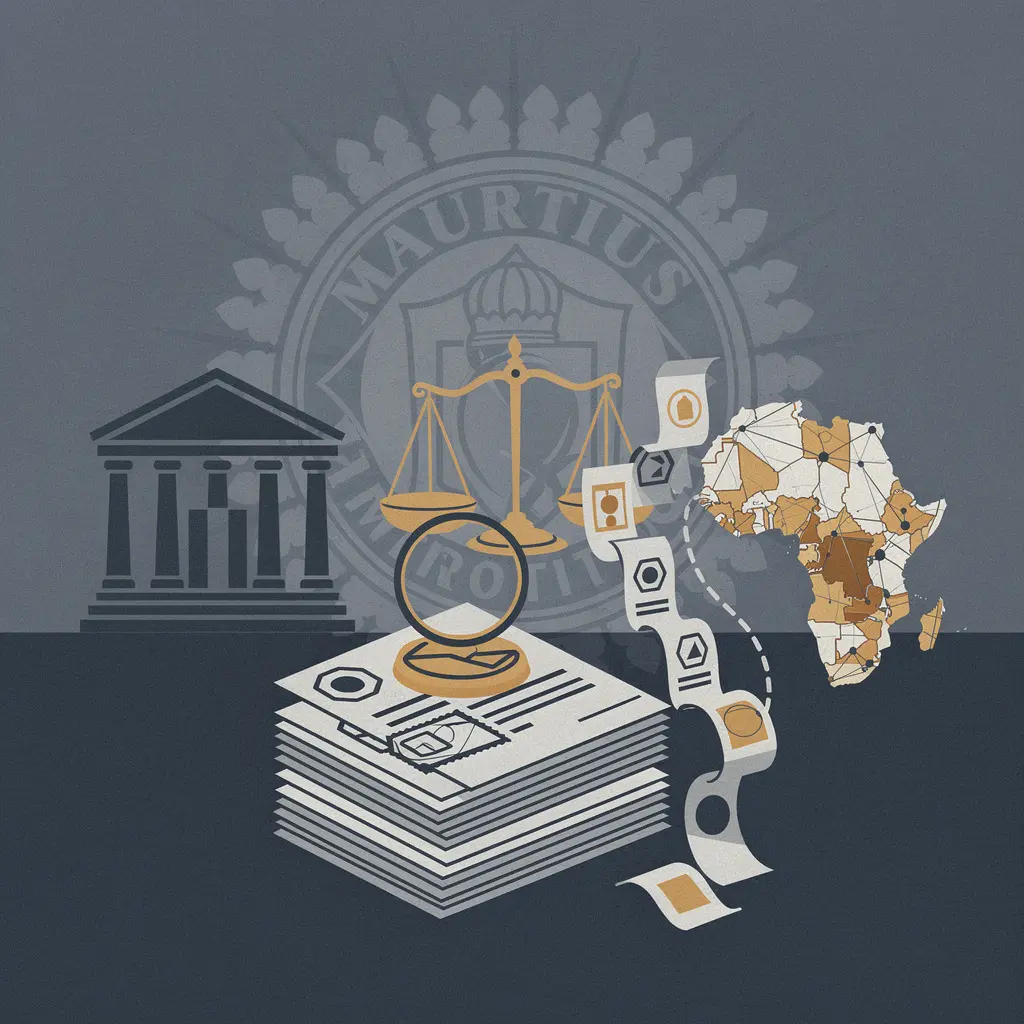
The Treaty That Says Nothing About the Registry: Inside Smart Africa's AFRINIC Authority Gap
Smart Africa's public engagement in AFRINIC governance runs on an internal board resolution and a series of statements, while its founding treaty — signed in Kigali, gazetted by Rwanda in 2023 — contains no provision mentioning AFRINIC or delegating any registry competence.…
Afrinic SAGA
The Receiver Who Has Not Yet Left: Gowtamsingh Dabee's Control Surface at AFRINIC
A termination application filed in October 2025 was meant to end the court-appointed receivership of AFRINIC. A year later, the located public record shows no discharge order — and the receiver's consent is still being recorded on the registry's corporate acts.

Afrinic SAGA
RIPE NCC to AFRINIC: what the instruments actually certified
Africa's registry handover is usually narrated as an act of recognition. The dated instruments say something narrower, and for anyone who has to rely on them, more useful: what each deciding body actually certified, what it attached as a condition, and which body was positioned…

Afrinic SAGA
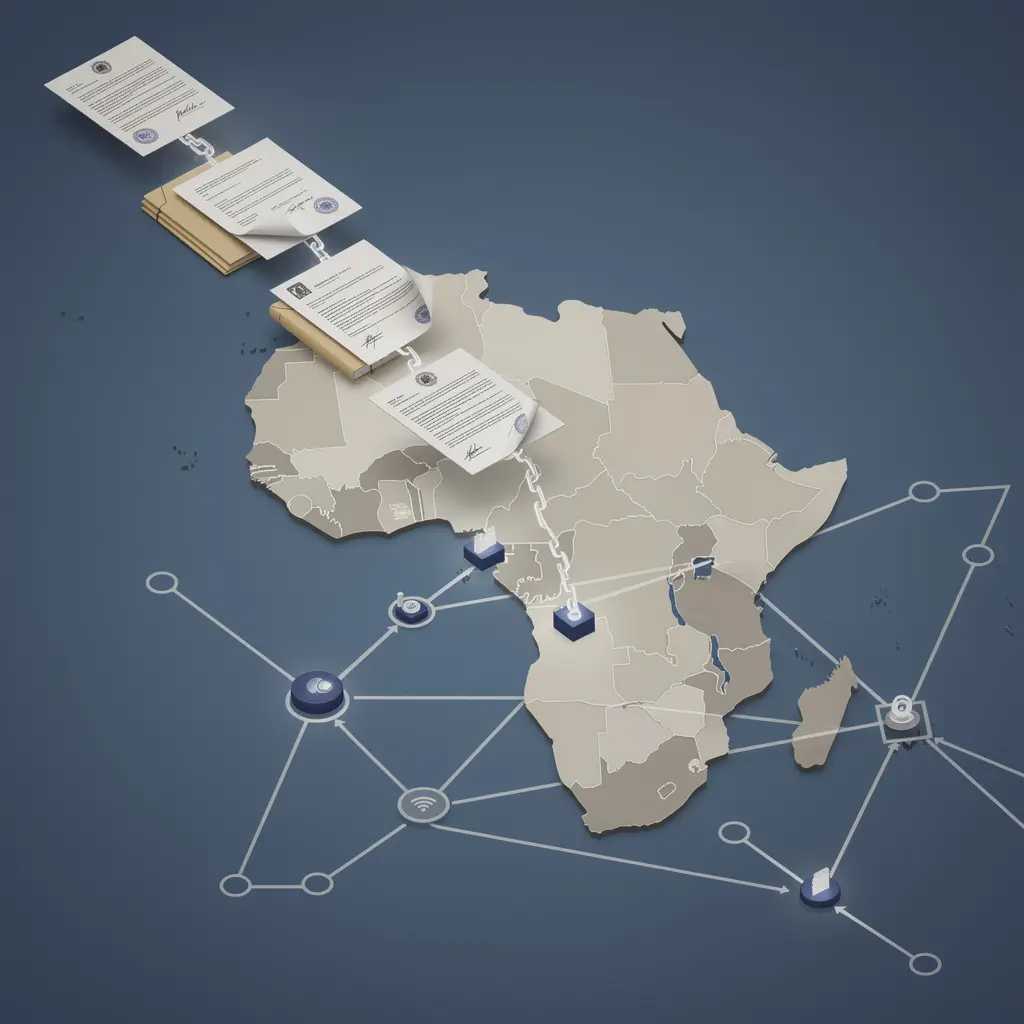
Undischarged: what AFRINIC's instruments certify — and what they still await
Eleven months after the Receiver of AfriNIC Ltd asked the Supreme Court of Mauritius to end the receivership he administers, the retrievable public record still shows no judgment granting or refusing that request. What the record does show — in the registry's own communiqués…
Afrinic SAGA
The Receiver's Own Instruments: What AFRINIC's Undischarged Custodian Still Controls
Since 12 September 2023 the recorded deciding organ over AFRINIC's control surface has not been the elected Board but a court-appointed receiver — and on the public record located at publication, that receiver's own discharge remains undetermined.

Afrinic SAGA
What Deciding Bodies Record: ICANN's .WEB IRP Playbook and AFRINIC's Vanishing Public Record
When a governance body loses an Independent Review Panel case, the test of its legitimacy is not the finding — it is what the body records next. Two internet-governance institutions faced that test within the same week in January 2022, and their records diverged in ways that…

Afrinic SAGA
AFRINIC's control over its registry stays conditional as the discharge ruling waits
Authority over African Network Information Center - (AfriNIC) Ltd is split and conditional in September 2026: a court-appointed receiver still consents to board decisions, the receiver's discharge application has no published outcome, ICANN has joined a contested winding-up…

Afrinic SAGA
AFRINIC under receivership: who can authorise, detect and reverse a change to its routing-security machinery
An operator in Nairobi or Lagos who validates a route with AFRINIC's RPKI tools, or signs a zone through its DNSSEC service, is relying on a registry that a Mauritian court placed under an official receiver and that ICANN has twice intervened to defend. The visible question in…

Afrinic SAGA
AFRINIC's authority over African number resources: contract, court, receiver
A member's addresses can be taken away by a clause, a court order or a board vote — and African internet governance is currently living through the argument about which of those three actually applies to any individual holder.

Afrinic SAGA
From RIPE NCC to AFRINIC: the instruments that moved registry authority, and the court that holds the ring
Africa's Internet number resources changed registry in 2004 and 2005 through a short chain of dated instruments. The chain moved authority. What it left with resource holders was a contract. Twenty years later the body that received that authority answers to a court-appointed…

Afrinic SAGA
RIPE NCC to AFRINIC: the handover that moved the ledger but never escrowed it
Africa got its own internet registry in 2005. What it did not get, on the evidence available two decades later, was a registry that could outlive its keeper. The entities moved. The guarantee did not.

Afrinic SAGA
AFRINIC’s continuity controls remain harder to prove than its public machinery
AFRINIC can keep a registry visible while the evidence needed to establish lawful authority, privileged access, detection and recovery remains incomplete. The practical test is not whether the machinery appears to run, but whether high-impact changes can be authorised, observed…

Afrinic SAGA
After the Silence: What AFRINIC’s 2017 Written Cure Needed to Prove
AFRINIC’s members heard the audited statements without recorded objection, yet the annual meeting never adopted them. A later 78 per cent resolution offered a sensible repair—but only a distinct, traceable member act could close the gap left by silence.

Afrinic SAGA
AFRINIC’s USD 107,994 Write-Off: The Missing Reconciliation Behind a Material Loss
AFRINIC’s 2012 accounts recorded USD 107,994 in bad-debt expense, rounded in the annual report to USD 108,000. The disclosure matters not because a write-off proves wrongdoing—it does not—but because it joins three institutionally different acts in one compact passage: removing…

Afrinic SAGA
AFRINIC's Legal Spend per Active Member
AFRINIC's legal bill becomes more intelligible when divided by the organisations sustaining the registry, but the calculation also exposes a missing denominator, unequal fee incidence and the absence of a member-level account of what the expenditure achieved.

Afrinic SAGA
From AFRINIC Failure to NRS Advocacy for Continuity
The way out of registry failure is not a rival database launched overnight, but a verified transfer of service in which operators can move while uniqueness, disputes and running-network state remain intact.

Afrinic SAGA
The Clean-Restart Fallacy in AFRINIC Reform
A newly elected board can reopen a boardroom, but it cannot by itself repair the records, incentives, delegated powers and remedies that allowed a registry crisis to reach the running Internet.

Afrinic SAGA
A Court Calendar Is Not a Registry Recovery Plan
Hearings, return dates, injunctions, and judicial deadlines governed AFRINIC's legal crisis, but recovery required a separate operating map for authority, services, people, money, records, member rights, and failure.

Afrinic SAGA
AFRINIC's Customers Were the Continuity Backstop
African networks kept routing, serving users, maintaining infrastructure, and absorbing registry uncertainty while AFRINIC's ordinary governance failed, making customers the unrecognised last line of continuity.

Afrinic SAGA
Why Transparency Could Not Reconstitute AFRINIC's Board
AFRINIC's long board vacuum showed that publication can expose institutional failure, but only valid authority, enforceable deadlines, reviewable remedies, and a completed member vote can end it.
Member Unlock
Restricted Profile Intelligence
Login is required to unlock full profile briefings and deep-dive sections.
Strategic Circle Briefing
Join to unlock strategic briefings after signing in.
Join Strategic CircleLeadership Alliance Briefing
For qualified IP-asset owners and management; sign in to unlock alliance briefings.
Join Leadership AllianceChronology
AFRINIC Saga Timeline
8 April 2005
Formal accreditation: AFRINIC is officially recognised as the fifth RIR by ICANN.
March 2018
Allegations of bullying and sexual misconduct are raised by a staff member.
April 2019
AFRINIC senior staff member Ernest Byaruhanga is found to have stolen 4.1 million IPv4 addresses, many later used to host gambling and pornography websites.
October 2019
Eddy Kayihura replaces Alan Barrett as CEO and dismisses Byaruhanga; later election process moves become a central governance dispute point.
July 2021
The Supreme Court of Mauritius rules the AFRINIC board invalid due to quorum and term issues; the CEO is suspended and board seats become vacant.
June 2022
The Supreme Court again rules the board invalid; directors' terms eventually expire, leaving AFRINIC without a functioning board or CEO.
September 2023
Virasami Vasoo Deven is appointed Official Receiver by the Supreme Court of Mauritius to restore governance and arrange board elections.
2024-2025
Board election process remains under high scrutiny as legal and procedural disputes continue to shape AFRINIC's recovery path.