
Latin America and Caribbean Institutional Trends
Latin America and Caribbean Institutional Trends
Institutional trend intelligence tracks institutional market trends, regulatory pressure, standards activity, public-sector digital policy, governance reform, and infrastructure funding in Latin America and the Caribbean, giving readers a fuller view of the demand shifts, capacity constraints, platform strategies, capital timing, regulatory pressure, and operating assumptions behind the market.

Latest Coverage
Latest from Latin America and Caribbean Institutional Trends
26 articles

Latin America and Caribbean Institutional
NIC.br’s IX.br: access options are not a recovery test
A network’s own exchange port and a shared connection describe different ways to reach IX.br. Neither description, on its own, establishes what remains usable during a failure. The operational question is which dependencies an alternative avoids—and who can put it to work.

Latin America and Caribbean Institutional Trends
Chilean Cobalt Earned a 2% Royalty. Buying NeoRe Would Cancel It
Chilean Cobalt has completed the funded milestones for a 2% net smelter return interest in NeoRe. The next step is not simply “more NeoRe”. If a negotiated acquisition closes, the royalty is extinguished and the company takes the project directly. That fork separates a claim on…

Latin America and Caribbean Institutional Trends
RRC24 Timed Out at Startup. Recovery Needs Its Own Load Test
RIPE NCC has traced a routing-data publication interruption to unusually heavy starting work. The useful management question is now what load a recovered service has actually proved it can finish.

Latin America and Caribbean Institutional Trends
Chevron’s 600,000 bpd Venezuela target is a JV total, not disclosed net production
Chevron has put a large operating ambition on Venezuela: more than $7 billion over five years and production of about 600,000 barrels a day. The numbers become useful only after they are placed on the right ledgers. They describe a programme across three joint ventures with…

Latin America and Caribbean Institutional Trends
Scotiabank's C$500m Jamaica Buyout Would Cut CET1, Not Profit
Scotiabank is proposing to spend roughly C$500 million to own the rest of a Jamaican bank it already controls. That sounds like an acquisition, but the consolidated accounts describe something narrower. Scotia Group Jamaica is already inside the group's revenue, assets and…

Latin America and Caribbean Institutional
RedCLARA capacity needs a member-funding clock
The EllaLink route gave RedCLARA and GÉANT long-term South Atlantic capacity. Durable use still depends on national networks and the funding that follows projects.

Latin America and Caribbean Institutional
RedCLARA needs a renewal compact
Two decades of institution-building produced continental reach. The next institution must define what members renew when projects and capacity terms expire.
Latin America and Caribbean Institutional
RedCLARA is only as strong as the national edge
A continental optical route can remove one ocean bottleneck. Campus and national networks still determine whether researchers receive that capacity reliably.
Latin America and Caribbean Institutional
RedCLARA needs a capacity-allocation rule
Long-term optical capacity is a shared asset only if national networks can see how demand, scarcity and upgrades are prioritised.

Latin America and Caribbean Institutional
RedCLARA needs an exit plan for every supplier
Federation reduces the need to own every route, but it does not remove commercial dependencies. Capacity rights must remain usable through supplier change.
Latin America and Caribbean Institutional
RedCLARA needs one incident-authority map
A federated backbone crosses national networks, project bodies and commercial suppliers. During an outage, shared purpose is not the same as shared command.

Latin America and Caribbean Institutional
BELLA II’s five-country expansion is still a design process
RedCLARA has moved from market soundings to structured supplier dialogue, but Peru and four Central American priority countries should not yet be treated as new operational backbone nodes.
Latin America and Caribbean National Telecom Trends
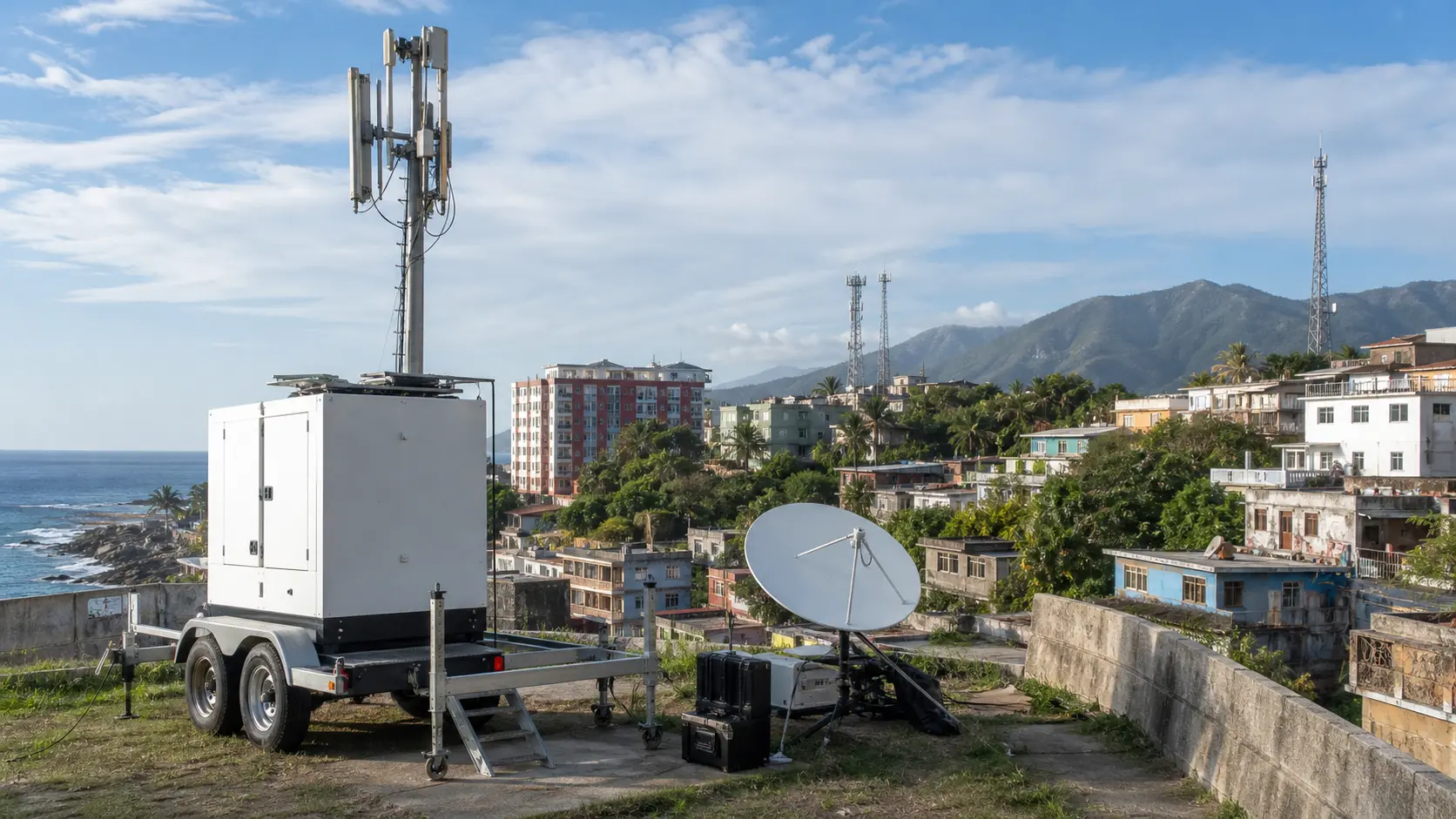
Movistar restores La Guaira coverage on a network that is still provisional
Movistar says voice, data and SMS are again available across all 11 parishes after reactivating 52 sites, but nine satellite-backed base stations and two mobile units show how much of the recovery still depends on emergency architecture.

Latin America and Caribbean National Telecom Trends
Anatel confirms call-centre contractors are inside telecom compliance checks
Brazil's telecom regulator says outsourced telemarketing and customer-service firms were already covered by an existing document-verification rule, while a five-year mandate for the industry's verifier turns a short appointment into a more durable compliance cost.

Latin America and Caribbean National Telecom Trends
Telebras makes supplier freedom a condition of Brazil's next sovereign satellite
Brazil's SGDC-2 market sounding puts open architecture, technology transfer and control of the ground estate ahead of a price that has not yet been set.

Latin America and Caribbean Institutional Trends
Carlos Martinez-Cagnazzo and the Boundary Work of Routing Security
Carlos Martinez-Cagnazzo's public record does not describe a lone architect making the internet safe. It shows a more instructive kind of authority: a regional registry strategist working where cryptographic standards, trust-anchor operations, operator education and cross-border…

Latin America and Caribbean National Telecom Trends
Starlink offers free access after Venezuela quakes
Starlink's emergency internet offer in Venezuela operates without an official licence — a politically delicate move that sidesteps regulatory approval while providing genuine disaster relief.

Latin America and Caribbean Institutional Trends
Binance secures key regulatory approval in Brazil
What happened: Binance gains regulatory approval in Brazil Binance, the world’s largest cryptocurrency exchange by trading volume, has secured regulatory approval in Brazil. The approval marks a significant milestone in Binance’s efforts to establish compliance with local laws in…

Latin America and Caribbean Institutional Trends
Brazil restricts on stablecoin transferring to curb financial risks
What happened Brazil is considering a proposal to restrict stablecoin transfers to self-custody wallets in order to increase financial transparency and combat illicit activities. The policy would limit the ability of users to transfer stablecoins like Tether (USDT) or USDC…

Latin America and Caribbean Institutional Trends
Google limits on android auto access may breach EU rules
Google’s refusal to allow an electric car app developed by Enel to access its Android Auto platform may violate competition rules.