
Profiles of leaders, operators and founders included in our market intelligence.
Market / People
People
People intelligence profiles the leaders, operators, researchers, creators, investors, and policy actors shaping internet infrastructure strategy. The category connects interviews, public profiles, company links, role changes, governance exposure, affiliation context, and related articles so readers can follow decision-makers by operating role rather than by isolated article chronology.
LeadersDisruptorsAcademicsCreators

Leaders, disruptors, academics, and creators grouped so readers can compare role, authority, and market influence.
People coverage gives readers a clear path from market category to individual profile detail.
Private contact channels remain behind membership access on profile detail pages.
Latest Coverage
Latest from People
523 articles

Creators
Dave Maltz and the operating stack behind Azure networking
Dave Maltz’s role at Microsoft is best understood through the breadth of the organisation he leads. Azure Networking spans customer-facing services, DNS, security, distributed control, host offload, switch software, data-centre fabrics, wide-area links and optical systems. That…

Academics
Colin Perkins: How Real-Time Media Learned to Share the Internet
Colin Perkins did not invent RTP, WebRTC or Internet congestion control. His more defensible contribution is also more revealing: over three decades, he helped develop the repair, feedback, signalling, safety and governance mechanisms that allow voice and video to remain useful…

Creators
Roy Arends and the hard work of changing DNS safely
Roy Arends helped write the 2005 specifications that made modern DNSSEC interoperable across implementations. Two decades later, his work at ICANN focuses on a harder operational problem: changing keys, error signals and delegation in a global system that no organisation can…

Creators
Ivan Pepelnjak and the discipline of testing network automation
Ivan Pepelnjak’s career runs from Slovenia’s early internet and exchange infrastructure to ipSpace.net and the open-source netlab project. His recurring argument is practical: automation becomes trustworthy only when intended state is modelled explicitly, vendor claims are…

Creators
Cricket Liu and the long work of making DNS operable
Cricket Liu’s career follows the Domain Name System from a specialist service run by a small group of operators to an enterprise control plane and, increasingly, a security sensor. His importance lies less in inventing protocols than in explaining how names, addresses, leases and…

Creators
Jiří Pírko and the Linux interfaces exposing switch hardware
A physical switch can forward packets at extraordinary speed while revealing little about the tables, limits and failures inside it. Jiří Pírko's work on switchdev and devlink helped give Linux a common language for that hidden machinery, bringing forwarding state and device-wide…

Leaders
John Curran and ARIN’s 2019 Resilience Test
ARIN’s December 2019 outage exposed a gap between a high-availability design and a recovery path that could survive a shared-storage failure. The public record shows how the registry restored its website and customer application on separate clocks, then made remediation and…

Leaders
Ching-Heng Ku and the Gap Between a Signed Route and a Filtered Route
In Taiwan’s routing-security programme, the distance between publishing an authorization and acting on a route is the point that matters. Ching-Heng Ku’s public record spans both sides of that gap, but the available numbers are snapshots with different denominators—not a simple…

Leaders
Gaurav Kansal and the Limits of a Public DNS Scorecard
A 91-day RIPE Atlas comparison put NIC’s public resolver beside three global alternatives. Its strongest contribution is not a simple ranking, but a measurable result with visible boundaries: cached lookups, uneven sample counts and a data package that does not fully reproduce…

Leaders
Amrita Choudhury and the Different Gates of Internet Governance
A constituency bid, a later At-Large certification and a co-authored APNIC policy change can all put the same advocate in view. They do not confer the same authority. Amrita Choudhury’s record shows why Internet governance must be read institution by institution: each forum…

Leaders
Bill Woodcock, PCH and the Two Layers of Internet Authority
Bill Woodcock’s public record puts two arguments about Internet institutions side by side: his 2015 case for contractual accountability in the IANA transition, and Packet Clearing House’s later report that it had become an intergovernmental treaty organization. The difference is…

Leaders
Aftab Siddiqui and a Routing-Security Survey That Could Not Order an API
At APNIC, Aftab Siddiqui appears in two different routes from operator concern to institutional action: a policy proposal with public decision milestones, and a routing-security survey meant to inform service design. The contrast shows what each record can—and cannot—prove.

Creators
Ivan Pepelnjak and the discipline of verifiable network automation
From Slovenia’s early internet infrastructure to netlab’s multi-vendor labs, Ivan Pepelnjak has consistently advanced an approach built on explicit models, reproducible tests and clearly stated limits. His central contribution is not a single protocol but a durable question: what…

Leaders
Remco van Mook and the IPv4 Gateway That Has No IPv4 Neighbour
An IPv4 default gateway normally looks like an address that a host can find with ARP. Remco van Mook's current IETF proposal turns that expectation inside out: `192.0.0.11` is not a neighbour to discover, but an instruction to reuse a neighbour that IPv6 has already discovered.…

Leaders
Noor Helmi's API-Driven Interconnection Argument, Tested Against IX-API's Public Record
The IX Telecom co-founder and chief executive has argued publicly that telecom interconnection must become automated and API-driven. The industry's open interconnection standard, IX-API, is a concrete test of that direction — and the documents reviewed for this briefing do not…

Leaders
Adrian Farrel and the Path That Exists Only on the Controller
A positive PCEP reply can put a clean route on an operator's screen before any router has accepted it. Adrian Farrel's PCE architecture matters because it lets us say exactly what has happened—and what has not.

Leaders
Cristiano Amon and the Missing Receipt in Qualcomm's Oryon Story
Qualcomm closed its Nuvia acquisition in March 2021, put Oryon inside Snapdragon X Elite in October 2023 and reached retail shelves with a multi-OEM PC wave in June 2024. A court ruling arrived later. Each event strengthens Cristiano Amon's strategic case, but none proves the…

Leaders
Cristiano Amon and the Two FY2029 Clocks Behind Qualcomm's Expansion
Qualcomm put FY2029 on two investor-day charts, twenty months apart. The date stayed fixed; the businesses inside the target did not. Reading that change as accomplished growth would turn a management plan into a historical result.
Leaders
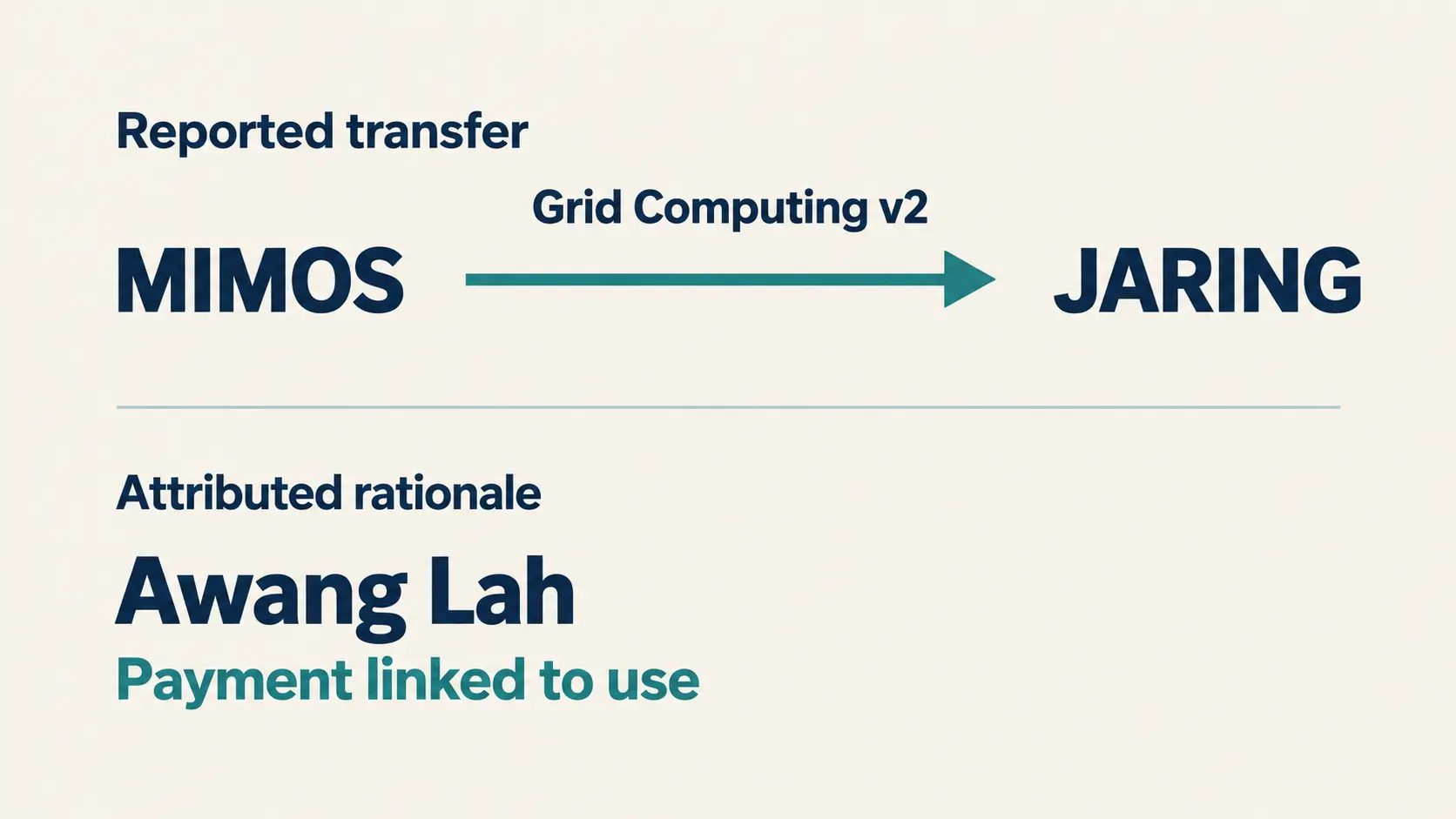
Mohamed Awang Lah and JARING’s pay-for-use proposition
The relevant leadership question is what an executive argued a technology would do for customers—and what would establish that the benefit reached them.

Leaders
The missing handoff: What Malaysia’s internet history can prove about Mohamed Awang Lah
Malaysia’s early internet history contains two institutional stories that are often placed too close together: the development of public connectivity around RangKom and JARING, and the later organization of national incident response through MyCERT, NISER and CyberSecurity…
Taxonomy
People Categories
Profiles
Leaders
Senior decision-makers controlling strategy, capital, and execution.
Profiles
Disruptors
Operators driving step-change performance and market reconfiguration.
Profiles
Academics
Researchers shaping long-cycle infrastructure and governance thinking.
Profiles
Creators
Protocol and platform creators shaping architecture and standards behavior.