
AFRINIC saga currently tracked end-to-end.
Governance / Case File
CASE FILE
Case File governance intelligence tracks institutions, policy processes, standards activity, registry operations, accountability disputes, and implementation signals that affect internet infrastructure. BTW.
Institutional BreakdownLegal and Policy ConflictElection and Control Risk

Institution legitimacy and continuity risk mapping.
Primary-source based timeline and risk analysis.
Used for continuity and policy exposure planning.
Latest Coverage
Latest from CASE FILE
1,079 articles

CASE FILE
Brussels Wants an Arctic Cable Alarm. Who Gets the 2 A.M. Call?
The EU's new Arctic strategy proposes a cable hub to spot trouble and help repairs. Its real test will come at the handoff: a warning from the seabed needs an authority, an operator and a vessel to move in the same direction.

CASE FILE
The Phone Number Has a Waiting Room. Its Former Customer Needs a Door.
Canada's telecom regulator refused to reopen a former host's porting system for Ztar Mobile. A dissent found a smaller job left undone: prove who last used an unreassigned number before the clock runs out.

CASE FILE
October 23 Came. Verizon’s Copper Scissors Stayed Locked.
Verizon’s earliest date to retire legacy phone lines has passed. The FCC stopped the application’s automatic approval before it took effect. In rural Virginia, counties are asking the question the calendar cannot answer: which household has a working replacement voice line?

CASE FILE
Three Buyers Want SFR. France Kept the Spectrum Keys.
Orange, Bouygues Telecom and Iliad/Free have proposed taking different parts of Altice France’s business. France will examine three linked deals, and Arcep will separately rule on the radio frequencies and phone-number resources that make a network work. The cabinet is still…

CASE FILE
The Hearing Is in November. Canada Paid for the Deaf Delegates’ Trip in October.
A seat at a telecom hearing has a travel bill. The CRTC ordered C$3,788 in advance costs for two Deaf Wireless Canada Consultative Committee representatives before its consumer-protection hearing begins. Three large carriers must pay it now.

CASE FILE
The 2030 Census Picked Noise. Commerce Took It Off the Menu.
The Census Bureau had compared ten ways to protect future population statistics, heard user feedback and chosen a method for block-level counts. A year later, Commerce removed that method from the permitted menu. The decision chain now matters as much as the algorithm.

CASE FILE
Whitehall Put AI in the Rulebook. The Scorecard Still Marks Its Own Homework.
GovS 005 now threads AI through the people who approve, fund, operate and retire government technology. The companion scorecard is still an internal self-assessment, and its change log says the latest update changed an email address.

CASE FILE
Canada Froze Its New Outage Rule Four Days Before Launch. The API Is Still a Questionnaire
Seven big carriers challenged the reporting threshold. The regulator kept interim notices flowing and is now asking how an automated submission channel should work.
CASE FILE
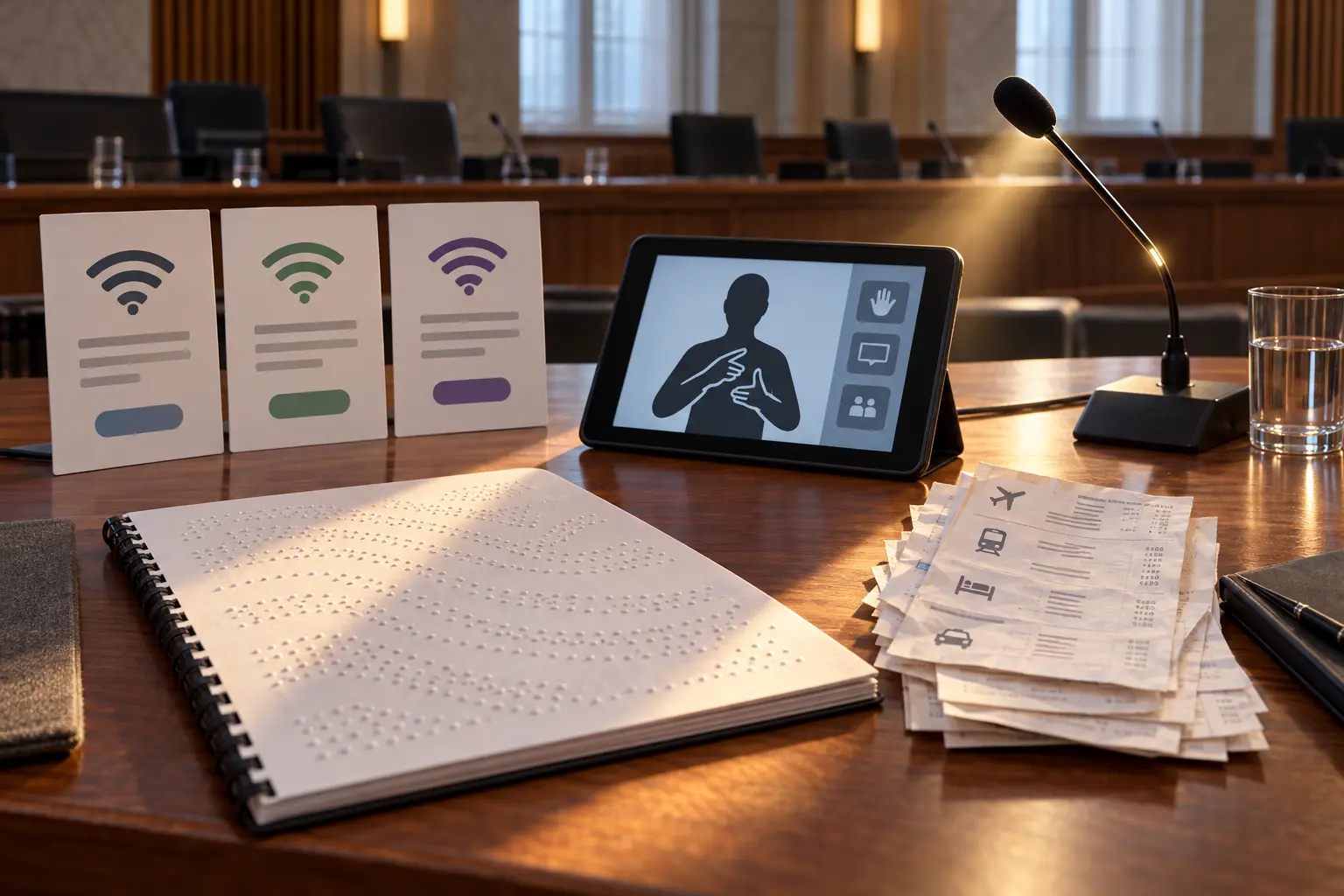
Canada Counted 176 Hours of Deaf Access Work. Then It Counted the Hotel Nights
Deaf Wireless brought survey evidence to a hearing on shopping for home Internet. The CRTC accepted the work, the travel and the bill — up to the point where a fourth hotel night belonged to another meeting.
CASE FILE
A Seat for Consumers Cost $14,406. Canada's Telecom Four Got the Bill
The CRTC awarded a consumer group CAD 14,406.08 for its work in a telecom complaint-fee hearing and ordered four participating carriers to cover the cost. The group qualified without a demographic membership card.

CASE FILE
Britain Has £130m for Cyber AI. Who Gets the Keys?
The Treasury has put money behind a national cyber shield and a vulnerability centre. The awkward part of automated defence starts when the software wants to change a live network.
CASE FILE
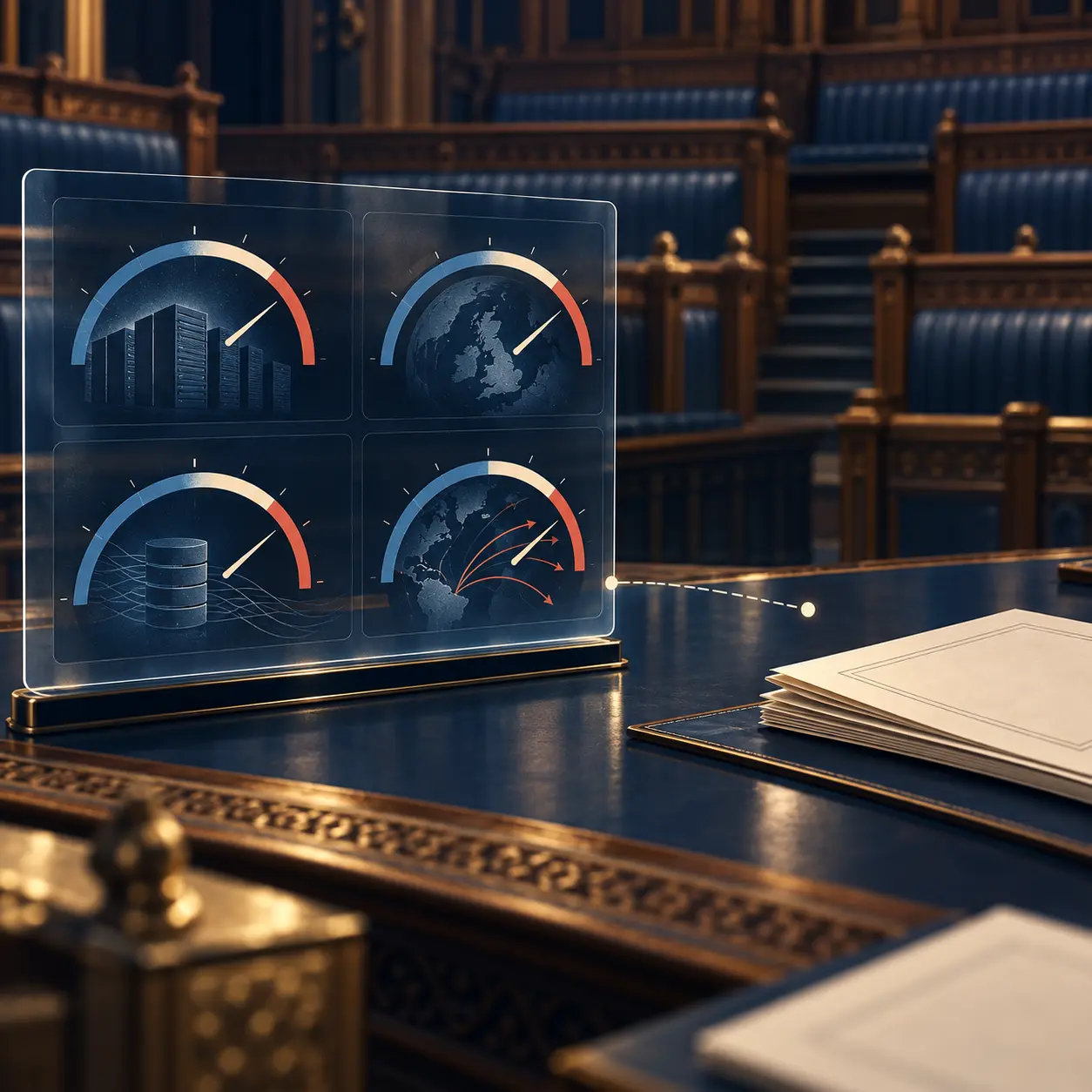
The Lords Want a Digital Sovereignty Dashboard. Parliament Gets the View-Only Link.
A Lords amendment would put Britain’s digital dependencies on a public dashboard. Its text orders publication; the parliamentary veto described in the note is missing from the operative clause.

CASE FILE
Britain's Cables Are Growing Ears. Whitehall Wants the Listening Plan
A UK White Paper would make operators register subsea fibre sensing before they turn it on. The filing would name the people, equipment and data routes behind a new kind of seabed observation.

CASE FILE
The cable is fixed. The number is not.
Hawaiki has carried commercial traffic across the Pacific since July 2018 on the same three fibre pairs, over the same roughly 15,000 kilometres, between the same five landing points. Its published design capacity, depending on which document you open, is either 43.8 Tbps or 67…

CASE FILE
One Bad BGP UPDATE. Four Possible Fates.
BGP’s old emergency response had the charm of a fire alarm with one button: a malformed UPDATE could bring down the whole session. Draft -03 of the revised BGP-4 specification puts four levels of response into the base text, from ending a peering to dropping one harmless…

CASE FILE
Five Minutes Across the Atlantic. Who Gets to See What?
At TNC26, an Internet2 agent and a SURF agent exchanged diagnostics about an Atlantic circuit in roughly five minutes. The useful breakthrough is the narrow door between their networks.

CASE FILE
Britain’s Broadband Scoreboard Has a Denominator That Won’t Sit Still
The latest Project Gigabit table lists 861,890 premises in initial contract scope and 340,880 built. BDUK’s other official series counts subsidy-backed coverage, on a different calendar and a different base.

CASE FILE
The Person in the Directory Who Is Actually a Button
A directory built to make people answerable contains an entry called "How it works". It carries a title line, a confidence figure and one evidence link. Not one of those three things is a person.

CASE FILE
One ASN and Three Claims: The Thin Registry Evidence Behind Ghana's Internet Exchange Association
One ASN and Three Claims: The Thin Registry Evidence Behind Ghana's Internet Exchange Association intelligence summary explains the development, the public evidence available to readers, the organisations involved, the regional context, market exposure, and the infrastructure…

CASE FILE
Mayotte’s Fibre Pause Tests the Economics of Public Coverage
A temporary order over five municipalities is also a test of the financing logic behind a territory-wide network: can a public concession still reach lower-density places if a parallel build changes where the expected wholesale revenue sits?
Member Unlock
Restricted Profile Intelligence
Login is required to unlock full profile briefings and deep-dive sections.
Strategic Circle Briefing
Join to unlock strategic briefings after signing in.
Join Strategic CircleLeadership Alliance Briefing
For qualified IP-asset owners and management; sign in to unlock alliance briefings.
Join Leadership AllianceSession Map
Active Dossiers
AFRINIC Saga
Multi-year governance and legal crisis with implications for RIR accountability worldwide.
Open AFRINIC Saga