
Europe and Middle East Institutional Trends
Europe and Middle East Institutional Trends
Institutional trend intelligence tracks institutional market trends, regulatory pressure, standards activity, public-sector digital policy, governance reform, and infrastructure funding in Europe and the Middle East, giving readers a fuller view of the demand shifts, capacity constraints, platform strategies, capital timing, regulatory pressure, and operating assumptions behind the market.

Latest Coverage
Latest from Europe and Middle East Institutional Trends
235 articles

Europe and Middle East Institutional Trends
Finland Calls the Sender “Spam.” Your Restaurant May Still Have the Table.
Finland has tightened the identity check on business messages. A failed check can now erase a sender's name and replace it with “Roskaposti”, even when the message confirms a real booking.

Europe and Middle East Institutional Trends
One App, Three Age Ratings: Ofcom Finds the Store Gate Cannot Agree
An app can be 13+, parental guidance and suitable from age three depending on which store sells it. Britain’s regulator found that the same stores often decide who can download by asking users to state their own age.

Europe and Middle East Institutional Trends
Ofcom Wants a Crisis Post-Mortem While the Crisis May Still Be Live
Two UK online-safety code amendments took effect on 2 November. They ask certain services to choose crisis signals, assemble a senior response team and record their decisions by day 90 at the latest, even if the emergency continues.

Europe and Middle East Institutional Trends
The Smart-Meter Network Changed Hands. The Old Licence Still Has Work.
DCC2 took over Britain’s smart-meter communications service on 2 November. The former operator keeps a licence until September 2027 and needs the successor’s data to finish its accounts and reports.

Europe and Middle East Institutional Trends
Your bank says paid. RIPE NCC may still see an unpaid invoice.
A bank transfer and a registry receipt are different records. RIPE NCC says an unclear payment reference can leave an already paid invoice showing as outstanding. Its current procedure stops new and open service requests and suspends a member at 60 days without received payment.…

Europe and Middle East Institutional Trends
Europe Wants a Map of Its Internet Backbones Before It Chooses Where to Spend
The Commission is offering up to €400,000 for an 18-month study of land and submarine routes, ownership risk and the next funding criteria. Whoever draws the baseline will help define which gaps count as strategic.

Europe and Middle East Institutional Trends
Canada Got a Seat at EuroHPC. Brussels Still Holds Half the Vote.
Canada joined Europe’s public supercomputing venture on 30 October. The summit sold access to machines. The harder news sits at the board table: a Canadian representative now helps govern a body whose voting rules keep the European Union firmly in charge.
Europe and Middle East Institutional Trends
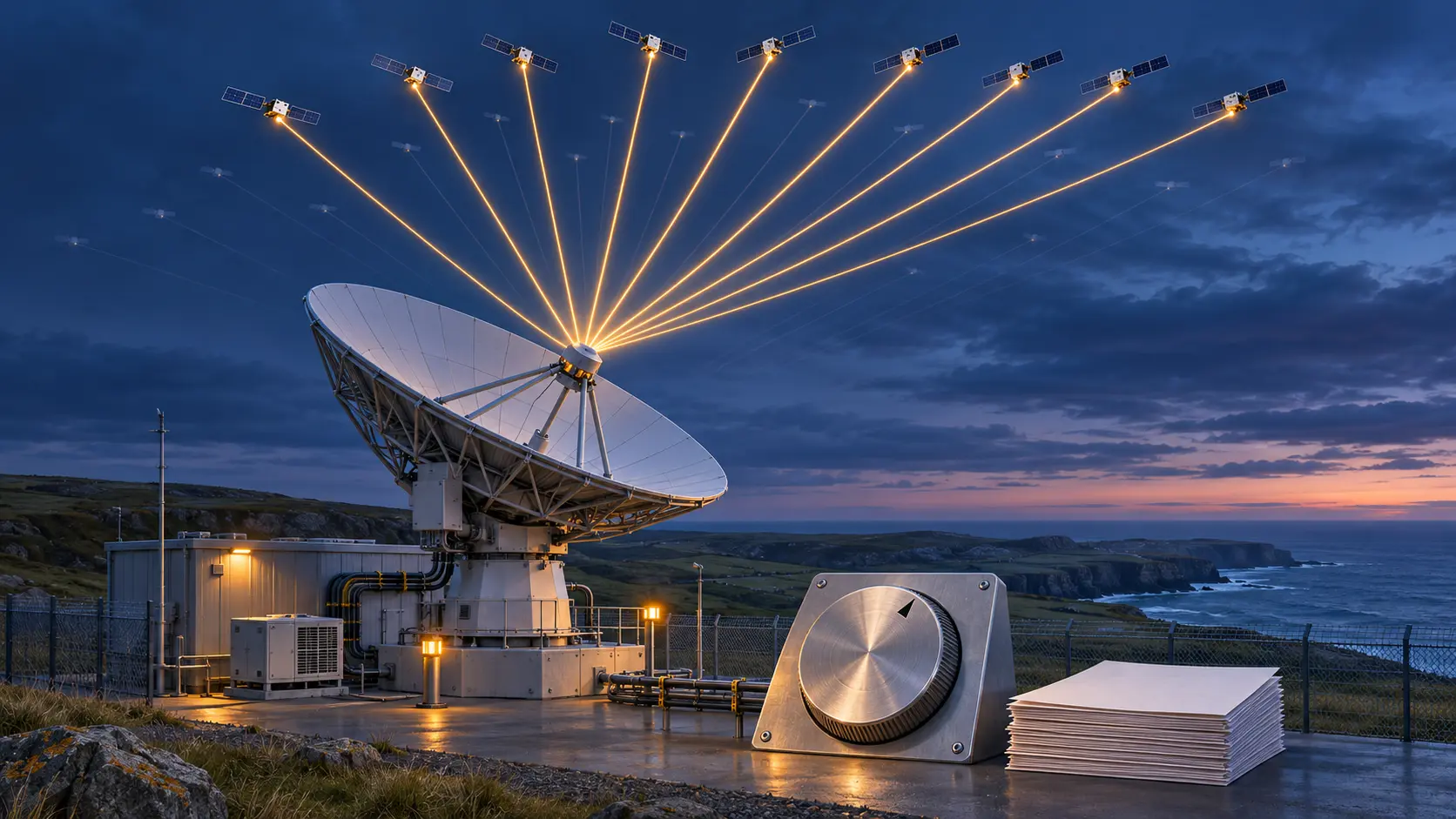
Ofcom Drafts a Ten-Path Bill for Satellite Gateways
The UK regulator has put legal text behind its plan to replace a £500 flat NGSO gateway fee. The proposed bill follows a site’s authorised radio paths, and Ofcom’s own three-band example reaches £20,900.

Europe and Middle East Institutional Trends
The EU Picked One Team for Its Science Hub. The Handover Still Needs an Order.
The Commission awarded a single-lot, four-year framework for the EOSC EU Node to a new consortium. Its public timetable still separates the award from a takeover order and the first baseline operating contract, scheduled to start on 14 February 2027.

Europe and Middle East Institutional Trends
Ofcom Has Drawn the Wi-Fi Line at 6585 MHz. The Rule Starts Next Week.
Britain’s upper-6-GHz debate has produced a usable boundary: 160 more megahertz for licence-exempt low-power Wi-Fi from 10 November. The instrument changes what equipment may do; the remaining 540 MHz still belongs to a different sharing bargain.

Europe and Middle East Institutional Trends
Europe Picked Its Science-Cloud Crew. The €40m Is Still an Estimate.
The EU’s research-data hub has a new operating consortium, a four-year framework and a February handover date. The money in the tender is an estimate. Actual continuity will arrive through specific orders, one service at a time.

Europe and Middle East Institutional Trends
Brussels Opens the Telecom File, but Its Veto Stops at Two Findings
On 29 October, the European Commission said its full record of telecom-market decisions—including first-stage decisions and monthly overviews—was available on CIRCABC without registration. The archive opens a busy review process to inspection. It also makes the Commission’s hard…

Europe and Middle East Institutional Trends
RIPE Wants a Policy Manual. Copying the Text Can Shift Its Meaning.
At RIPE 93, Remco van Mook proposed an index first, then the gradual relocation of policy chapters. The room’s sharpest question was whether a verbatim move can stay clerical once old text carries years of precedent.

Europe and Middle East Institutional Trends
Ofcom Wants Two New Harm Categories. The Pre-Duty Tracker Missed Them
Ofcom recommends adding body-stigma and depression content to the statutory priority list. Its tracker began asking about those non-designated categories only after child-safety duties had started.

Europe and Middle East Institutional Trends
A Bank Card Is Physical. Digital Voter ID Must Convince a Human.
The Representation of the People Bill would add physical payment cards to the documents accepted at polling stations while making a digital document pass a visual test. The House of Lords is due to examine the proposal on 2 November.

Europe and Middle East Institutional Trends
Ofcom Holds the 1.4 GHz Result Until Bidders Fund Their Offers
Ofcom will seal bids for the 25 MHz lot at noon, then give each bidder until 11:59 the next business day to secure funds against its own offer. The regulator expects to keep individual results private until that cash deadline has passed; miss it and the bid is invalid, with the…

Europe and Middle East Institutional Trends
Luxembourg Gets WHO’s AI Office. Copenhagen Keeps the Chain of Command.
The new office will sit in Luxembourg, where its host sees a chance to deepen a health and research ecosystem. WHO/Europe’s own plan keeps supervision, reporting and the authority to set standards in Copenhagen. The host agreement is where those two maps have to meet: the AI…

Europe and Middle East Institutional Trends
Sweden Drew a 5,000-Connection Fibre Line. Brussels Wants the Math.
PTS has proposed wholesale-access duties for fibre owners above 5,000 single-dwelling connections and no advance regulation below that line. The European Commission has opened a Phase II review, asking whether the number can do that much legal work.

Europe and Middle East Institutional Trends
Meta Paused Its Terms. The CMA Opened a Case Anyway.
Meta paused its proposed commercial-terms rollout after regulatory engagement. Two days later, the UK Competition and Markets Authority opened a formal case. The pause changed a deadline; it did not answer the legal question.

Europe and Middle East Institutional Trends
RIPE NCC Members Put Any 2026 Surplus in Reserve—and Any Deficit on the Membership
The October General Meeting approved a one-year settlement rule: any excess contribution paid in 2026 goes to RIPE NCC reserves, while any 2026 deficit is covered by members in 2027. The decision assigns the downside before it assigns a collection formula.