Governance / RIR Watchdog / LACNIC

Lacnic

LACNIC governance intelligence tracks institutions, policy processes, standards activity, registry operations, accountability disputes, and implementation signals that affect internet infrastructure. BTW.

Latin AmericaPolicy EvolutionICP-2
Lacnic signal visual
Governance / RIR Watchdog / LACNICLacnic
RegionLatin America and Caribbean

LACNIC governance for the Latin American IP address allocation region.

Primary DomainGovernance

Institutional adaptation and ICP-2 governance trajectory.

Key TopicPolicy Evolution

Transfer policy and governance modernization signals.

ImpactModerate

Regional governance evolution with cross-RIR implications.

Latest Coverage

Lacnic Headlines

162 articles

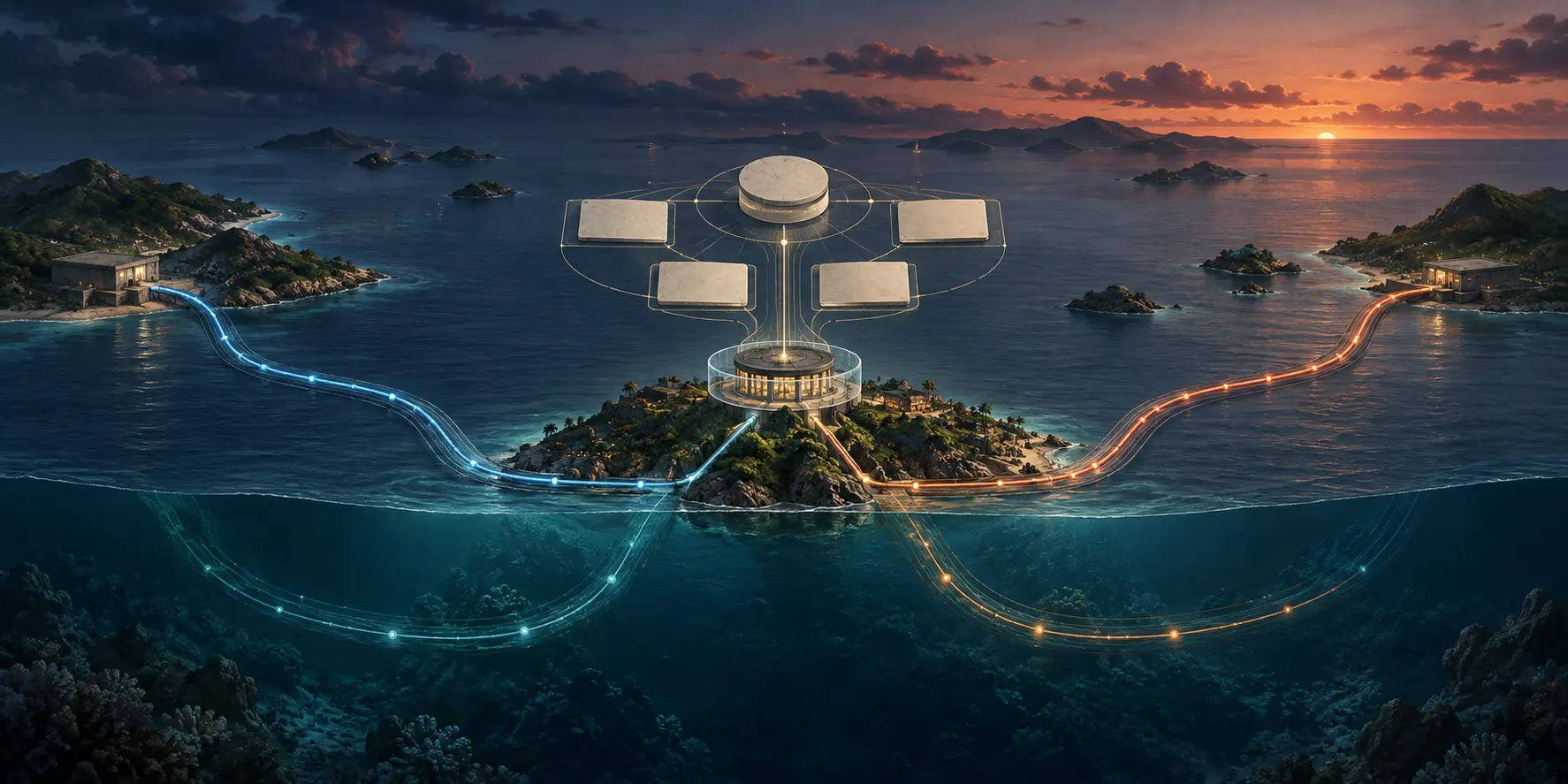
Photorealistic coastal interconnection facility where secure domestic network zones share a fiber junction that continues through unmarked subsea infrastructure beyond the coastline.

Lacnic

Sovereign Internet Plans Meet Non-Territorial Number Resources

Sovereign Internet Plans Meet Non-Territorial Number Resources intelligence summary explains the development, the public evidence available to readers, the organisations involved, the regional context, market exposure, and the infrastructure consequences that may follow. The…

Jul 15, 2026
Photorealistic carrier-neutral operations facility with five separated work bays and uninterrupted fiber infrastructure, observed by a legal specialist and network engineer.

Lacnic

Sanctions Fragmentation and the Case for Service Layer Separation

Sanctions target individuals, companies, governments, sectors, transactions and forms of support. Internet number resource institutions, however, operate shared systems whose effects extend far beyond a single contract. When a bank rejects a payment, a registry cannot safely…

Jul 15, 2026
Photorealistic service-provider facility where many customer fiber lines converge on compact translation equipment beside a much larger secured archival storage area.

Lacnic

CGNAT Logging Mandates and the Governance of Scarcity Costs

Carrier-grade network address translation is usually described as a conservation technique. An Internet service provider lets many subscribers share a smaller pool of public IPv4 addresses by translating each connection to a public address and port. That description is…

Jul 15, 2026
Photorealistic cloud data hall where a customer engineer's small unmarked edge cabinet connects into a vast provider-controlled infrastructure with a distant empty transition bay.

Lacnic

Cloud Providers as De Facto Address Registries

The cloud did not replace the regional Internet registries. It created another allocation layer below them. A hyperscale provider can decide which customer receives an external address, which account may reserve it, where it can be used, how much it costs, whether it can move…

Jul 15, 2026
Photorealistic network operations facility where an independent engineer observes several separated server rooms while a distinct security team examines a certificate-signing enclosure.

Lacnic

RPKI Adoption as Institutional Risk Transfer

Route origin security has crossed an important threshold. The Resource Public Key Infrastructure can no longer be regarded as an optional experiment of a narrow technical community. More address space is covered by Route Origin Authorizations, more networks validate the resulting…

Jul 15, 2026
Anonymous delegates pass a blank evidence folder from a conference roundtable to a separate operational team through a glass threshold.

Lacnic

The First Permanent IGF and the Same Old Execution Gap

The Internet Governance Forum became permanent in December 2025, but permanence did not convert discussion into command. The first annual meeting under that status will take place in Nairobi from 14 to 18 December 2026, after this article's publication date. The honest question…

Jul 15, 2026
A lone analyst examines sealed unmarked folios in an empty conference chamber while an unchanged operations room remains active behind glass.

Lacnic

WSIS+20 After the Applause: Which Operational Right Changed?

The twentieth-year review of the World Summit on the Information Society ended with a consensus resolution, a permanent Internet Governance Forum and a long list of commitments on access, human rights, inclusion, cooperation, financing and follow-up. Those are consequential…

Jul 15, 2026
Three transparent blank waiting trays on a quiet registry counter, with the first two empty and only a few blank blocks in the last tray.

Lacnic

LACNIC's 2020 Exhaustion Phases and the Disappearing Queue

LACNIC's last free IPv4 block did not simply run out on 19 August 2020. It converted a visible stock of addresses into a long, conditional claim on whatever might later be recovered, exposing how queue rules distribute time, information and entry costs when a regional registry…

Jul 13, 2026
Blank finance papers and network equipment sit in a dusk-lit office with a blurred abstract regional map in the background.

Lacnic

LACNIC Fees in a Region of Currency Volatility

A membership invoice stated in US dollars gives LACNIC a stable accounting unit, but it transfers exchange-rate timing, conversion cost and access to dollars to networks whose customers usually pay in local currency.

Jul 13, 2026
A network operator workbench shows fibre connectors, sealed mandate cards and an open exit path through a glass door.

Lacnic

NRS and the Return of the Operator as Principal

If Number Resource Society is to matter, it should treat operators as verifiable principals with scoped mandates, accountable evidence and portable exit rather than as an audience to be counted.

Jul 13, 2026
Blank mandate cards, sealed envelopes and fibre strands are arranged on a secure table under precise archival light.

Lacnic

The Mandate Ledger Internet Governance Never Built

Internet governance has learned how to record attendance, comments and votes, but it still lacks a portable ledger for principal, scope, evidence and expiry.

Jul 13, 2026
Blank draft papers and cooling coffee sit in a late-night consultation room where most chairs have fallen into shadow.

Lacnic

Participation Fatigue as a Governance Outcome

Long consultations can look open while quietly exhausting the people most likely to entity, leaving institutions with a silence that is mistaken for consensus.

Jul 13, 2026
An empty delegate chair faces a layered national network landscape of cables, towers and homes under soft institutional light.

Lacnic

The Country With One Delegate and a Million Dependencies

A country label can identify geography, but it cannot compress every operator, customer, public service and network dependency inside that place into one voice.

Jul 13, 2026
A quiet network operations room shows fibre paths radiating from server racks toward empty conference chairs in the distance.

Lacnic

Counting Autonomous Systems, Not Conference Passes

Internet number governance cannot infer representation from meeting attendance when the operational denominator is made of ASNs, organisations, customer dependencies and routing exposure.

Jul 13, 2026
A fictional institution faces a mirrored questionnaire whose narrow answer channels exclude several visible paths of dissent.

Lacnic

The Consultation Survey Designed by the Institution Under Review

An institution can administer a useful survey about its own performance, but if it controls the questions, sample, answer options and interpretation, independence cannot be inferred from anonymous responses.

Jul 12, 2026
A blank policy page receives several streams of distinct scripts before one central draft takes shape, with translators working alongside rather than behind it.

Lacnic

Language Choice Before Translation Begins

Translation can widen access to a finished text, but the first drafting language has already selected the concepts, ambiguities and burdens that every later language must carry.

Jul 12, 2026
A fictional network-policy conference agenda table is crossed by light from an unbranded sponsor wall, reception doorway and meeting stage.

Lacnic

The Sponsor Logo on the Agenda

Sponsorship rarely arrives as an instruction to decide a certain way, but money can buy visibility, hospitality, and access to social spaces where an agenda becomes natural before it becomes official.

Jul 12, 2026
A gender-balanced fictional council sits around a precisely lit table whose central chair is connected to no visible constituency beyond the room.

Lacnic

Gender Balance Cannot Repair a Missing Principal

A balanced board can correct exclusion and improve judgment, but composition alone cannot reveal who authorised the board, what it may decide or how those affected can remove it.

Jul 12, 2026
A diverse group of fictional younger participants speaks at an illuminated side forum while an elevated decision chamber remains connected by a narrow transparent bridge.

Lacnic

Youth panels and the problem of borrowed legitimacy

A youth panel can broaden the data available to an institution, but selection by the institution cannot manufacture consent on behalf of a generation that never chose the speakers.

Jul 12, 2026
A fictional household and small business stand at the end of a layered network corridor while an appeal doorway remains near the distant upstream registry.

Lacnic

The User Who Pays Through the ISP but Has No Registry Standing

The cost of number-resource decisions travels through the provider to the user, while formal notice, appeal and remedy often stop at the registry's direct contractual boundary.

Jul 12, 2026