
Latin America and Caribbean National Telecom Trends
Latin America and Caribbean National Telecom Trends
National Telecom trend intelligence tracks national telecom market trends, 5G rollout, fibre modernisation, wholesale network strategy, spectrum pressure, and digital infrastructure investment in Latin America and the Caribbean, giving readers a fuller view of the demand shifts, capacity constraints, platform strategies, capital timing, regulatory pressure, and operating assumptions behind the market.

Latest Coverage
Latest from Latin America and Caribbean National Telecom Trends
49 articles

Latin America and Caribbean National Telecom Trends
Anatel Tests a Data-Free Complaint Door. Carriers Keep Two Keys.
Brazil’s telecom regulator is testing a complaint channel that consumes no mobile data, even for a prepaid customer with no credit. The entry ticket is still an active line on the provider’s network.

Latin America and Caribbean National Telecom Trends
Jamaica’s 2600 MHz Homework: 95% Coverage, Measuring Tape Not Included
Jamaica’s Spectrum Management Authority is asking who wants 100 MHz in the 2600 MHz band. Any qualifying applicant able to start commercial service as soon as a licence is granted would also face a two-year coverage schedule for the general population and named underserved…

Latin America and Caribbean National Telecom Trends
Brazil’s New Drone Band Has One Awkward Guest Question: Can It Talk to Air Traffic Control?
Anatel proposes ten 200 kHz channels between 468 and 470 MHz for remotely piloted aircraft. Brazil’s existing rulebook gives that category a surprisingly specific guest list.

Latin America and Caribbean National Telecom Trends
The Coverage Map Met a Road Test. Some Colours Had to Move
Arcep checked new graded 4G maps across five French Caribbean and Guiana territories. Field evidence prompted local corrections to the operator-supplied pictures.

Latin America and Caribbean National Telecom Trends
Brazil’s Mobile Market Meets Anatel’s National Target. The Municipal Data Add a Second Test
Anatel says Brazil’s national mobile-market concentration indicator met its 2027 target in the third quarter. In the same report, its municipality-level analysis shows a much less even picture: concentration rises as population falls. The two findings measure different scales…
Latin America and Caribbean National Telecom Trends
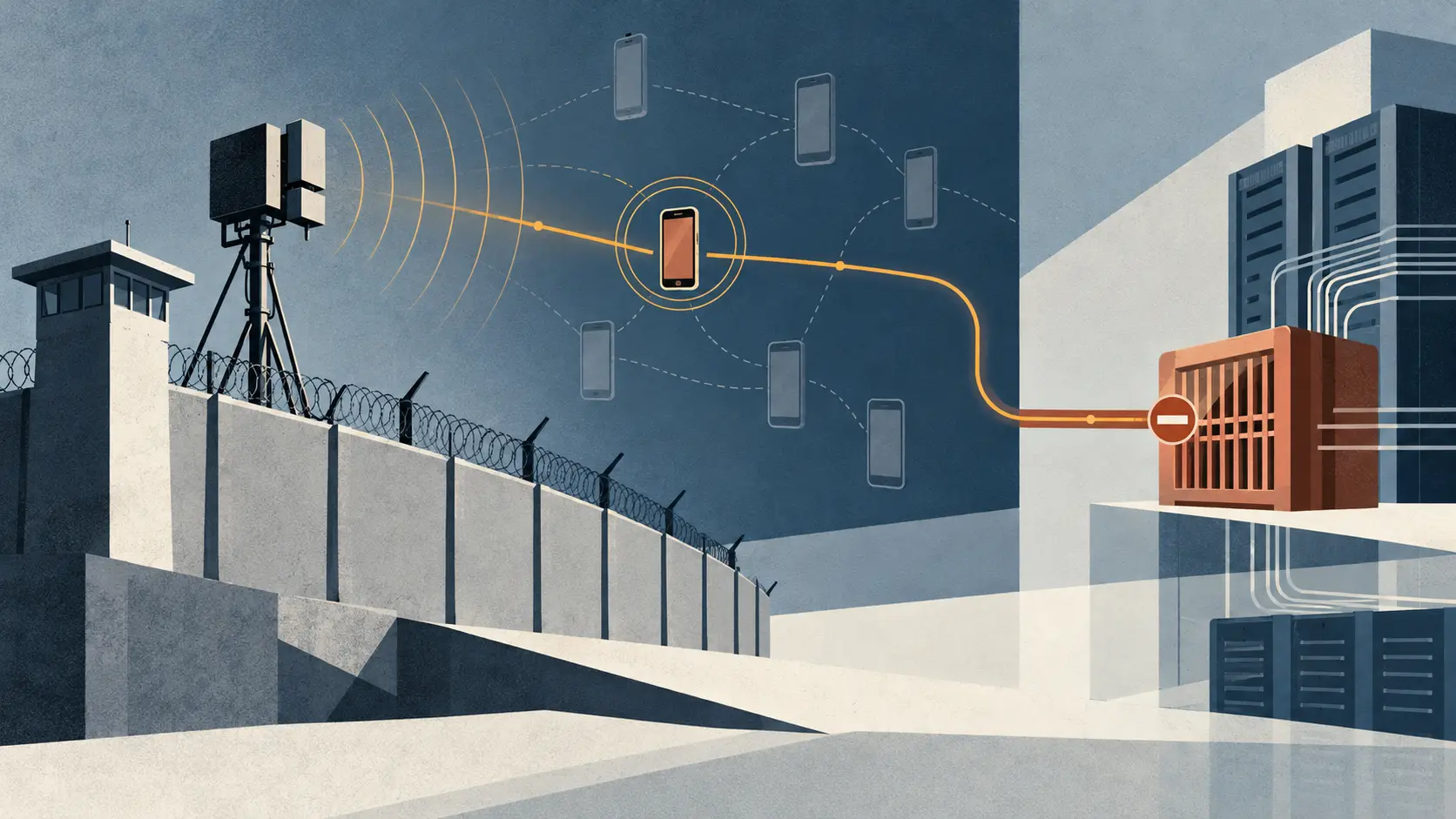
Brazil can cut a prison phone's mobile access before officers seize it
Rio's first operation under a new administrative procedure produced an official tally of 143 blocked devices. The next question is what happens between identifying a handset, restricting it and correcting a mistake.
Latin America and Caribbean National Telecom Trends
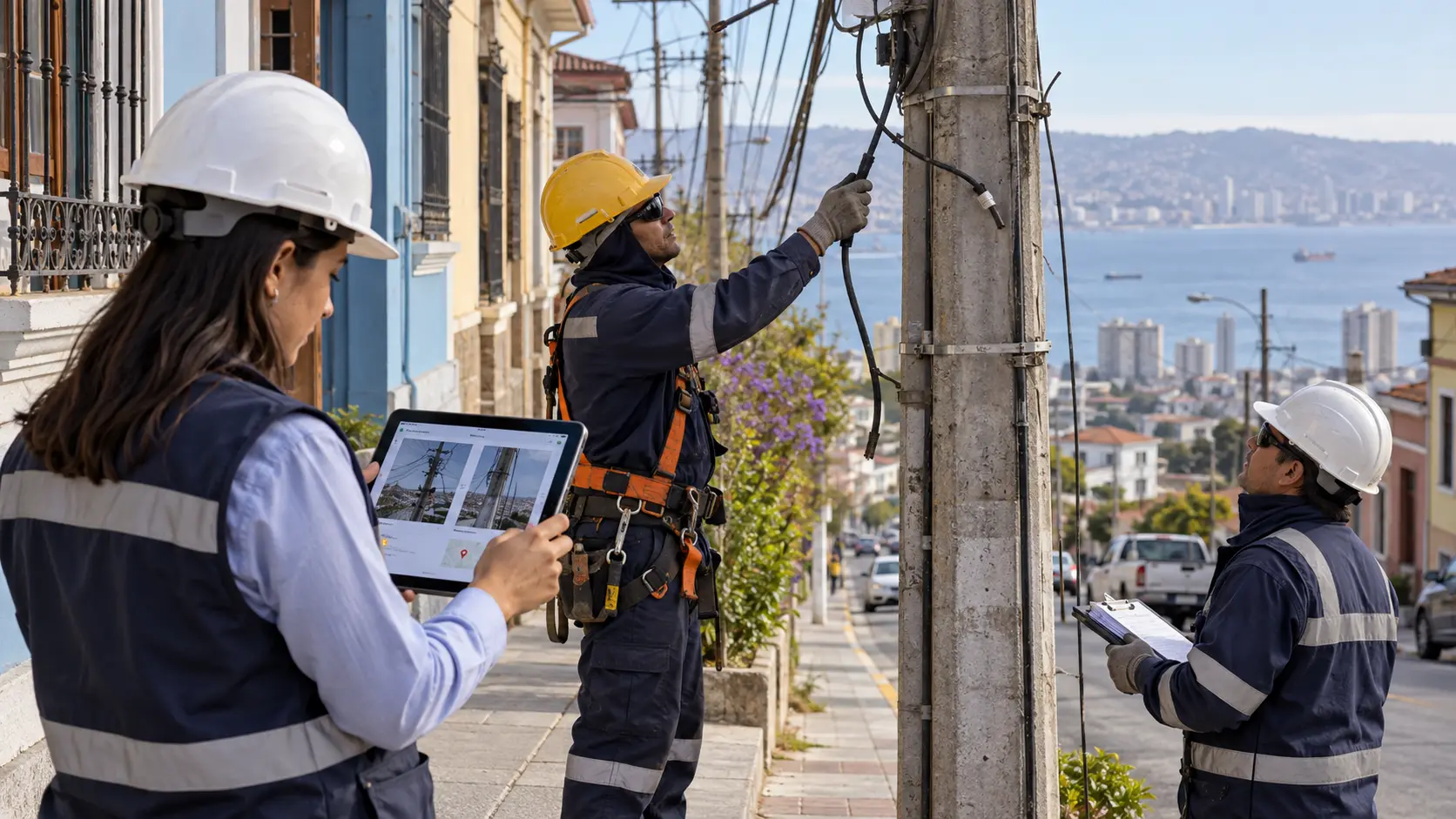
In Chile's cable clean-up, silence can sign off the work
A municipality has 30 days to answer a handover request before acceptance is presumed. That keeps the paperwork moving. It does not tell a resident what happened at the pole.

Latin America and Caribbean National Telecom Trends
ECTEL can change the spectrum bill. What about yours?
For an operator, cheaper access to airwaves could make a network investment more attractive. For a household, the question is simpler: will the connection work better, and will the bill hurt less?

Latin America and Caribbean National Telecom Trends
Sercomtel's exit from the old phone contract has a price—and a delivery address
The Brazilian operator's settlement turns a dispute over a fixed-line concession into commitments to mobile coverage and school connectivity. Reading the price correctly is the first step towards judging what the public gets.

Latin America and Caribbean National Telecom Trends
Turks and Caicos turns satellite access into two different bills
Turks and Caicos has made satellite licensing more concrete by separating permission to provide a network or service from permission to use spectrum. Its new fee schedule makes that distinction financial as well as legal: one charge follows revenue, another follows the frequency…

Latin America and Caribbean National Telecom Trends
Uruguay’s Fibre Trunk Cuts Exposed a Cross-Layer Dependency
Four terrestrial fibre-trunk cuts on 13 October did more than interrupt domestic transport routes in Uruguay. Their simultaneous effect also constrained access to international submarine-cable capacity reaching Maldonado, showing how a terrestrial failure can become an…

Latin America and Caribbean National Telecom Trends
AT&T Mexico’s sale hinges on more than closing
AT&T calls the proposed sale a US$2 billion exit. The buyer documents describe a 50–50 consortium, a financing plan, regulatory conditions and transition agreements still to be completed. The transfer is a sequence, not a single signature.

Latin America and Caribbean National Telecom Trends
A public consultation is a record of decisions, not a vote: Anatel’s new rule
When regulation can alter a network operator’s investment plan, consultation is useful only if a firm can later see what happened to the evidence it submitted. Anatel’s new procedure creates that trace from comment to reasoned disposition; it gives entities a route into the…

Latin America and Caribbean National Telecom Trends
Brazil’s 6 GHz auction ties the last payment to operating proof
Anatel’s proposed regional infrastructure fund would pay for neutral hubs and smaller edge sites only where private provision falls short. Its strongest safeguard is the sequence: test the market, fund only the viability gap, then hold back money until the network has worked in…

Latin America and Caribbean National Telecom Trends
Brazil’s data-price proxies reveal a wide state-level spread
Anatel’s Q2 2026 accounts show lower revenue-per-gigabyte proxies alongside heavier average use. The state tables make the comparison more useful—and more dangerous—because neither figure is a household tariff or an affordability measure.

Latin America and Caribbean National Telecom Trends
Mexico’s rural broadband order needs two delivery tests
The Comisión Reguladora de Telecomunicaciones has set out two routes for extending rural access through Telmex and Telnor. A connection point for a local provider and a household fibre offer sit at different places in the network; the public record should measure them separately.

Latin America and Caribbean National Telecom Trends
Brazil’s Wi-Fi Plan Puts AFC Operator Exit in the Continuity Test
Anatel’s paired proposals would let outdoor Wi-Fi share the lower 6 GHz band through automated frequency coordination. They also make the continuity of that service depend on database freshness, outage windows and what happens when an authorized AFC operator leaves.

Latin America and Caribbean National Telecom Trends
A satellite beam is not a service permit: TATT’s landing-rights proposal
TATT’s September draft would place a national space-station registry before satellite operators supply capacity to local earth stations, then let gateway location and customer type shape later concessions. The first consultation closes on 19 October; none of these proposed rules…

Latin America and Caribbean National Telecom Trends
Chile’s new industrial channels sit behind a Release 17 gate
Chile has enlarged the 2.3 GHz range available to industrial networks, but the added channels are not a general spectrum grant. Access depends on a newer radio standard, a limited-service permit and a site-specific interference review.

Latin America and Caribbean National Telecom Trends
Axtel's Second Bidder Has Preliminary Approval, Not a Higher Offer
Axtel has two prospective control paths, but only one has published prices. On 27 August, 4 Tech Plus's board-approved requests named MXN 3.86 per AXTELCPO and MXN 1.22 per Controladora Axtel share. On 1 September, Flō Networks arrived with preliminary board approval and an…