
Company listings are organized to preserve sector-level browsing and profile lookup.
Market / Companies
Companies
Company intelligence maps internet infrastructure operators, cloud service providers, telecom networks, data centre companies, registries, alliances, standards bodies, and institutional market actors across global internet infrastructure markets.
GlobalNorth AmericaEurope and Middle EastAsia-PacificLatin America and CaribbeanAfrica

Company coverage maps execution patterns across multiple infrastructure contexts.
Cloud, telecom, datacenter, institutional, and operator profiles remain the core structure.
Company profile pages identify the organisation, operating footprint, evidence, customer dependency, and market relevance; company-related event coverage remains separate.
Latest Coverage
Latest from Companies
8,650 articles

Global Cloud Services
Brokerage Disguised as Infrastructure: What almazcloud.network's Footprint Means for AI-Era Compute Buyers
Brokerage Disguised as Infrastructure: What almazcloud.network's Footprint Means for AI-Era Compute Buyers intelligence summary explains the development, the public evidence available to readers, the organisations involved, the regional context, market exposure, and the…

Global Regional ISP
Is the internet connected by undersea cables?
Yes, the internet is overwhelmingly connected by undersea cables. In fact, approximately 99% of global internet traffic is transmitted through undersea cables, which form the essential infrastructure that powers much of the world’s digital communication. These cables are the…
Latin America and Caribbean Regional ISP
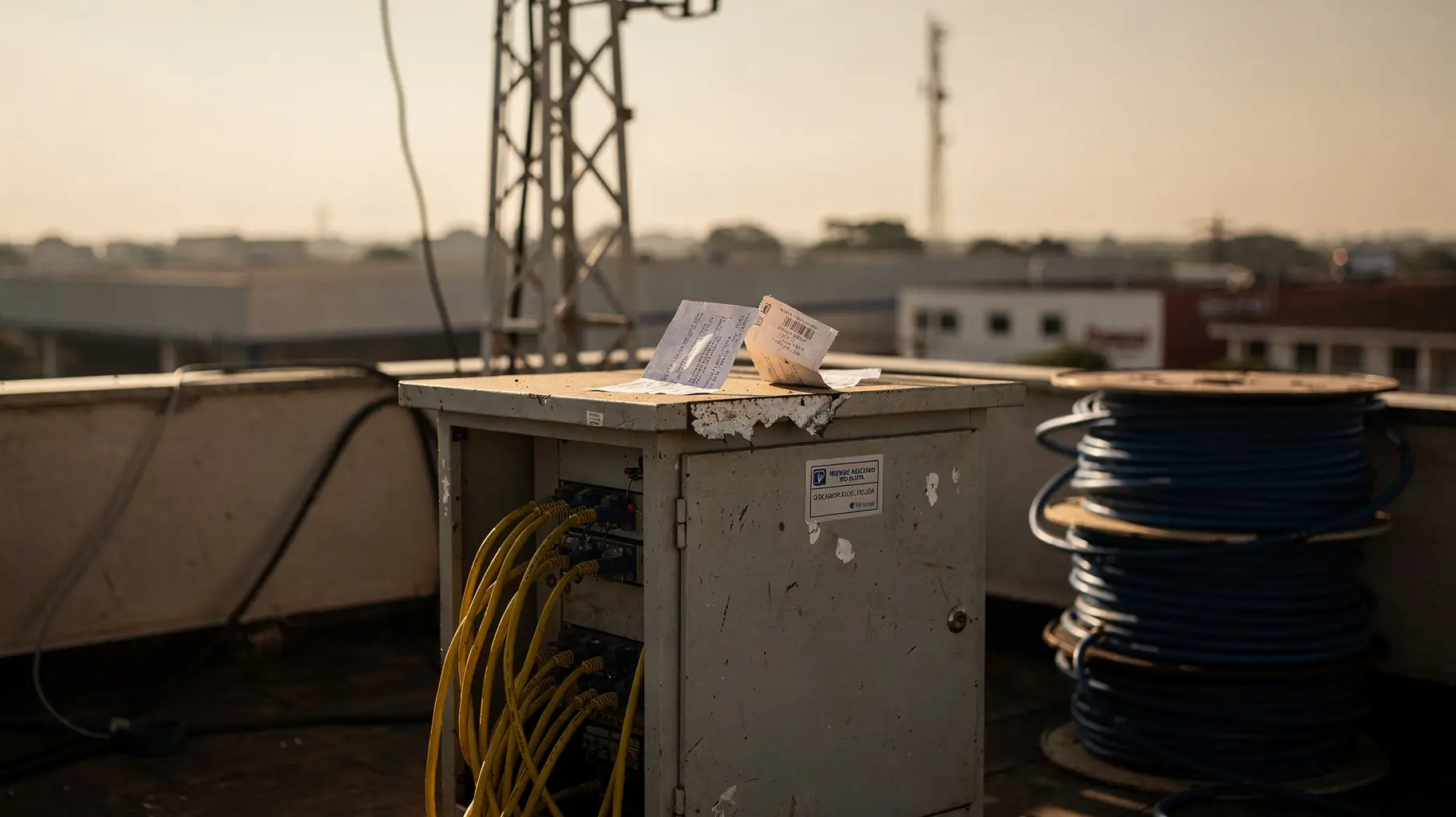
Membership Is Not Capacity: Brazil's Small ISPs and the IPv4 Waiting Room
One line on a registry's member list is enough to open a file on a Brazilian internet provider. It is not enough to size one — and in a market where the smallest operators carry the majority of the connections, that gap has a price attached to it.
Europe and Middle East Institutional
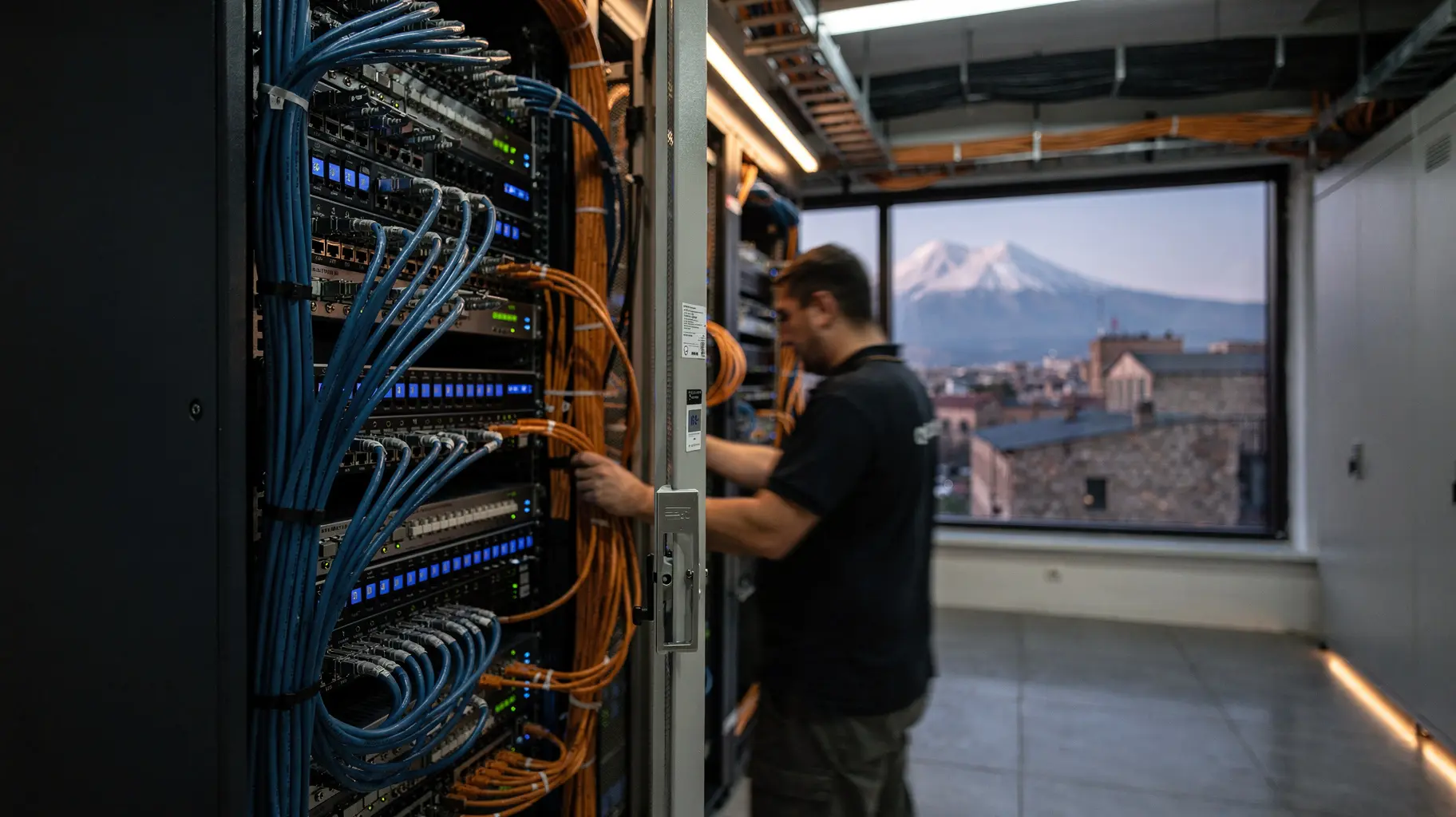
ARMIX Has Twenty Members and a Second City. Its Ceiling Is Still Ten Gigabits.
Armenia's national exchange counted twenty member networks in November 2025 and opened a second access point in Gyumri in February 2026. The published port range — 100 Mbit/s to 10 Gbit/s — says more about what kind of exchange this is than either announcement.

Europe and Middle East Institutional
France Bought the Cable Factory. Nokia's Own Paperwork Cannot Agree on When.
Nokia sold 80% of Alcatel Submarine Networks to the French State at a €350 million enterprise value, kept 20% with a put option attached, and signed up to a €100 million industrial plan for Calais and Greenwich. The record cannot agree on the day the handover happened — and that…

Europe and Middle East Datacenter
InterLAN-IX charges the same port price in Bucharest, Frankfurt and Sofia. Who pays for the distance?
Romania's exchange told RIPE 93 that geography does not change the price of a port. The same talk explains what has to be true for that promise to hold: eleven sites stitched onto one Layer 2 fabric, redundant links the operator describes as expensive, and a transport bill that…

Global Cloud Services
Kentik and the data engine that turns network flows into evidence
Kentik’s network-intelligence platform depends on a proprietary analytical engine designed to retain large volumes of telemetry, add routing and business context, and return historical answers quickly enough to guide operations. Kentik Data Engine gives network teams a searchable…

Global Institutional
SNIA writes shared storage rules without the authority to enforce them
Since 1997, SNIA has tried to make storage systems from different vendors easier to compare, manage and trust. Its specifications span management software, cloud data, media sanitisation, energy use and hardware form factors, but every useful rule still depends on companies…

Global Institutional
Four Documents, One Ambitious Label: Inside Packet Clearing House's Paper Trail
A California corporation number, a tax classification, a sentence on a homepage and one public number-resource record have been enough to file Packet Clearing House, Inc. in an infrastructure directory as an institution performing registry functions for internet number resources…

Global National Telecom
A Submarine Cable Name With a Mailbox and Six Empty Columns
BTW's directory record for STC Submarine Systems, Inc. fills every field a registry can supply — legal name, jurisdiction, eight contact records, two people — and scores zero in all six sections that would tell you whether anything is operated, maintained or owed. The zeroes…

Global Institutional
FreeRADIUS and the trust decisions behind network access
A network login may be decided in a few packets, but the trust behind it can span certificates, directories, access devices, roaming partners and accounting systems. FreeRADIUS makes that policy inspectable and programmable, while leaving operators responsible for the legacy…

Asia-Pacific Cloud Services
Velo Technologies expands its infrastructure business from Cyberjaya
The Malaysian private company spans data-centre capacity, cloud, managed security, networks and IT outsourcing. Its partnerships are increasingly visible, but its ownership names, absolute financial scale and the economics behind some of its infrastructure commitments remain…

North America Datacenter
PIT-IX Reports Three Buildings. The Record Won't Say Which.
An internet exchange is a building problem in a routing costume. The Pittsburgh Internet Exchange now tells the world it runs across three facilities, counts thirty-six member networks and has imported forty-one networks from its IX-F feed — and it does not name one of the three.

Global Institutional
The UCIe promise for chiplets depends on what lies beyond the link
UCIe has defined a die-to-die interface that reaches 64 GT/s and now spans 3D packaging, raw traffic and whole-package management. The decisive test will be whether these rules sustain multi-vendor products when power, thermals, manufacturing yield, software, security and…

Global Institutional
NVM Express: How Drives Became a Network Protocol
NVMe began as a queue architecture for flash drives attached over PCI Express. Over time it grew into a modular protocol family that can reach storage over TCP and RDMA networks, supports resource discovery and multiple paths, describes specialised storage media models and…

Global Institutional
BIRD and the routing policy engine behind internet exchanges
The BIRD Internet Routing Daemon grew from a Czech university project into a control-plane system used in demanding routing environments, including internet exchanges where policy is concentrated and operational mistakes can spread quickly. Its history shows how open routing…

Global Institutional
linuxptp and the control loop behind precision time
linuxptp turns a Linux host, hardware clock and network timing source into a precision-time system. Its daemons coordinate IEEE 1588 state, packet timestamps, servos and system clocks, but software alone cannot manufacture accuracy: the result still depends on NICs, oscillators…

Global Institutional
SNIA sets common storage rules but cannot impose them on the market
Since 1997, SNIA has tried to make storage systems from different vendors more comparable, manageable and predictable. Its specifications cover software management, cloud data, media sanitisation, energy use and hardware form factors, but any useful rule works only when companies…

Europe and Middle East Regional ISP
The National Satellite Company must keep contracted capacity ahead of orbital fixed costs
JSC National satellite company, better known through the Tricolor brand, looks like a mass-market pay-TV operator until the economics are pulled apart. Its household base is vast, but the cash machine depends on scarce orbital capacity, set-top-box replacement, dealer discipline…

North America National Telecom
Crown Castle Runs the Towers. T-Mobile Still Carries the Bill and the Assets.
An operator can hold the gate key without buying the mast. T-Mobile's tower contracts give Crown Castle management rights over two large site bundles and future purchase options, while the carrier keeps the assets and a financing obligation on its accounts. The two purchase…
Taxonomy
Company Regions
Region
Global
Multi-region operators with cross-RIR strategic footprint.
Region
North America
ARIN-region member companies and infrastructure operators.
Region
Europe and Middle East
RIPE NCC-region member companies and operators.
Region
Asia-Pacific
APNIC-region member companies and operators.
Region
Latin America and Caribbean
LACNIC-region member companies and operators.
Region
Africa
AFRINIC-region member companies and operators.