- Vyntelligence’s video libraries and real-time feedback loops reduce training time by 30% and defects by 68%, addressing telecom’s retiring workforce crisis.
- The “pointing and calling” method—filming and narrating tasks—slashed Openreach’s audit failures by 93% and resolution time from 10 days to zero.
- Each avoided site visit saves 2.5 kg of CO2, positioning video audits as critical for ESG compliance.
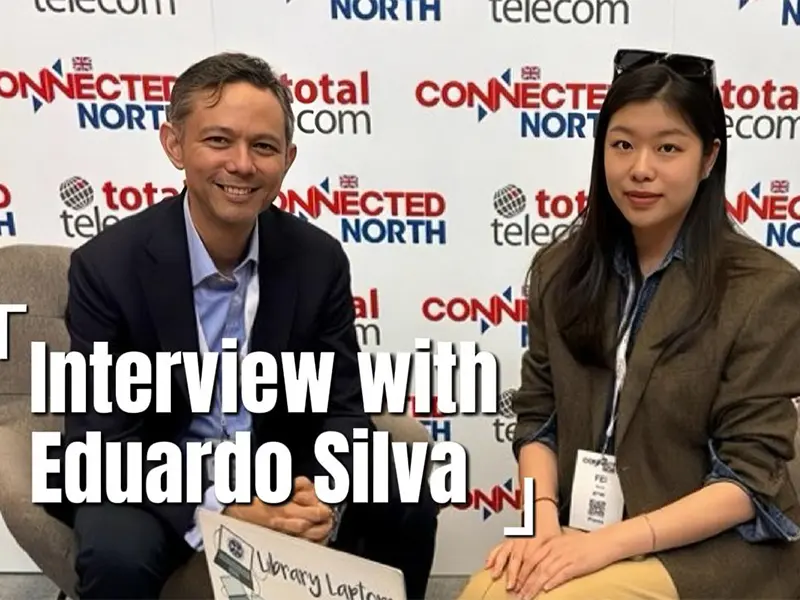
At Connected North 2025, we were speaking with Eduardo Silva, Global Vice President of Telecommunications at Vyntelligence. Standing at the intersection of AI and video technology, he is working to solve the telecom industry’s most challenging ‘generational gap’—how can new engineers quickly take on the heavy responsibilities of operations and maintenance when veteran experts retire, taking decades of experience with them? From the UK to Brazil, the intelligent platforms he leads are transforming human expertise into system-level insights, making tasks like antenna installation and fault diagnosis no longer reliant on traditional apprenticeship. In this interview, Eduardo will reveal how technology is becoming a ‘time capsule’ for industry knowledge and share his vision for the disruptive changes shaping the telecom industry over the next decade.’
Vyntelligence’s AI-powered video tools are solving telecom’s dual challenges of an ageing workforce and ESG accountability. By combining Japan’s “pointing and calling” safety method with real-time remote audits, the platform helped Openreach cut defects by 68% and resolve quality checks instantly. With each video audit reducing carbon emissions by 2.5 kg, Eduardo argues this approach will soon be indispensable for telcos balancing operational efficiency and sustainability targets.
Also read: Connected North 2025: Delivering the north’s connected future
“We’re not replacing human expertise; we’re scaling it.”
Eduardo Silva, Global Vice President of Telecommunications at Vyntelligence
Q1:The industry faces a shrinking skilled workforce. How does Vyntelligence tackle this without compromising service quality?
Eduardo Silva: It’s a systemic issue. By 2030, over 40% of telecom engineers in Europe will retire. Traditional apprenticeships can’t bridge this gap. Our solution combines behavioural nudges and AI-guided workflows. Contractors submit short video walkthroughs of their work, verbally explaining each step—a technique adapted from Japan’s railway safety protocols called “pointing and calling.” This forces self-auditing: “When you narrate your actions on camera, you’re far less likely to skip critical checks.” For Openreach, this reduced defects by 68% and audit failures by 93%. New hires also access a library of expert-led video tutorials, cutting training time by 30%.
Q2: Openreach’s deployment is a standout case. What specific strategies should other telcos adopt?
Eduardo Silva: Three lessons: First, streamline documentation. Openreach slashed 70+ manual questions per job to 10, replacing text forms with 3–4 targeted videos. This shifts focus from paperwork to execution. Second, accelerate payments through real-time remote audits. Previously, contractors waited 10 days for approval; now, supervisors review AI-flagged video clips within hours. “Faster payouts motivate contractors; faster approvals delight clients.” Third, build a feedback loop. When AI detects recurring errors—like incorrect cable splicing—it triggers custom training alerts, creating continuous improvement.
Q3: Digital tools often face resistance from frontline teams. How did Vyntelligence improve user adoption and NPS scores?
Eduardo Silva: Resistance stems from poorly designed tech that adds workload. We prioritised simplicity: contractors record videos directly via SMS links—no app downloads. For customer installations, homeowners film their property’s layout upfront, reducing repeat visits. In one case, a UK fibre provider saw NPS jump 22 points because customers valued the transparency. “Engineers aren’t luddites; they reject tools that waste time. Our platform saves them 1.5 hours daily—that’s why 89% adopt it voluntarily.”
Q4: Openreach’s audit turnaround dropped from 10 days to zero. What technical and cultural shifts enabled this?
Eduardo Silva: Technically, we rebuilt the audit workflow around collaboration. AI scans videos for 50+ quality markers (e.g., cable tension, port alignment), then flags ambiguities for human review. Supervisors prioritise clips where AI confidence is below 85%, cutting their workload by 70%. Culturally, we shifted from punitive inspections to collaborative coaching. “One Openreach manager told me, ‘Now I spend less time chasing errors and more time mentoring engineers.’”
Q5: Beyond compliance, could remote video audits reshape telecom’s ESG goals?
Eduardo Silva: Absolutely. Every avoided site visit saves 2.5 kg of CO2 on average. For Openreach, which handles 30,000 monthly jobs, that’s 75 tonnes monthly—equivalent to planting 1,800 trees. Additionally, video archives provide auditable ESG proof points. “Investors demand sustainability data; our platform turns routine fieldwork into carbon accounting.”
The hidden value of video archives
Beyond immediate quality gains, Vyntelligence’s video logs create long-term value. Eduardo notes that anonymised footage trains AI models to predict infrastructure wear: “A frayed cable in Manchester teaches our system to spot similar issues in Madrid.” This turns routine audits into a global knowledge base.
Also read: Pace Technology enhances construction security with telematics solutions
Redefining Field Supervision
The platform’s success hinges on reimagining leadership. Supervisors transitioned from “fault-finders” to coaches using AI-highlighted clips for targeted feedback. “One engineer improved his splice accuracy from 72% to 94% in a month by reviewing his own flagged videos,” Eduardo shared.