
Summary
- Confirmed event and dates: Qantas said it detected unusual activity on Monday, June 30, 2025, on a third-party platform used by a Qantas airline contact centre, contained the incident, and disclosed on July 2, 2025, that a cyber criminal had targeted a call centre and accessed a third-party customer-servicing platform. (Qantas July 2 statement)
- Scale and data fields: On July 9, 2025, Qantas said forensic analysis found 5.7 million unique customers' data in the compromised system after removing duplicates. The majority of records were limited to name, email address and Qantas Frequent Flyer details, while a smaller portion included address, date of birth, phone number, gender or meal preferences. Qantas said no credit card details, personal financial information or passport details were stored in the system, and passwords, PINs and login details were not accessed. (Qantas July 9 update)
- Regulatory and legal record: The OAIC confirmed on July 2, 2025, updated July 24, that Qantas had notified it of an eligible data breach under the Notifiable Data Breaches scheme and that the office was engaging with Qantas. Qantas's ASX preliminary final report later recorded the incident as a post-balance-sheet event and noted a representative complaint lodged with the OAIC on July 17, 2025. (OAIC statement) (Qantas ASX preliminary final report)
- Accountability frame: The attacker controlled the criminal targeting. Qantas controlled contact-centre dependency, data-field retention, customer notices, support, frequent-flyer assurance, third-party oversight and escalation to government agencies. Regulators controlled privacy engagement. Customers controlled only downstream vigilance after loyalty and contact data had already become abuse fuel.
The Flight Was Safe, But The Customer Record Was Not
The most important boundary in the Qantas incident is also the easiest to miss. Qantas said there was no impact to flight operations or airline safety. That statement matters because airline cyber incidents can quickly invite speculation about aircraft, air traffic or operational safety. The public record for this event is different: it is a customer-data incident tied to a third-party customer-servicing platform used by an airline contact centre. (Qantas ASX preliminary final report)
That boundary does not make the incident minor. It locates the harm in the customer relationship. Airlines do not only move passengers. They store names, addresses, dates of birth, phone numbers, meal preferences, travel support histories, baggage-delivery addresses, loyalty numbers, tier information, points balances, status credits and contact-centre notes. Some of those fields look ordinary in isolation. Together, they create a map of identity, travel habits, status, accessibility needs, family logistics and customer-service pathways.
Qantas's July 2, 2025, statement said a cyber incident occurred in one of its contact centres, the system was contained, customers were being contacted, and the incident happened when a cyber criminal targeted a call centre and gained access to a third-party customer-servicing platform. (Qantas July 2 statement) The current Qantas customer page is more specific about detection: on Monday, June 30, 2025, Qantas detected unusual activity on a third-party platform used by a Qantas airline contact centre, took immediate steps and contained the incident. (Qantas customer cyber incident page)
That timeline makes the accountability question concrete. The incident was not a vague "cyber issue." It was a breach of customer-service infrastructure. The practical question is who controlled access to that platform, why the platform held the fields it held, how contact-centre identity was verified, how third-party access was monitored, how quickly affected customers were told what fields were involved, and how Qantas reduced the risk that stolen loyalty data would be used for scams.
The July 9 Update Changed The Scale
Qantas's July 9, 2025, update is the central factual source. It said forensic analysis had progressed and that, after removing duplicate records, the compromised system held data for 5.7 million unique customers. Qantas divided the records into two broad groups. About 4 million customer records were limited to name, email address and Qantas Frequent Flyer details. Within that group, about 1.2 million records contained name and email address, and about 2.8 million contained name, email address and Qantas Frequent Flyer number, with most also including tier and a smaller subset including points balance and status credits. (Qantas July 9 update)
The remaining 1.7 million customer records included a combination of the above fields plus one or more additional fields: address for about 1.3 million, date of birth for about 1.1 million, phone number for about 900,000, gender for about 400,000 and meal preferences for about 10,000. Qantas said customer records were based on unique email addresses and that customers with multiple email addresses might have multiple accounts. (Qantas July 9 update)
This field breakdown is better than a single headline number because it lets customers distinguish risk. Name plus email creates phishing risk. Name plus email plus frequent-flyer number creates loyalty impersonation risk. Tier, points balance and status credits create a status-authenticity signal that a scammer can use to sound credible. Address and date of birth create a stronger identity-fraud and social-engineering base. Phone number supports smishing and voice scams. Meal preference may sound trivial, but in travel contexts it can indicate medical, religious, cultural or personal information.
The article should not exaggerate. Qantas said no credit card details, personal financial information or passport details were stored in the compromised system and therefore had not been accessed. It also said there was no impact to Qantas Frequent Flyer accounts, and that passwords, PINs and login details were not accessed or compromised. Those exclusions matter. They reduce some immediate fraud paths. They do not remove the abuse value of identity and loyalty fields.
Loyalty Data Is A Trust Token
Frequent-flyer data is not just a marketing field. It is a trust token inside an airline relationship. A person who knows a customer's frequent-flyer number, tier, points balance or status-credit context can sound like the airline, a travel partner, a premium-service agent, a baggage-resolution desk or a loyalty fraud team. That is why Qantas's reassurance that the compromised data was not enough to access frequent-flyer accounts is necessary but incomplete.
On its customer page, Qantas said frequent flyers can continue using the program and partners as normal, that passwords, PINs and login details were not accessed, and that all frequent-flyer accounts have multi-factor authentication or two-factor authentication by default. It also said the information accessed was not enough to gain access to frequent-flyer accounts. (Qantas customer cyber incident page)
That account-access boundary is valuable. But scam economics do not require account takeover. A scammer can use a real frequent-flyer number, a real tier or a real address to persuade a customer to click a fake refund link, provide a one-time code, reveal login information, pay a bogus fee, confirm date of birth, or call a fake support number. The abuse surface is therefore not only "can the attacker log in?" It is "can the attacker sound credible enough that the customer helps them?"
The Cyber.gov.au Scattered Spider advisory, updated July 29, 2025, is not a Qantas attribution source. It is useful threat context because it describes groups that target large companies and contracted help desks, use social engineering, impersonation, SIM swapping and MFA bypass, and often engage in data theft for extortion. (Cyber.gov.au Scattered Spider advisory) The related Cyber.gov.au news item likewise says Scattered Spider targets large companies and contracted IT help desks and uses social engineering techniques. (Cyber.gov.au joint advisory news)
The disciplined use of that source is narrow: Qantas's public record involved a third-party customer-service platform, and public cyber agencies were warning about social engineering against large companies and help desks in the same period. The article should not say Qantas was attacked by Scattered Spider unless an authoritative source says so. It can say the incident belongs to the same governance problem: customer-service and help-desk workflows are now high-value identity surfaces.
Third-Party Does Not Mean Third-Party Accountability Only
Qantas's wording consistently points to a third-party platform used by a contact centre. That matters for architecture. It also creates a familiar accountability trap. A company can say the compromised system was third-party, but customers chose Qantas, not the vendor. The loyalty relationship, customer notice, support line, privacy obligation and public trust burden stayed with Qantas.
The OAIC statement, published July 2, 2025, and updated July 24, confirmed Qantas had notified the office of an eligible data breach under the Notifiable Data Breaches scheme. It also said the OAIC was actively engaging with Qantas on compliance with NDB obligations, and that Qantas was working with the National Cyber Security Coordinator, the Australian Cyber Security Centre and independent cyber security experts. The Australian Federal Police had been notified because of the criminal nature of the incident. (OAIC Qantas statement)
The OAIC's general reporting page explains that an eligible data breach occurs when there is unauthorized access to or disclosure of personal information, or loss likely to lead to unauthorized access or disclosure, the event is likely to result in serious harm, and remedial action cannot prevent the likely risk of serious harm. It also states that notification must include the organization's details, a description of the breach, the kinds of information involved and recommendations for affected individuals. (OAIC report a data breach)
Those sources define the frame. They do not establish that Qantas breached privacy law. They establish that Qantas treated the incident as an eligible data breach and the regulator engaged. The control question remains practical: did Qantas and its third-party provider minimize data, segment access, verify contact-centre identity, monitor unusual activity, limit export, log access, enforce strong authentication, and maintain a tested notification playbook?
The public record confirms some response steps. It does not fully expose the vendor-control evidence. A mature record would tell customers what category of platform was involved, what role the contact centre played, what data fields were necessary for that platform, how access was contained, and what controls changed, without naming sensitive technical details that would help attackers.
Contact-Centre Identity Became The Risk Surface
Contact centres exist to solve customer problems quickly. That makes them valuable and vulnerable. Agents need enough information to identify a customer, retrieve context and act. Attackers want the same path: call, impersonate, persuade, reset, access, export or exfiltrate. If a third-party customer-service platform holds loyalty and contact data, the call centre becomes a data gateway.
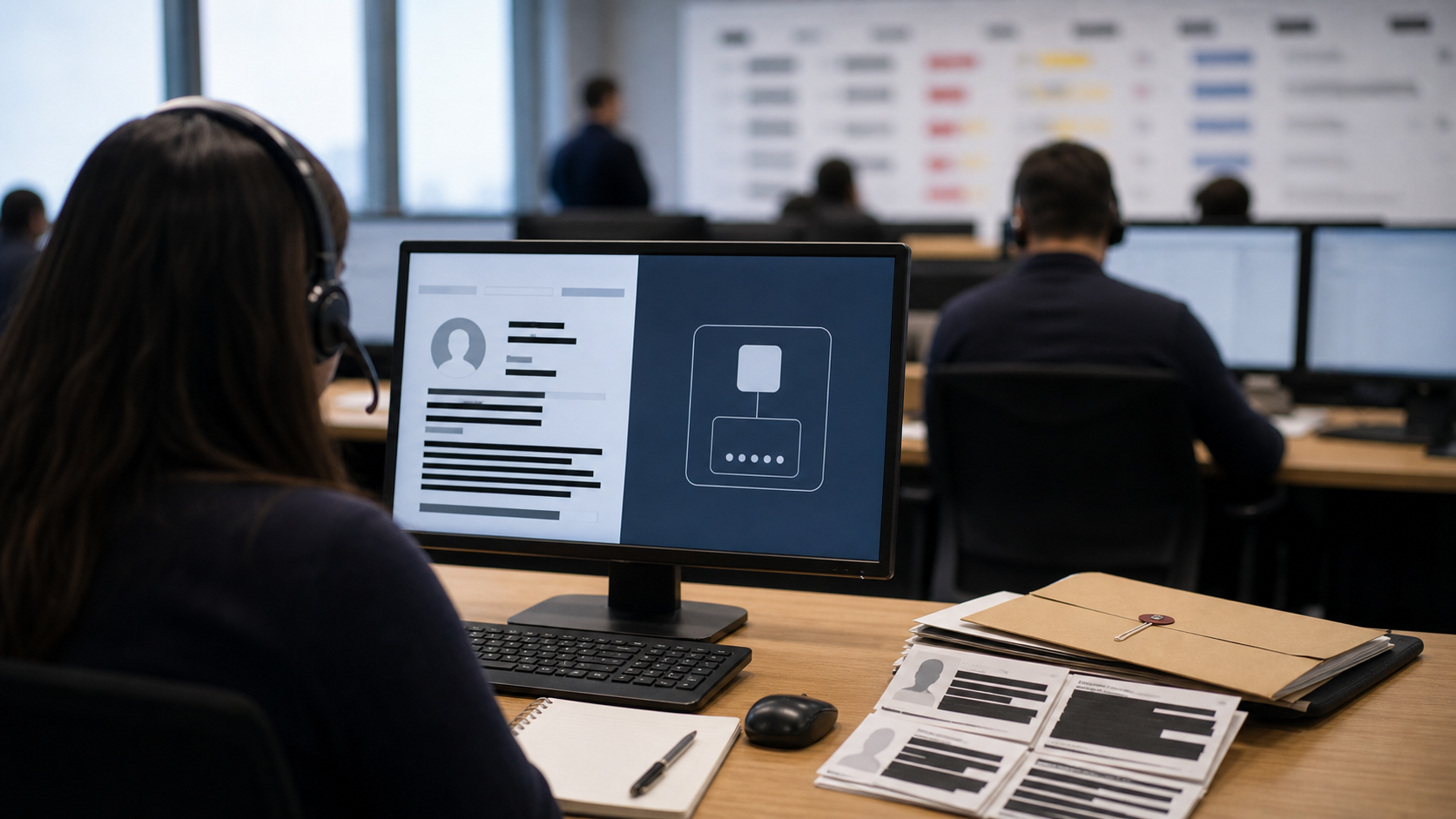
The Qantas public record does not describe the exact social-engineering path. It says a cyber criminal targeted a call centre and gained access to a third-party customer-servicing platform. That is enough to analyze the control surface without inventing a technique. The control surface includes agent authentication, supervisor approval, third-party access controls, session monitoring, query limits, export restrictions, device controls, API logging, and field-level masking.
It also includes the human process: what agents can see before verifying identity, what scripts are used, what exceptions are allowed, and what unusual activity alerts are generated.
OAIC's ACSC advice page says cyber criminals use common tricks to get employees to reveal organizational credentials and recommends staff awareness, MFA for remote access and privileged action, suspicious-login monitoring, caution around credential entry, patching and anti-virus protections. (OAIC and ACSC prevention advice) That is general advice, not Qantas-specific evidence. It identifies the control categories that contact-centre operators should be able to prove.
The point is not that every customer-service platform is unsafe. The point is that a customer-service platform is a privileged view of people. It often combines enough fields to authenticate a person and enough history to persuade them. When that view is held by a third party, the airline's vendor governance must be as strong as its loyalty ambition.
The Date Sequence Matters
Because this was a 2025 incident, exact dates matter. On Monday, June 30, 2025, Qantas detected unusual activity on the third-party platform. On July 2, 2025, Qantas publicly confirmed the cyber incident and said the system was contained. On July 9, 2025, Qantas published the 5.7 million unique-customer analysis and field categories. On July 17, 2025, Qantas said it had obtained an interim injunction in the NSW Supreme Court to prevent the stolen data from being accessed, viewed, released, used, transmitted or published by anyone, including third parties. (Qantas July 17 update)
On August 28, 2025, Qantas's preliminary final report recorded the cyber incident as a post-balance-sheet event. It said the group announced on July 2 that a cyber criminal targeted a call centre and gained access to a third-party customer-servicing platform; it also said there was no impact to flight operations or airline safety. The same note said Qantas notified the OAIC and communicated with the Australian Cyber Security Centre and the Australian Federal Police.
It also noted that on July 17, Maurice Blackburn made a representative complaint to the OAIC against Qantas, claiming Qantas failed to adequately protect customer personal information. (Qantas ASX preliminary final report)
On September 11, 2025, Qantas's customer page update repeated the data-field categories and support line. On October 12, 2025, Qantas updated the page to say it was one of a number of companies globally that had data released by cyber criminals after a cyber incident in early July, where customer data was stolen through a third-party platform. Qantas said it was investigating what data was part of the release and that an ongoing NSW Supreme Court injunction was in place. (Qantas customer cyber incident page)
That sequence shows why breach accountability is not a single notice. The first notice contained and announced. The second notice quantified and categorized. The third notice used legal process to reduce publication risk. The later notice addressed release. Each stage changed what customers and regulators needed to know.
The Injunction Was A Harm-Reduction Tool, Not A Deletion Tool
Qantas's July 17 update said it obtained an interim injunction from the NSW Supreme Court to prevent stolen data from being accessed, viewed, released, used, transmitted or published. Its customer page later described an ongoing injunction. (Qantas July 17 update) (Qantas customer cyber incident page)
That legal step should be understood carefully. An injunction can deter lawful publishers, intermediaries, researchers and third parties within the court's practical reach. It can reduce casual spread and signal that the company is trying to protect customers. It cannot make a criminal actor delete stolen data. It cannot guarantee that data will not circulate in criminal channels. It cannot replace support, monitoring, field-specific notification or data-minimization review.
The October 12 update proves the limitation. Qantas said data had been released by cyber criminals and that it was investigating what data was part of the release. The injunction remained part of the response, but the harm model had shifted. Once data is released, customers need clear field confirmation, scam warnings, identity-support pathways, and reassurance about what was not exposed. They also need the company to avoid overstating what legal tools can achieve.
This is not a criticism of seeking an injunction. It is a boundary. Legal containment is one layer of harm reduction. It is not technical containment, criminal disruption, field minimization or customer recovery. The best public language would describe it as one control among several: support line, identity advice, scam monitoring, regulator notification, law enforcement, vendor remediation and customer-field notices.
Scammers Did Not Need Passwords
Qantas repeatedly warned customers to remain alert for email, text and telephone scams, especially communications purporting to be from Qantas. It said it was aware of increased reports of scammers impersonating Qantas and attempting to use heightened awareness of the incident to entice customers to click links or share personal details. It said Qantas would never contact customers requesting passwords, booking reference details or sensitive login information. (Qantas customer cyber incident page)
That advice is necessary because the breached fields make scams more believable. A scam that starts with "Dear customer" is easier to spot than one that includes a real frequent-flyer number, tier, address or recent baggage-delivery address. A scammer with date of birth and phone number can pass some weak verification scripts. A scammer with meal preference or status information can make a phishing message feel travel-specific. The harm is not only identity theft. It is personalization of fraud.
Cyber.gov.au's scam guidance explains common scam types, including phishing emails and texts, remote access scams and impersonation methods. (Cyber.gov.au scam types) Qantas also pointed customers to the National Anti-Scam Centre's Scamwatch page and IDCARE. (Scamwatch) (IDCARE Learning Centre)
These downstream resources are useful. They also show the shifted burden. Customers must now monitor calls, texts and emails with extra suspicion. Some will need to secure personal email accounts because email access can be a path into travel accounts, password resets and identity fraud. Some will need to educate family members who manage bookings together. Some will need to separate real Qantas communication from fake Qantas communication after Qantas itself has told them to expect emails. That is the abuse-contact economics of the incident: a data breach makes every future contact more expensive to trust.
Field Minimization Is The Uncomfortable Question
The strongest long-term question is why each field was in the customer-service platform. Some fields make obvious operational sense. Name and email identify a customer. Frequent-flyer number connects a service interaction to loyalty status. Phone number helps return calls. Address may support baggage delivery, refunds, special handling or identity confirmation. Date of birth may support verification. Meal preference supports travel service. Tier, points balance and status credits may help loyalty support.
But operational usefulness is not the same as unlimited retention. Data minimization asks whether the field is needed in that platform, for that agent role, for that time period, in full detail, under those export rules. Does every contact-centre workflow need address? Does it need full date of birth or only an age flag? Does it need points balance, or can it query a separate loyalty system only when needed? Does it need meal preference after travel is complete? Does it need hotel addresses used for misplaced baggage delivery after the baggage case closes?
Qantas's field breakdown makes the minimization issue visible. The smaller the exposed field set, the lower the downstream abuse value. Qantas's exclusions - no credit card details, personal financial information, passport details, passwords, PINs or login details - show minimization working in important areas. The remaining exposure shows that identity and loyalty fields still create harm even when financial and passport fields are absent.
The best vendor-governance standard would require a field inventory for every customer-service platform: field name, source system, purpose, retention, role access, masking, exportability, logging, and whether the field is needed for live support or only historical lookup. Without that inventory, a company learns its real data product only after breach analysis.
The Representative Complaint Keeps The Record Open
The ASX preliminary final report noted that Maurice Blackburn made a representative complaint to the OAIC on July 17, 2025, claiming Qantas failed to adequately protect customers' personal information. Maurice Blackburn's own media statement said it filed an official complaint with the OAIC and sought compensation for affected customers. (Maurice Blackburn media statement)
This should be handled with care. A representative complaint is not a final regulator determination. The complaint alleges failure. Qantas may contest the allegations, provide evidence, remediate, settle, or receive a regulator finding later. The article should not convert a complaint into proof of unlawful conduct.
Still, the complaint is part of the accountability record because it shows affected customers seeking a formal privacy process. It also shows that the incident will be judged not only by whether Qantas responded quickly, but by whether preincident controls were reasonable given the data held, the third-party platform, the call-centre access surface and the foreseeable scam consequences.
Qantas's FY25 results release said 5.7 million customers were impacted by a cyber incident in June, additional protections were put in place, and the airline continued to support impacted customers with a support line and specialist identity-protection advice. (Qantas FY25 results release) The annual-report record likewise captured the event after balance date. (Qantas 2025 annual report via ASX)
Those investor sources show that the incident moved from customer notice to corporate reporting. That transition matters. A data breach involving more than five million customers is not only a support matter. It becomes a governance matter, a legal-risk matter and a trust matter.
Cross-Border Notification Was Not A Footnote
Qantas is an Australian airline with international customers and operations. Its customer page says it disclosed the incident to the Federal Government's National Cyber Security Coordinator, ACSC, OAIC, and privacy and data-protection regulators in other relevant jurisdictions, including New Zealand's Office of the Privacy Commissioner in accordance with section 114. (Qantas customer cyber incident page)
That cross-border note is important because data sovereignty is not only Australian privacy law. A Qantas customer may live in New Zealand, the United States, Europe or Asia. A contact-centre platform may support interactions across jurisdictions. A baggage-delivery address may be a hotel. A business address may reveal employer context. A frequent-flyer account may be used with partners. Privacy obligations therefore travel through customer location, data subject rights, regulator expectations and third-party platform contracts.
The public record does not provide a full jurisdiction-by-jurisdiction map. It does show Qantas recognizing more than one regulator. A mature cross-border breach record would explain, in customer-facing terms, how notices differ by region, which regulators were notified, what support is available to non-Australian customers, and whether identity-protection advice is locally useful. A support line based around Australian numbers may not be enough for a customer in another time zone, even if an international number exists.
Data locality also includes platform locality. Qantas said the incident involved a third-party customer-service platform used by a Qantas airline contact centre. Public reports described call-centre geography, but Qantas's official pages do not need geography to establish the governance issue. Whether the platform, staff or data sat in one jurisdiction or several, the airline owned the customer relationship and had to coordinate notification across privacy regimes.
Current Public Sources Changed The October Picture
The October 12, 2025, Qantas customer-page update changed the public state of knowledge. Earlier, Qantas said there was no evidence that stolen personal data had been released. By October 12, it said Qantas was one of a number of global companies that had data released by cyber criminals after the early July incident, and it was investigating what data was part of the release. (Qantas customer cyber incident page)
That evolution is why current sourcing matters. An article based only on July 9 or July 17 would be stale. The risk model after release differs from the risk model before release. Before release, customer harm reduction focuses on notification, monitoring, injunction, scam warning and support. After release, it must also address the likelihood that criminals, scammers, data brokers or opportunists may be able to use portions of the data.
The customer notice still matters because Qantas said the July advice to impacted customers about data fields had not changed. That means customers should not infer new field categories solely from the October update, unless Qantas or another verified source says so. The correct public statement is: Qantas confirmed data had been released by cyber criminals, was investigating what data was part of the release, and had previously advised impacted customers of the field categories contained in the impacted system.
That distinction protects accuracy. It avoids treating criminal publication as proof that every field for every customer was included. It also avoids false reassurance. Release changes the practical risk even if the field categories remain the same.
What Qantas Controlled
Qantas controlled the customer promise. It controlled what data fields were collected, which systems were selected for customer service, how third-party providers were contracted and monitored, what data was stored in the platform, what fields were visible to agents, how anomalies were detected, how customers were notified, what support was offered, and what language described the account-access boundary.
Qantas also controlled the clarity of exclusions. Its repeated statements that no credit card details, personal financial information, passport details, passwords, PINs or login details were accessed are useful because they reduce specific fears. But those exclusions should be paired with equally clear statements about included fields. Qantas did that on July 9 with approximate counts. That was good disclosure practice.
Qantas controlled the support architecture. It established a 24/7 support line and said customers could access specialist identity-protection advice and resources through the team. It pointed people to Scamwatch, Cyber.gov.au, IDCARE and OAIC. That support architecture should be assessed by availability, specificity and duration. A breach whose data is released months later needs support that lasts beyond the first notification cycle.
Finally, Qantas controlled how it spoke about the third-party platform. A company should not reveal details that help attackers. But it can tell customers what class of data was exposed, what class of platform was involved, what controls were improved, how monitoring changed, how training changed and how vendor oversight was strengthened. The October update said Qantas put in place additional security measures, increased training and strengthened monitoring and detection since the incident. That is directionally useful. It is not a detailed remediation account.
What Customers Controlled
Customers could check whether they received a Qantas email, review field-specific notices, remain alert for suspicious messages, use two-step authentication on personal accounts, avoid sharing passwords or financial information, independently verify callers, report scams to Scamwatch and seek identity-protection advice. Those are practical steps. Qantas listed many of them on its customer page. (Qantas customer cyber incident page)
Customers could not control whether the third-party platform held their data. They could not audit the contact centre. They could not decide whether tier or points balance should be visible in that environment. They could not stop the initial access. They could not force criminals to delete data. They could not know whether an incoming call using real details was legitimate without extra work. They could not fully undo exposure of date of birth, address or frequent-flyer number.
This asymmetry is the reason abuse-contact economics belongs in the article. The company and its vendor held the data for service convenience and loyalty operations. After breach, customers pay the attention cost: extra verification, suspicious calls, changed email hygiene, anxiety about personalized scams, and possible future identity checks. A support line helps, but it does not return the customer's baseline trust.
The best customer-facing response therefore must be field-specific. A customer whose exposed data is name and email needs different advice from a customer whose exposed data also includes date of birth, phone number and address. A customer whose record includes tier or points balance needs advice about loyalty impersonation. A customer whose address was a hotel for misplaced baggage delivery needs context that the address may not be their home address. Qantas's field-specific email approach was the right direction. The quality of those emails is not fully visible in the public record.
What Better Evidence Would Look Like
A stronger public postincident record would answer several questions.
First, it would provide a platform-control explanation. Without naming sensitive systems, Qantas could describe the third-party customer-servicing platform category, the data-source relationship, the agent role model, the broad containment step, and the reason Qantas systems remained secure.
Second, it would provide a field-minimization review. For each exposed field category, Qantas could explain why the field was in the platform, whether it remains there, whether it is masked, whether retention changed, and whether agent access changed. This is especially important for date of birth, address, phone number, meal preference, tier, points balance and status credits.
Third, it would provide a vendor-governance update. Customers do not need contract terms, but they need evidence that third-party access controls, monitoring, incident notification, export restrictions and employee training were reviewed.
Fourth, it would provide a support-duration promise. If stolen data has been released, support should not expire quietly. Customers need to know how long the 24/7 line, specialist identity advice, scam monitoring and complaint handling will remain available.
Fifth, it would provide a regulator-status boundary. Qantas can say the OAIC was notified and that a representative complaint exists without accepting allegations. It can also provide updates when regulator engagement changes, while avoiding any claim that the matter is resolved before it is.
Finally, it would provide current updates with versioning. The October update changed the public state from "no evidence of release" to "data released by cyber criminals." A clearly versioned incident page helps customers understand what changed, what did not change and what action, if any, they should take now.
The Lesson Is Loyalty Governance
The Qantas incident shows that loyalty data is not harmless because it is not a passport or credit card. A frequent-flyer number, tier, points context, email address and phone number can make an attacker sound legitimate. A date of birth and address can strengthen identity misuse. A meal preference can reveal personal context. A baggage-delivery address can expose travel disruption or temporary location. The risk sits in combination.
Qantas did several things the public record can credit: it disclosed quickly, quantified the affected population, published field categories, distinguished included and excluded data, maintained a customer page, notified regulators, worked with government agencies and police, set up 24/7 support, obtained an injunction and later updated customers when data was released. Those actions do not answer every control question, but they are part of the accountability record.
The unresolved question is upstream control. Why did the platform hold the fields it held? How was contact-centre access verified? How did the attacker gain access? What third-party controls failed or were bypassed? What monitoring detected unusual activity? What export limits existed? What data was removed, masked or segmented afterward? What changed in training and detection beyond the general statement? Those answers matter because airline loyalty programs are identity systems in practice, even when they are marketed as rewards.
The lesson is not that airlines should collect no data. Airlines need customer data to operate. The lesson is that every convenience field has to justify its place in the support environment. When a third-party contact-centre platform becomes the point of compromise, airline accountability is measured by how clearly the company can prove minimization, access discipline, vendor oversight and harm reduction after the customer's trust token leaves the airline's control.