
Topic
Regional ISP Economics
Within the Topic facet, Regional ISP Economics topic intelligence connects articles that share a specific subject, signal focus, or monitoring theme. The page gives readers a richer path through related reporting, source evidence, market actors, and infrastructure implications, with enough context to understand why the topic matters across company movements, governance decisions, regional exposure, and operational risk. Readers can compare recurring signals, affected organisations, public evidence, market context, service continuity, procurement, competition, compliance, and strategic planning questions behind the subject instead of stopping at a thin list of matching articles. It explains what the topic covers, which infrastructure actors or policies are involved, what evidence supports the coverage, and why the subject may matter for operators, customers, investors, and policy readers.

History
Four Plans, One Meter: BruNet’s 1995 Dial-Up Tariff
A December 1995 message from Brunei’s Telecommunications Department records four BruNet plans, each pairing a monthly subscription with a stated dollar value of “free traffic,” then charging extra use by the minute at different peak and off-peak rates.

History
Libya’s Internet Had More Than One Opening Date, 1998–2000
Libya’s Internet chronology changes with the threshold being measured: institutional connection, licensed service, eligibility to connect, and ordinary public use do not begin on the same day. Contemporary accounts disagree most sharply just as public venues started to appear.

History
A Twice-Daily Call Kept the Network Going: Vanuatu’s Pacific S.D. Network, 1994–96
In Vanuatu, one small development network had a name in the global host list before it had stable local IP service. By December 1996 it still called Sydney twice a day over dial-up, using a FidoNet system, while a local TCP/IP upgrade remained a plan the group could not yet…

History
A Cent for Every 320 Bytes: How BELINET Financed Belize’s International Mail
In 1994, the University College of Belize faced an unusual constraint: the international telephone call could cost more than the messages it carried. BELINET pooled institutions around a monthly site fee and a charge for each 320-byte block of international email.

North America National Telecom Trends
Leaving Canada’s telecom fund does not erase the bill
Canada’s new fund rules give telecom providers three years to pay contributions already recorded against them, even after they lose contributor status. The CRTC also halves the fund’s prescribed balance. The two changes smooth one side of the system while reducing its cash…

Latin America and Caribbean Regional ISP
A Registry Listing Without a Network: Colombia's Vahos Telecom Association and the Limits of Numbering Evidence
A community association in Colombia carries an operator identity in BTW's directory, a paper trail that points at the number-resource world, and almost nothing else that a reader can check. This report separates what a registry listing can and cannot certify for a rural ISP, and…

History
Mongolia’s UUCP Mail Ran Ahead of Its Permanent Internet, 1994–96
Mongolia’s early international email used scheduled exchanges between Datacom’s domestic bulletin-board system and an outside mail host. The records distinguish that service from the permanent satellite Internet connection that followed.

History
Kiribati’s 128 kbps Backbone Had Only 32 Dial-up Ports, 1999–2001
Kiribati’s first reported commercial Internet service paired a narrow international link with a small dial-up modem bank. A 2001 account suggests that the connection people could actually obtain mattered more than the headline capacity.

History
SezamPro Needed More Than a Dial Tone to Become an ISP
SezamPro began as a dial-up online service. Connecting its users to the Internet took a separate chain: a BBS, an academic-network handoff, an email gateway, a public café, more telephone lines and, eventually, a provider circuit.

Story
LACNIC links an operator’s ASN to the freedom to change providers
LACNIC links an operator’s ASN to the freedom to change providers intelligence summary explains the development, the public evidence available to readers, the organisations involved, the regional context, market exposure, and the infrastructure consequences that may follow. The…
History
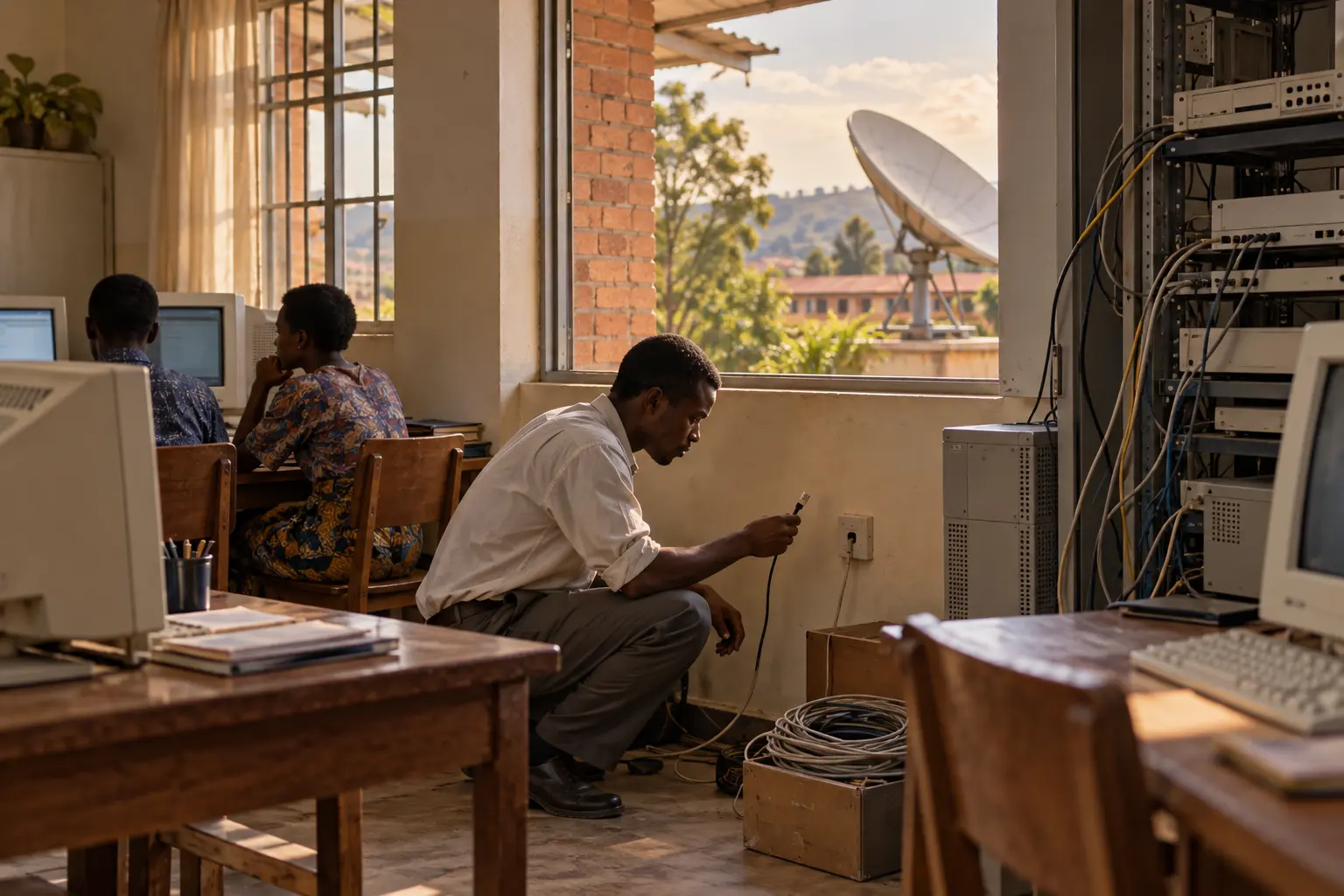
Rwanda Received the VSATs Before the ISP Market Opened, 1996–2001
A gateway, an Internet service, a university connection and a competing provider were different things in Rwanda’s late-1990s network. The record becomes clearer when each is dated separately—and when later accounts that use “service” differently are left visibly unresolved.

History
One Gateway, Two Internet Providers: Samoa’s 1998 Dial-up Network
Samoa’s first-ISP chronology is unsettled, but a 1998 field report records a clearer milestone: Telecom Samoa installed a shared gateway so two retail providers could reach the international link. The cutover shows where the route, the customer service and the operational…

History
The Internet Arrived in Stages: Papua New Guinea’s 1997 Launches
Papua New Guinea’s Internet did not enter the record as one switch thrown on one day. A carrier announcement, an international gateway, retail providers, academic use and a public website each marked a different kind of arrival—and the sources assigned them different dates.

Europe and Middle East National Telecom
EI Towers: Reported Control, Unverified Leverage and a Tie-Up That Stopped at the Deadline
Italy's principal independent broadcast tower operator is simple to describe and hard to document: the ownership split, the debt and the service contract that decide its economics all sit behind a delisting completed in 2018, and the record available for this briefing reaches…

History
Karachi Went Online; Four Cities Still Waited for the Upgrade: Digicom in 1995
In August 1995, a Karachi company could offer a live route to the Internet while the service reported in four other cities still belonged to the slower world of stored mail. Pakistan’s first commercial online service was a real connection, but its launch did not make the same…

North America National Telecom
Ripple’s sale gives fiber expansion two different scorecards
Eaton Fiber acquired Ripple Fiber as Verizon took most of Ripple’s existing customers and some network assets. The close expands a wholesale build platform, but its progress will only be legible if construction, customer migration and service continuity are measured separately.

History
The Network Was Free. The Internet Had to Pay Its Way: Zambia’s ZAMNET, 1991–95
A university email network reached hundreds through scheduled calls before Zambia had a direct Internet circuit. Turning that shared system into a public service demanded a company, outside financing and a way to pay recurring costs.

History
The First Ping Was Only One Route: Mauritius’s Internet, 1993–96
In Mauritius, a 1996 traceroute showed that one named host could be reached from the United Kingdom. It did not show who could use the service, how widely it was available, or when the island first joined the Internet. The record becomes clearer when email relays, a route, a…

History
The Café Was Public; Its Users Were Accounted For: Tunisia’s PubliNet Rules
Tunisia tried to widen Internet access through small public centres. The record also shows how a café became a managed access point, where the operator’s duties shaped what “public” meant.

Asia-Pacific National Telecom Trends
India’s mobile data volume grew; revenue per gigabyte fell
TRAI’s April–June figures show traffic expanding faster than the reported value earned per unit of data, while wireless ARPU rose modestly. Those indicators describe different sides of the business and do not explain one another.