
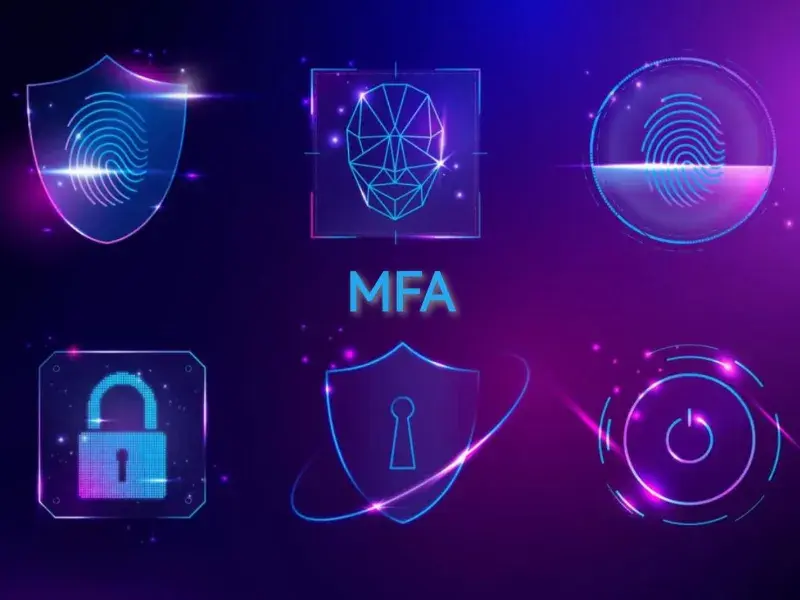
- Multi-factor authentication(MFA) provides enhanced security by requiring two or more authentication factors, making it more difficult for attackers to gain unauthorised access.
- By using a combination of factors such as knowledge (passwords), possession (hardware tokens), and inherent (biometrics), multi-factor authentication helps prevent identity theft and meets compliance requirements.
- Organisations can enable multi-factor authentication by selecting appropriate factors, leveraging authentication services, and regularly reviewing and updating their authentication schemes to stay ahead of evolving security threats.
Traditional username and password authentication methods are not secure enough in the face of increasingly sophisticated cyber threats, as passwords can be compromised, guessed, or brute-force broken. The need for more secure authentication protocols is increasing as attackers have more and more sophisticated tools at their disposal. Multi-factor authentication provides a stronger layer of security by introducing additional authentication factors.
What is multi-factor authentication?
Multi-factor authentication is a simple and effective approach to security practices designed to provide two or more layers of authentication protection. The three most common authentication factors include knowledge (something the user knows), possessions (something the user owns), and inherent (something the user is). This approach improves security because even if one factor is compromised or cracked, an attacker will still need other factors to access a user account or system.
Especially in the face of increasingly sophisticated cybersecurity threats, the implementation of MFA can effectively reduce unauthorised access and improve account security.
Also read: What do telecom companies do?
Three authentication factors
Knowledge
The main factors include the traditional passwords and pin codes used in daily life, as well as the security questions set by yourself. However, additional authentication factors are also essential for users who are more afraid of the hassle of forgetting their account passphrase than security breaches.
Inherent
A user’s biometrics cannot be changed and are independent of any device, mainly including fingerprints, face and iris recognition. Although they are expensive to forge and crack, they are still a risk to security, so biometrics are constantly being improved.
Possession
There are relatively more technologies derived from external passwords, including dynamic passwords, SMS, emails and digital certificates. Among them, the authentication method of sending a verification code through SMS or email is the most common second authentication factor at present. However, this method has the risk of being maliciously intercepted.
The authentication methods of time-based dynamic passwords and SMS emails are relatively similar, and their security is better due to the fact that they are generated directly on the device held by the user without involving a third-party network, but the process of authentication is subject to strict time limitations, and the user experience is poorer.
Also read: How does Atlas robot work?
Why is multi-factor authentication important?
1. Improved security
Traditional usernames and passwords are easily stolen or cracked, especially when using weak passwords or subject to phishing attacks. Multi-factor authentication greatly reduces the risk of being compromised by attackers and improves system security by introducing additional authentication factors.
2. Preventing identity theft
Identity theft is a common form of cybercrime in which attackers impersonate users by stealing their login credentials. Multi-factor authentication allows attackers to require more information and resources to successfully impersonate a user’s identity, thus effectively preventing identity theft.
3. Meeting compliance requirements
Many industries and government agencies have strict compliance requirements for data security, especially when it comes to personally identifiable information and financial data. Multi-factor authentication is often seen as an effective way to meet compliance requirements, helping organisations to comply with laws, regulations and industry standards.
4. Enhanced user experience
Although multi-factor authentication increases the complexity of the login process to some extent, it also provides users with a higher level of security. With a properly designed multi-factor authentication scheme, security and user experience can be balanced to enhance users’ trust in the system.
How to enable multi-factor authentication?
1. Selecting appropriate certification factors
When implementing multi-factor authentication, organisations need to choose the right authentication factors based on their needs and risk profile. It is often recommended to combine different types of factors, such as using passwords (knowledge) plus cell phone verification codes (possession), or fingerprint recognition (inherent) plus USB keys (possession).
2. Using multi-factor authentication services
Many cloud service providers and identity solution vendors offer sophisticated multi-factor authentication services that can help organisations quickly implement multi-factor authentication without having to develop and maintain their own authentication systems. These services typically offer flexible integration methods and robust security features for organisations of all sizes and needs.
3. Regular reviews and updates
As security threats continue to evolve, multi-factor authentication programs need to be regularly reviewed and updated. Organisations should pay close attention to security vulnerabilities and best practices, and adjust and optimise their multi-factor authentication schemes in a timely manner to ensure the continued security of their systems.
In conclusion, multi-factor authentication is an effective way to improve the security of authentication, which not only relies on a single password, but also combines other factors to increase the difficulty of attackers. Although there are still some loopholes in the current multi-factor authentication technology, with the continuous development of technology, the method of multi-factor authentication is also evolving, bringing more innovation and convenience for users.