

- B2B fintech streamlines financial processes and enhances operational efficiency by automating tasks such as payment processing, invoicing, and cash flow management, reducing errors and freeing up time for strategic activities.
- B2B fintech provides access to alternative financing options, offering faster funding decisions and flexibility in terms, particularly beneficial for SMEs facing financial challenges and looking for rapid access to capital.
- B2B fintech empowers businesses with data-driven decision-making tools and advanced analytics, enabling insights into market trends, customer behaviour, and financial performance, leading to informed strategic decisions and competitive advantage.
Fintech, short for financial technology, refers to the innovative use of various technological means to improve the products and services offered by the traditional financial industry, enhancing efficiency and effectively reducing operational costs. According to the Financial Stability Board (FSB), financial technology encompasses a range of technological innovations such as big data, cloud computing, artificial intelligence, and blockchain, which are comprehensively applied in six major financial areas including payment clearing, lending and financing, wealth management, retail banking, insurance, and transaction settlement. This represents the mainstream trend of the financial industry in the future.
Fintech business models are generally divided into B2B (Business-to-Business), B2C (Business to Consumer), and C2C (Consumer to Consumer), with this blog primarily focusing on the B2B model.
Introduction to B2B fintech
B2B refers to a business model where companies exchange and transmit data and information, as well as conduct transaction activities, through dedicated networks or the Internet. It integrates a company’s internal network and its products and services with customers via B2B websites or mobile apps, providing better services to customers through rapid network response, thereby promoting business growth.
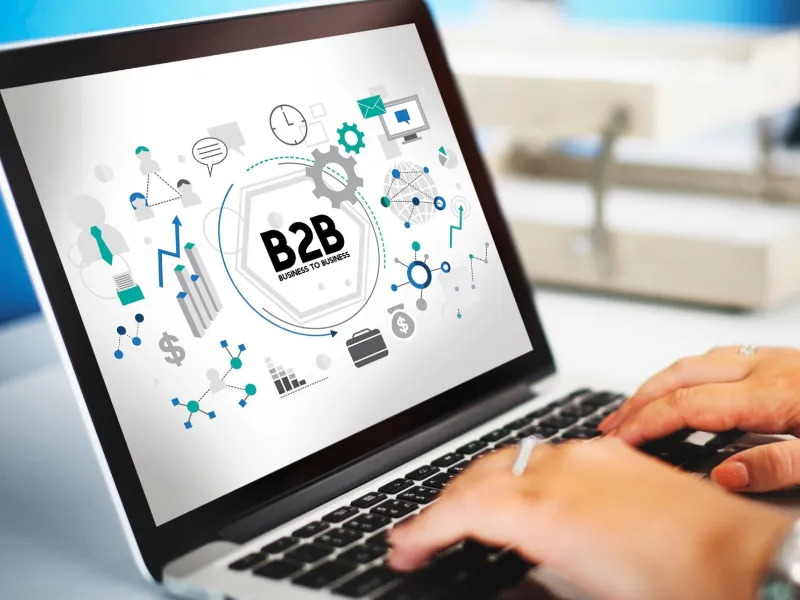
B2B fintech specifically targets financial transactions and services between businesses with financial technology solutions. These solutions aim to improve financial and transaction processes between companies, increase efficiency, reduce costs, and enhance the security and reliability of financial operations. B2B fintech typically covers multiple areas, including payments, loans, investments, fund management, risk assessment, and more.
Also read: The world’s best fintech B2B payment providers
Key components of B2B fintech
1. Payment and collection solutions
B2B fintech offers advanced systems for payment and collection, automating processes like payment gateways, e-wallets, and payment links to streamline financial transactions between businesses.
2. Management of operational funds
Effectively managing operational funds is essential for business success. B2B fintech provides tools to improve cash flow, handle receivables and payables, access real-time business data, and ensure sufficient liquidity for smooth operations.
3. Streamlining supply chain processes
B2B fintech platforms are reshaping supply chain processes with innovative financing solutions, leading to workflow optimisation, reduced errors and costs, and enhanced collaboration throughout the supply chain.
4. Platforms for business lending:
The lending landscape for businesses has been transformed by fintech. Online platforms and alternative lenders leverage technology to offer faster funding, flexible terms, and data-driven lending decisions.
5. Data-driven insights and analytics:
B2B fintech utilises data analytics to offer actionable insights. Real-time visibility and optimised financial methods enable data-driven decision-making, providing businesses with valuable business intelligence.
Also read: What is open banking? A short guide
Why B2B fintech is needed?
1. Enhance operational efficiency and productivity
B2B fintech solutions are tailored to automate repetitive and time-consuming financial tasks. This not only reduces the risk of errors associated with manual processes but also liberates your finance team’s time, allowing them to focus on strategic activities.
2. Optimise cash flow management
B2B fintech tools enable you to optimise cash flow by automating tasks such as invoicing, payment tracking, and working capital management. This helps maintain a healthy balance between receivables and payables, ensuring efficient financial operations.
3. Access to alternative financing
Traditional lending processes can be lengthy. B2B fintech introduces alternative lending platforms that use technology to quickly assess creditworthiness and provide businesses with rapid access to funding, which is particularly beneficial for SMEs facing financial challenges.
4. Streamline payment processes
B2B fintech solutions simplify and expedite payment processes through digital payment platforms, e-invoicing, and real-time transactions. This leads to faster, more secure, and cost-effective payment methods, improving operational convenience and fostering stronger relationships with stakeholders.
5. Data-driven decision-making
B2B fintech empowers businesses with advanced analytics and business intelligence tools. These tools leverage data to offer insights into market trends, customer behavior, and financial performance, providing a strategic advantage in decision-making within a competitive business environment.
6. Enhance transparency and security
B2B fintech solutions enhance transparency and security in financial transactions. Advanced encryption technologies ensure secure transmission of payment data and sensitive customer information, fostering trust and confidence in business operations.
7. Embrace digital transformation
With the rapid digital transformation of the global business landscape, adopting B2B fintech solutions positions businesses to adapt to evolving market dynamics, meet customer expectations, and remain competitive in a digital-first environment.
8. Access customised financial solutions
B2B fintech platforms offer customisable solutions tailored to meet specific financial needs. Whether adjusting payment terms, credit limits, or creating personalised financial dashboards, these platforms provide flexibility to address unique industry and business requirements effectively.
B2B fintech empowers businesses to thrive in the digital era through streamlined financial processes, data-driven decision-making, and alternative financing access. These advantages, diverse and impactful, position companies for ESG compliance and success in Industrial 4.0’s transformative era.
As businesses navigate an evolving landscape, integrating B2B fintech is crucial in strategic planning. Whether a small startup or established enterprise, adopting fintech solutions provides the tools and insights to navigate modern finance efficiently.