
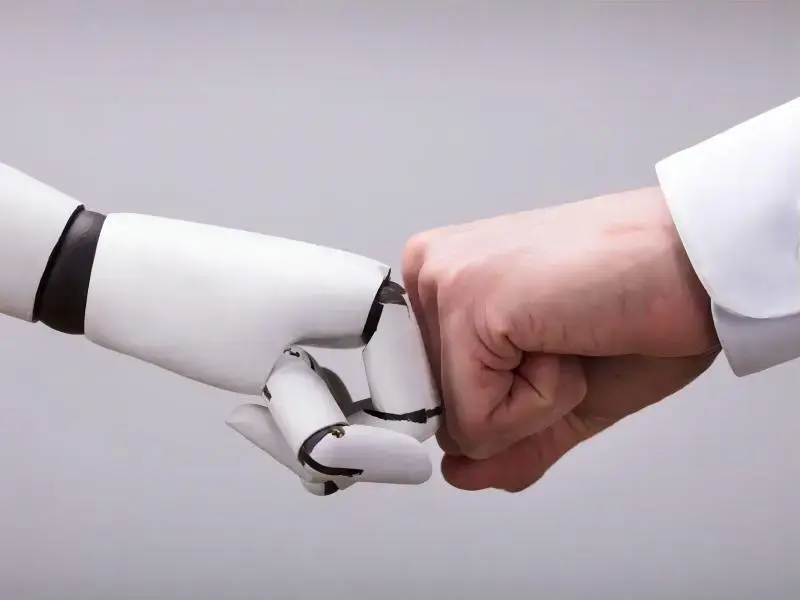
- A robot is an autonomous machine capable of sensing its environment, carrying out computations to make decisions, and performing actions in the real world.
- With the widespread of robots encompassing our everyday lives, not only does it make our work more efficient; but it’s also cost-saving in the long-term.
- Robots can handle long-term tedium, explore space, industrial tasks, disaster response, and medical procedures.
Robots are technologically advanced machines that carry out complex tasks by command. With the combination of computer designs and technology, they usually come in different shapes, sizes and functionalities. While some robots carry out tasks without supervision, others function with command. Ultimately, it all comes down to the most important aspect, which is to make our life better.
Amazing science fiction tasks were once only found in books and movies, but with the development of robotics, they are starting to come true. However, what precisely are these jobs that are making robots more advanced than humans? Maybe it can operate in radioactive environments or endure extremely high or low temperatures. Or perhaps it’s the accuracy needed to carry out complex tasks at the microscopic level.
Benefits from the use of robot
Increases work efficiency & productivity
Robots are here to carry out the impossible tasks on behalf of human workers. Mainly because they are more precise and versatile than human workers. As a result, there is a lower failure rate, which increases the production and profit margin in conjunction with its speed. However, there are no indefinite results that prove robots don’t make mistakes. These robots certainly make fewer errors compared to humans.
Promote skilled workers
The implementation of robots in the working society means that there will be fewer repetitive jobs in the future. While it undeniably reduces job opportunities, ultimately; it drives the future workforce to pick up new skills to stay competitive in the market. In the long-term, not only an individual can fully utilize their knowledge for the specific niche; but it also promotes a better working environment for the workforce in the future.
Versatile
The use of robots is versatile. Unlike human worker who takes time and effort to master a skill, robots are versatile enough to carry out tasks through computerized software and (AI) customization. For instance, robots are performed in the medical field for intricate surgical procedures; in military fields for security defence; for utilitarian use for entertainment; and even for research in outer space.
Also read: How to invest in Perplexity AI?
What can robots do that humans cannot do?
Handling long-term tedium
Repetitive activity, like uneventful nighttime patrols and collecting large amounts of mundane data, is boring and some now say even harmful. Current research is connecting boring tasks with a long list of negative behaviours. This is especially true for monotonous duties that require continuous attention, leaving no free time to ease boredom with creative activity. Thankfully, robots are already relieving us from drudgeries such as assembly-line micro-tasks, weeding, and like the Cobalt robot—handling uneventful night patrols.
Space exploration
Robots and humans face enormous challenges in the field of space exploration. Supply chain management, fuel consumption, and radiation exposure are just a few of the challenges we face as we explore deeper into space.
The vastness of the universe also raises existential concerns for us. Are we by ourselves? What awaits us on far-off planets? Despite these obstacles and uncertainties, we continue with enthusiasm, amazement, and an unquenchable curiosity for learning. We bring robots and humans together in our pursuit of exploration and adventure as we head into the last frontier.
Also read: AI: The opportunities and the threats
Industrial tasks
Robotics technology is causing a rapid change in industrial tasks. Although automated systems and drones have a lot of potential, can they completely replace humans? Robots are accurate and adaptable, but they are not without limitations.
Human intuition and feeling are absent from robots, which in certain situations can save lives. Cost-effectiveness and efficiency are the main concerns of industrialists, but for robots to function properly, human engineers are needed.
The system failing could mean a total stop to production. Robots have a place and limitations, and we should be aware of this. We should also be wary of the possible effects of unbridled enthusiasm.
Disaster response
Humans naturally want to help when a disaster strikes, but what if the first responders are robots? Although it sounds like a science fiction plot, AI and humans competing to respond to emergencies are becoming more and more common.
Even though they might not inherit human empathy, machines can make up for it quickly and precisely. Drones with infrared cameras, for example, can quickly search an area for survivors and help rescuers find them.
In the same way, robots can search collapsing structures for people who may be trapped without posing a threat to human life. Though strange and futuristic, this situation has the potential to save a great deal of lives. It remains to be seen if people will put their trust in machines to ensure their safety.
Medical procedures
Technological innovations and boundary-pushing tasks that humans and robots can perform together are both involved in medical procedures. Healthcare has enormous potential, ranging from operations to prosthetics.
Even though AI is all the rage, we must acknowledge its limitations. AI in medicine should supplement human expertise and judgment, not take its place. The delicate touch required cannot be replicated by machines. It’s important to keep in mind that AI enhances human knowledge, not takes its place.
The development of robotics has undoubtedly changed how we work and live, and there are countless applications for them. The idea that robots can do tasks that humans cannot is quickly coming to pass. Robots are overcoming human limitations in a variety of areas. Whatever the case, one thing is certain: robots are here to stay, and it is our responsibility to maximize their enormous potential for the benefit of society.