
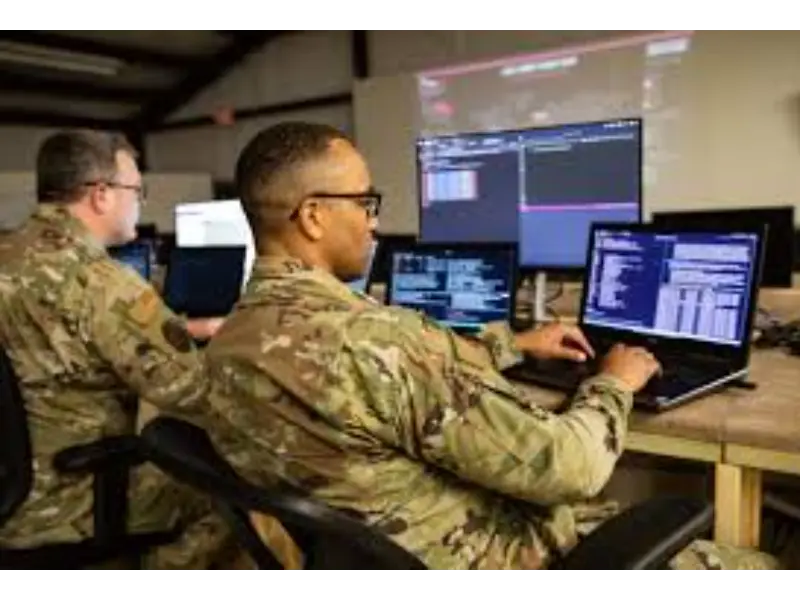
- American defence officials confirm AI use in Middle East airstrikes, enhancing target identification and combat efficiency.
- Over 85 targets were struck in Iraq and Syria, utilising computer vision algorithms.
- Human oversight remains crucial to minimise AI-related errors in military operations.
American defence officials confirm that artificial intelligence (AI) technology was used to assist in identifying targets during airstrikes in the Middle East this month, indicating an increasing military application of this technology.
Skyler Moore, Chief Technology Officer responsible for US military operations in the Middle East, recently stated that machine learning algorithms capable of autonomously identifying entities greatly enhance the combat efficiency of the US military. In early February, the US military conducted airstrikes on over 85 targets in Iraq and Syria, with significant effectiveness observed in the use of AI in selecting targets for attack.
Also read: Saudi Arabia aims to build a global AI centre
Computer vision is used to identify threats
Moore stated, “The US military has been using computer vision to identify places where threats may exist. In the past 60 to 90 days, we certainly had more opportunities to target.” She added that the US is currently seeking large numbers of rocket launchers from hostile forces in the Middle East.
The US military had previously acknowledged the use of computer vision algorithms for intelligence purposes, but Moore’s latest remarks indicate widespread use of this technology for targeting enemy targets.
The Pentagon stated that over 125 precision munitions were used in the airstrikes, targeting facilities including command and control centres, intelligence centres, rockets and missiles, unmanned aerial vehicle warehouses, and logistics and ammunition supply chain facilities for militia organisations and their sponsors from the Islamic Revolutionary Guard Corps. This was part of the Biden administration’s retaliatory action following the attack on the “22 Tower” US military base in northeastern Jordan, which resulted in the death of three US soldiers.
AI systems also helped identify rocket launchers
Moore claimed that AI systems also helped identify rocket launchers belonging to Houthi militants in Yemen and surface vessels in the Red Sea. Just last weekend, the US and UK conducted airstrikes on 18 military targets belonging to the Houthi militants, including underground weapon and missile storage facilities, air defence systems, radars, and a helicopter.
The target recognition algorithm was developed under the Maven project launched by the Pentagon in 2017, aimed at accelerating the Department of Defence’s adoption of AI and machine learning and supporting defence intelligence sources.
Moore stated that US forces in the Middle East have tested computer vision algorithms to locate and identify targets in images captured by satellites and other data sources, conducting relevant experiments in exercises over the past year.
Moore added that everything changed dramatically after October 7 last year when the AI project shifted into high gear, and after a year of digital exercises, the US military is proficient in using technology under the Maven project.
However, Moore also pointed out that in specific operations, humans constantly check the targets recommended by AI to minimise the risk of potential errors, with humans conducting the final check at every step involving AI.