
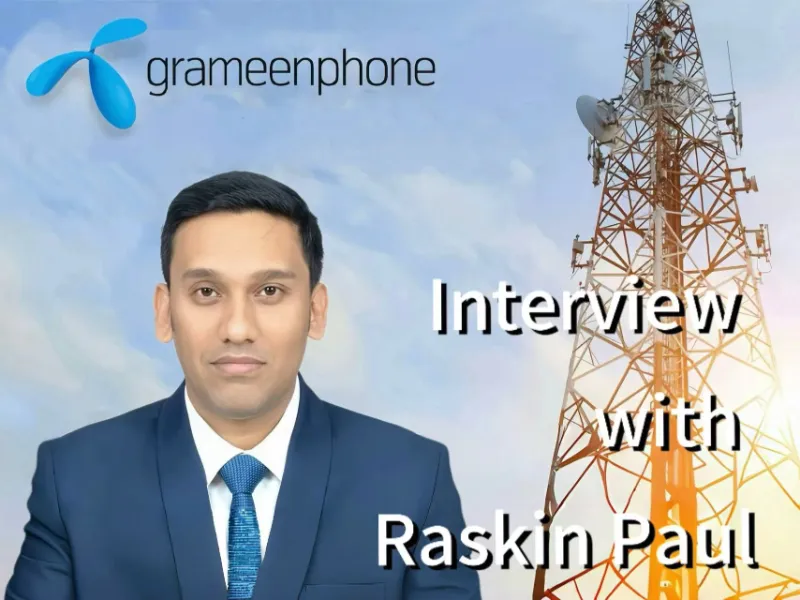
- In the exclusive interview with Raskin Paul, manager of Technology Division at Grameenphone, BTW uncovered how to improve network security.
- As cyber attacks continue to evolve, companies need to upgrade and adapt our defence strategies to protect against increasingly sophisticated threats.
In the exclusive interview with Raskin Paul, General Manager of the Technology Division at Grameenphone Limited, BTW discovered how to guarantee enterprise network security, the most important aspect of securing an enterprise network and what is Grameenphone Ltd’s strategy for success.
Q: How do you handle cyber threat incidents?
I will participate in security incident investigations and root cause analysis, ensure continuous threat search based on security tool alerts and reports, develop and follow security incident response plans and cyber security incident remediation programmes.
We work with the Security Operations Centre and the Management Detection and Response team on day-to-day security incident management, forensics and threat search activities. We work with OEMs, partners, vendors and stakeholders to ensure security incident response and maintain SLAs.
Technology develops use cases for SIEM, XDR dashboards, NBA, UBA, SOAR scripts to ensure next generation SOC functionality.
Raskin Paul, General Manager of the Technology Division at Grameenphone
Q: What do you think is the most important aspect of securing an enterprise network?
The core of securing an enterprise network lies in building a multi-layered defense system. This includes conducting a comprehensive risk assessment to continually identify and evaluate potential security threats and ensure that protection measures match actual risks. Ensure that only authorised personnel have access to sensitive information, using multi-factor authentication to enhance security.
To conduct continuous monitoring and response, establish a real-time monitoring system to detect abnormal activities and respond quickly to potential security incidents.
Conduct regular security training for employees to increase their alertness to common threats such as phishing and social worker attacks. Conduct regular security audits and vulnerability scans to identify and fix weaknesses in the system in a timely manner.
Cyber security is not just a technical issue, but a comprehensive challenge involving management and culture.
Raskin Paul, General Manager of the Technology Division at Grameenphone
Q: What technological challenges does the company face?
As cyber attacks continue to evolve, we need to constantly upgrade and adapt our defence strategies to protect against increasingly sophisticated threats. We need to ensure compatibility between different systems and platforms while effectively integrating old and new technologies.
To support the growth of the Company’s business, we need to continuously expand and upgrade our network infrastructure to cope with higher traffic volumes and more complex service demands. The development of emerging technologies such as artificial intelligence and the Internet of Things, while presenting opportunities, also comes with new security risks and technical challenges.
With stringent data protection regulations and standards, it is an ongoing challenge to ensure that the company operates in compliance with all privacy protection requirements.
Raskin Paul, General Manager of the Technology Division at Grameenphone
Q: What is Grameenphone’s strategy for success?
1. Internet access: We are committed to providing high quality, reliable Internet access services to meet the growing needs of our users. This includes not only traditional broadband services but also covers the expansion of 4G/5G mobile networks.
2. Personalised services: Through data analytics and user behaviour insights, we provide customised services and products to enhance user experience and satisfaction. For example, we recommend personalised value-added services based on user habits.
3. Efficient operations: Optimise internal processes and resource allocation to improve operational efficiency. This includes the introduction of advanced technology tools and automation solutions to reduce human error and operational costs.
4. Digital layout: actively promoting the Company’s transformation to digitalisation, including the adoption of technologies such as cloud computing, big data analytics and artificial intelligence to enhance business flexibility and market competitiveness.