
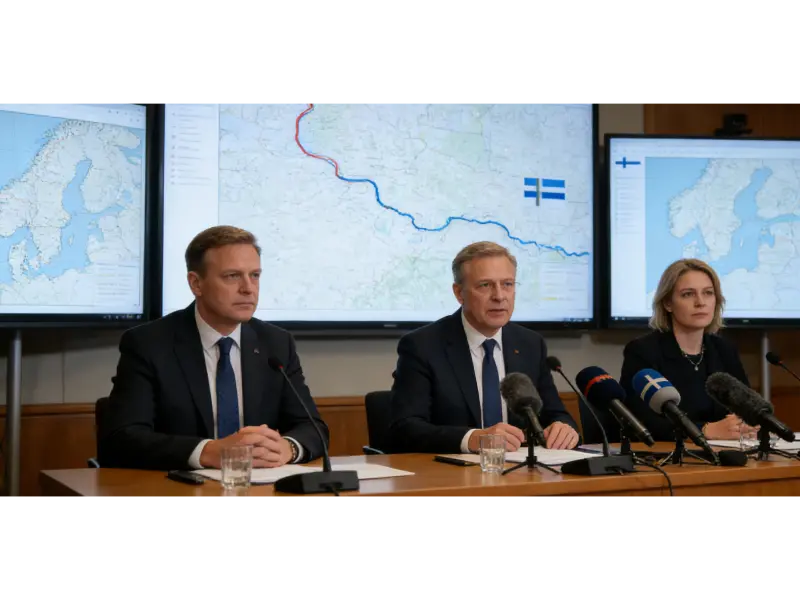
• Finnish authorities are investigating significant damage to an undersea telecommunications cable connecting Finland and Estonia, seizing a cargo vessel suspected to be involved.
• Two crew members have been arrested and the case is being treated as aggravated criminal damage and interference with telecommunications, highlighting vulnerabilities in critical digital infrastructure.
What happened: Authorities investigate suspected sabotage or interference with critical undersea cable’
Finnish police and border guard authorities have launched an investigation into damage sustained by an undersea telecommunications cable in the Gulf of Finland connecting Helsinki, Finland, and Tallinn, Estonia. The damaged link, owned by Finnish telecommunications operator Elisa, is considered critical infrastructure for internet and data traffic in the region.
The incident occurred on 31 December 2025 in Estonia’s exclusive economic zone, where divers and technicians later found the cable inoperable. Finnish officials detained the cargo vessel Fitburg, flagged in St. Vincent and the Grenadines, which was en route from Russia to Israel. The ship was found with its anchor chain lowered for several hours near the site, prompting suspicion of interference with the cable.
Two crew members have since been arrested in connection with the damage and are being questioned under suspicion of aggravated criminal damage, attempted aggravated criminal damage, and aggravated interference with telecommunications. Two additional crew members have been placed under travel bans as authorities continue to interview the vessel’s multinational crew, which includes citizens of Russia, Georgia, Azerbaijan and Kazakhstan.
Investigators are also examining onboard evidence, including the ship’s anchor and other materials, as part of a broader forensic and underwater survey of the damaged cable. Finnish Customs officials noted the presence of sanctioned materials, such as structural steel from Russia, which could have legal implications under European Union sanctions regulations.
Officials have not publicly attributed the incident to any state actor or confirmed whether the damage was a result of negligence or deliberate action. However, the case follows earlier concerns about undersea infrastructure vulnerability, including disruptions to other cables in the Baltic Sea region in recent years.
Also Read: DayOne launches hyper scale data campus in Finland
Also Read: Finland launches Europe’s first 50-Qubit quantum computer
Why it’s important
Undersea telecommunications cables carry a vast majority of global internet traffic and business data, making them foundational to modern digital economies. Disruption to these links can impede communications, financial transactions and public services. In the case of the Finland–Estonia cable, alternative routing has helped maintain services, but the damage highlights how delicate and strategically important these physical networks are.
The arrests and the formal investigation reflect both legal and security concerns. Investigating the incident as criminal damage and interference with telecommunications emphasises the seriousness with which nations treat attacks on critical infrastructure, given their potential impact on national security and economic stability.
Regional tensions have heightened sensitivity around undersea assets. Previous incidents in the Baltic Sea—such as the well-publicised 2024 Estlink 2 power cable break that disrupted electricity transmission between Estonia and Finland—have raised questions about whether such damage is accidental or connected to broader geopolitical friction.
The complexity of attributing responsibility for undersea damage, especially when multiple vessels and environmental factors are involved, suggests that robust international cooperation and technological monitoring are crucial to protecting these assets. Authorities have hinted at joint efforts with Estonian and European maritime authorities to shore up surveillance and improve rapid response should future incidents occur.
Finally, the case may spur broader discussions about maritime safety standards, vessel monitoring systems and legal frameworks for prosecuting interference with undersea infrastructure, balancing commercial shipping activity with the need to safeguard the backbone of global communications.