
Time Horizon
6–18 Months
Within the Time Horizon facet, 6–18 Months time-horizon intelligence organises articles by the period over which a signal is expected to matter. The page helps readers distinguish immediate operational changes from longer-cycle governance, investment, standards, and infrastructure shifts that may unfold across quarters or years. It connects timing assumptions with public evidence, related actors, market context, customer exposure, policy pressure, and infrastructure planning so readers can judge whether a development is urgent, strategic, or still waiting on confirming evidence. The page also explains how time horizon changes the meaning of a signal, which organisations may be exposed, and which infrastructure decisions require short-term action or long-cycle monitoring.

Asia-Pacific Regional ISP
XiaoLi Network and the Chinese economics of being believed
XiaoLi Network and the Chinese economics of being believed intelligence summary explains the development, the public evidence available to readers, the organisations involved, the regional context, market exposure, and the infrastructure consequences that may follow. The…

Asia-Pacific Regional ISP
Eunexus and the proof premium inside Australian secure cloud
Eunexus Pty Ltd is a small Australian technology company with a narrow but economically useful proposition: it sells regulated customers a managed private-cloud and data-platform relationship in which route control, clean upstream dependence, security governance and senior…

Europe and Middle East Regional ISP
Telesistema and the option value inside a Jujuy cable-fibre identity
Telesistema and the option value inside a Jujuy cable-fibre identity intelligence summary explains the development, the public evidence available to readers, the organisations involved, the regional context, market exposure, and the infrastructure consequences that may follow.…

Europe and Middle East Cloud Services
Webglobe, s.r.o. and the Cash-Flow Test for Central European Hosting Roll-Ups
Webglobe, s.r.o. is economically interesting because it turns a fragmented Czech hosting market into a practical test of consolidation: whether domains, web hosting, mailboxes, VPS support and local helpdesk habits can keep producing sticky cash flow after small brands are folded…

Europe and Middle East Cloud Services
Privex Inc. and the price of privacy at the edge of commodity cloud
Privex Inc. is economically interesting because it asks a narrow but important question: how much can a small routed host charge when the product is not only a virtual server, but also privacy posture, crypto-native payment, visible RIPE resource control, Stockholm and Amsterdam…

Europe and Middle East Regional ISP
Delta Telesystems and the proof discount on a Tyumen access network
Delta Telesystems and the proof discount on a Tyumen access network intelligence summary explains the development, the public evidence available to readers, the organisations involved, the regional context, market exposure, and the infrastructure consequences that may follow. The…

Asia-Pacific Cloud Services
DataSphere and the zero-dollar price of credibility in Hong Kong micro-infrastructure
DataSphere (H.K) Limited is a young Hong Kong infrastructure company whose most revealing economic signal is not scale, but price architecture: it advertises commercial colocation, VPS/VDS, IP transit and IP leasing, while its related exchange project offers free virtual exchange…
Europe and Middle East Regional ISP
Mraknet and the Czech Margin for the Network Next Door
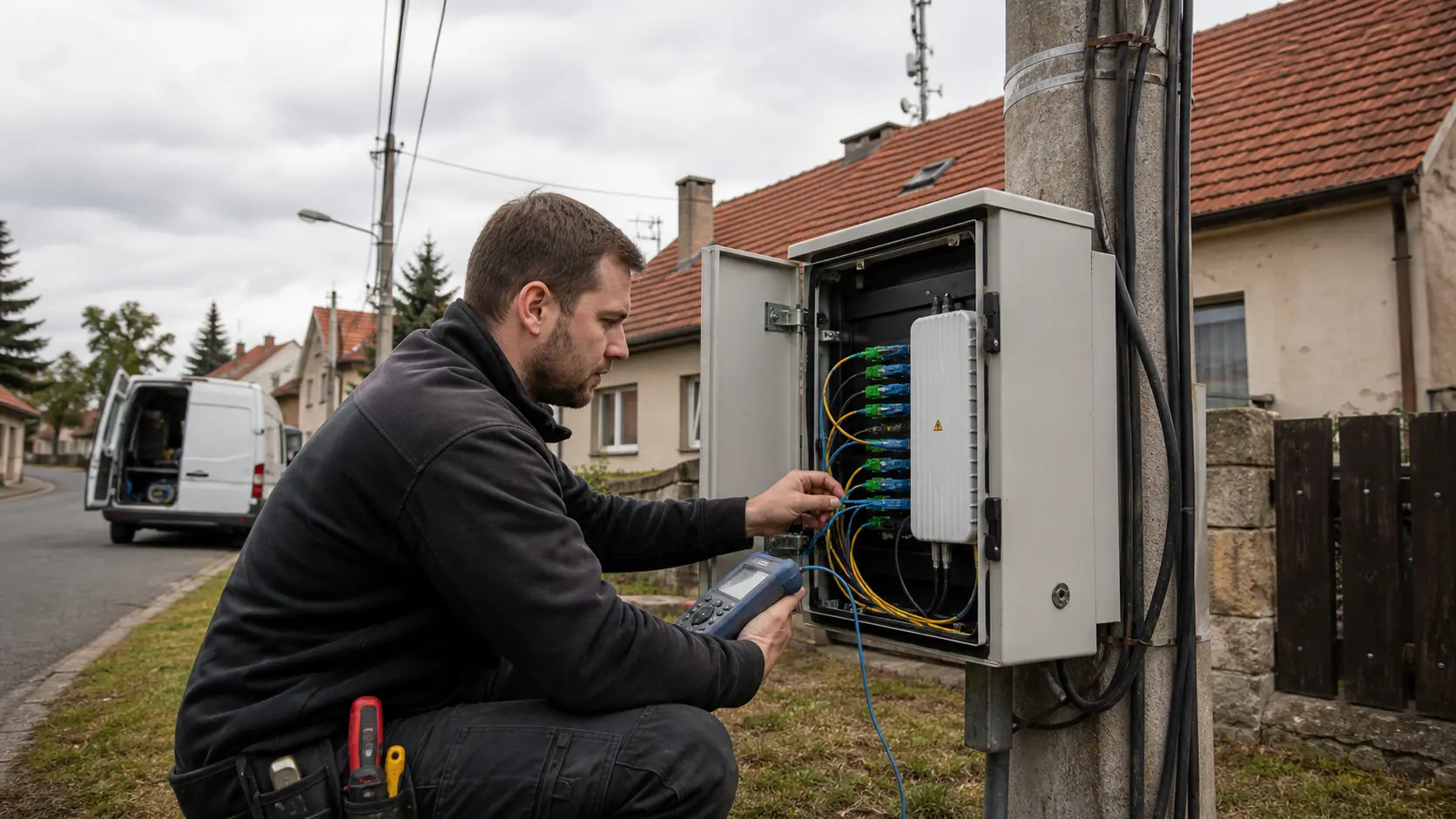
Mraknet s.r.o. is interesting because it shows how a local Czech broadband operator can still earn a place between national telco bundles and do-it-yourself wireless substitutes: not by pretending to be a national carrier, but by making access, support, local construction and…

Asia-Pacific Regional ISP
Star IT and the repair bill inside Tk 500 broadband
Star IT is best read as a small Bangladesh access utility whose public value is not scale for its own sake, but proof that a low-price home broadband offer can be tied to licensed local presence, BDIX participation, upstream choice and field support. The company is more than a…

Europe and Middle East Regional ISP
Overoptic Systems and the collateral value of a quiet UK IP estate
Overoptic Systems Ltd is not easy to value as a conventional internet service provider. The strongest public evidence points instead to a UK legal company holding RIPE resources, old HQHost and iPipe service surfaces, address space routed by other networks, and a very thin…

Europe and Middle East National Telecom
IPVOIP and the Switchboard Margin Behind a Cheap Business Call
IPVOIP s.r.o. is economically interesting because it sits in the narrow space where a business call, a carrier trunk or an application-to-person message looks cheap only after numbering, interconnection, fraud control, settlement, support and physical switching rooms have worked…

Asia-Pacific Regional ISP
Sky Link and the rooftop arithmetic of a Tk500 broadband bill
Sky Link and the rooftop arithmetic of a Tk500 broadband bill intelligence summary explains the development, the public evidence available to readers, the organisations involved, the regional context, market exposure, and the infrastructure consequences that may follow. The…

Latin America and Caribbean Regional ISP
VP23 Telecom and the economics of the neighbourhood repair promise
VIANA PEREIRA PROVEDORES DE A. AS REDES DE C., trading publicly as VP23 Telecom, is an instructive Brazilian regional ISP because its economics are not only in advertised megabits. They are in the promise that a local fibre line, a support truck, a pole route, a wholesale handoff…

Asia-Pacific Datacenter Trends
Remote NT Cattle Station Tests Off-grid AI Infrastructure
A proposed hyperscale AI campus in remote northern Australia highlights a growing industry trend: as established data centre markets run into power constraints, developers are increasingly taking compute to energy rather than energy to compute.

Europe and Middle East National Telecom Trends
UK Fibre Consolidation Faces Regulatory Test
Britain's fibre market is entering a new phase. The question is no longer who can build the fastest network, but how regulators balance consolidation with long-term infrastructure competition.

Asia-Pacific Datacenter Trends
Batam AI Campus Extends Singapore's Reach
DayOne, Firmus and Nvidia plan a 360MW AI campus in Batam, highlighting how Southeast Asia's AI infrastructure is extending beyond Singapore to markets with greater power, land and room for expansion.
Asia-Pacific Datacenter Trends
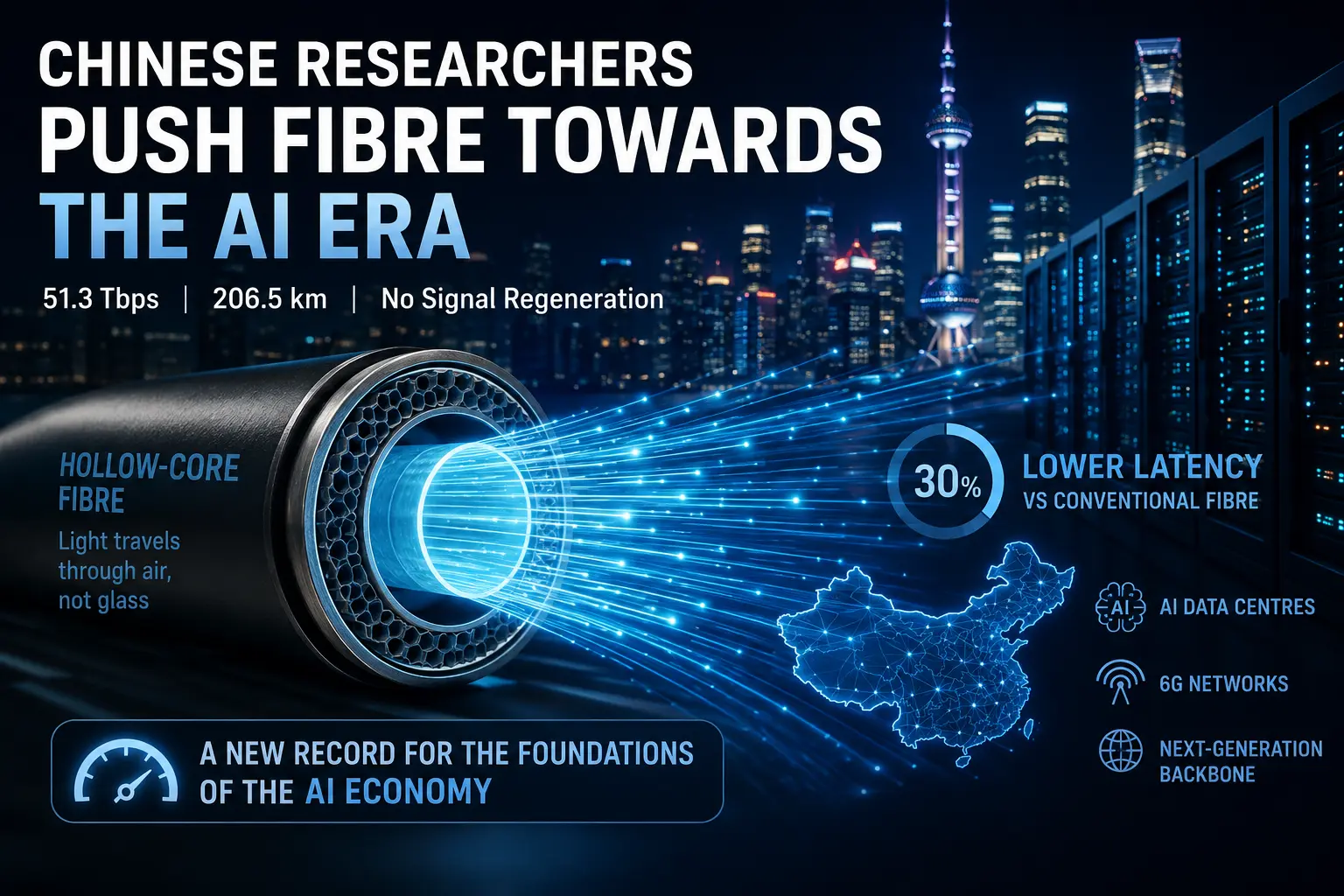
Chinese Researchers Push Fibre Towards the AI Era
A record-breaking hollow-core fibre trial in China marks more than a networking milestone. It signals that future AI competitiveness may depend as much on moving data efficiently as on building larger GPU clusters.

Asia-Pacific Regional ISP
Sixty Four Networks and the hard arithmetic of local broadband in Bangladesh
Sixty Four Networks looks like a small Dhaka Division fiber ISP, but its routing record, regulated license, retail tariff ladder, BDIX presence, app-based billing and upstream mix reveal a sharper economic story: local broadband operators can win trust one building at a time…

Asia-Pacific Regional ISP
Sky Digital's Taiwan niche is built on expensive bandwidth, not scale
Sky Digital Co., Ltd. is a small Taoyuan-based connectivity and hosting operator whose value depends on something Taiwan's telecom market makes unusually difficult: turning scarce local bandwidth, public IP resources, and cross-border routing into a service that small businesses…

Asia-Pacific Regional ISP
Sky Network Television’s second act is a bundle, not a dish
Sky Network Television is trying to turn a shrinking satellite-TV inheritance into a defensible New Zealand bundle of sport, streaming, advertising reach and fibre broadband. The question is no longer whether pay television can return to its old monopoly; it is whether Sky can…