
Summary
- What it says: A proposed AI data centre and battery storage campus by Xlinks in north Devon has triggered local opposition over environmental and infrastructure concerns, despite promises of major economic impact and job creation.
- Main topic: Data centre investment; AI infrastructure economics
- Context: market / briefing / Europe & Middle East
•Xlinks proposes AI data campus and battery storage on 850-acre site near Great Torrington
•Residents raise concerns over water use, infrastructure strain and environmental impact
The fact
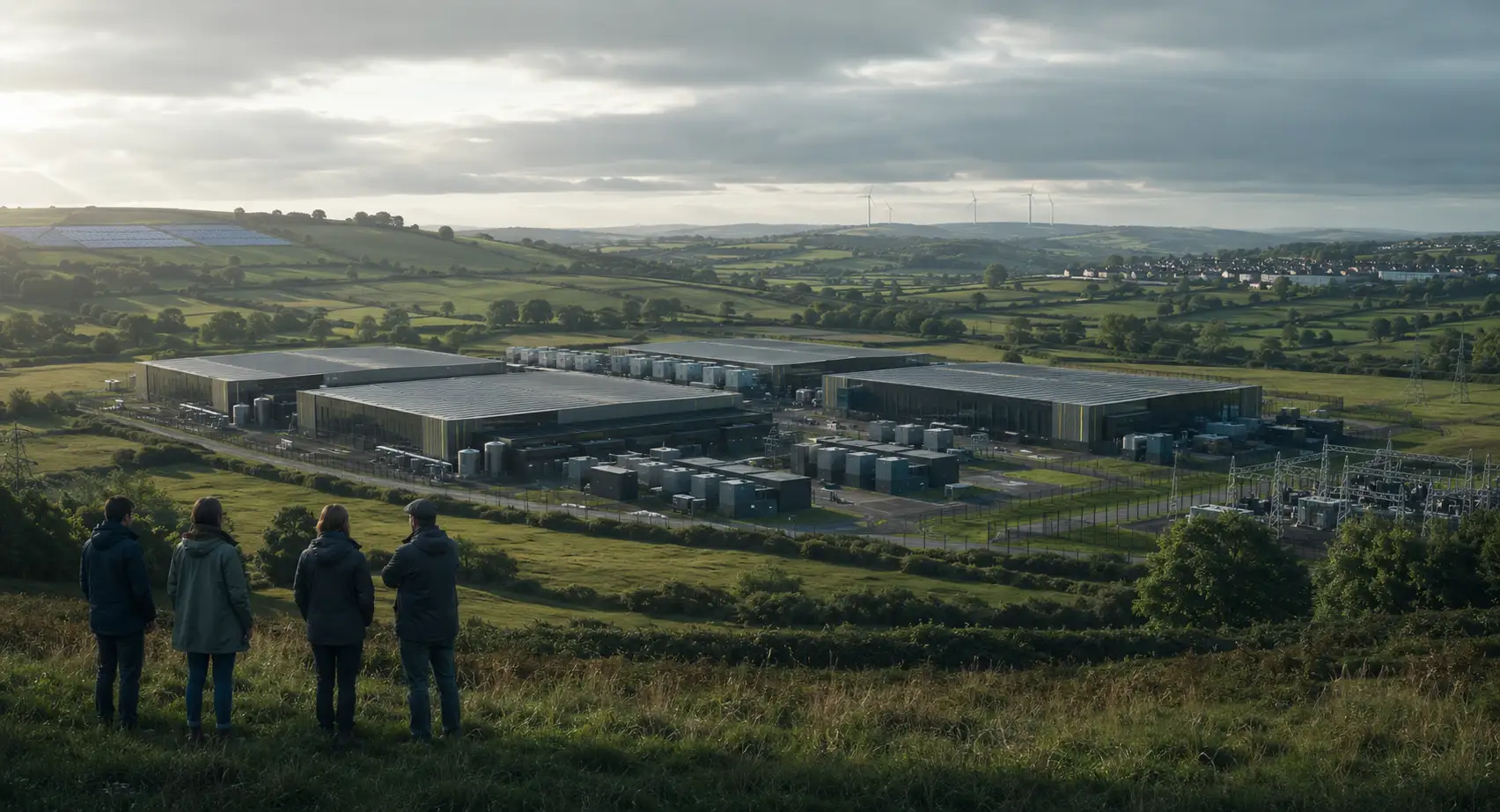
Xlinks has proposed an AI data centre and battery storage facility on an 850-acre site in north Devon, covering just over a third of the land near the Alverdiscott substation. The company has not yet submitted planning applications and says the data centre and battery storage will be filed separately. It estimates the project could create 650 to 1,200 jobs and contribute up to £3.6 billion to the UK economy.
The plans emerged after a public meeting attended by hundreds of residents, following an announcement by local MP Sir Geoffrey Cox. Residents raised concerns over water use, noise, fire risk, electricity demand and landscape impact. Xlinks says the site was selected for grid proximity, renewable energy access and cooler climate, with further engagement planned for July.
Xlinks' wider UK–Morocco 3.8GW renewable cable project was abandoned by the UK government in June 2025 over energy security concerns.
The Assessment
The proposal marks a strategic pivot for Xlinks, which lost UK government backing for its flagship 3.8GW Morocco–UK renewable cable project in June 2025. Repurposing its Devon land and grid access for AI compute and battery storage shifts the company from cross-border energy transmission toward domestic infrastructure.
From a BTW perspective, AI compute build-out is drawing non-traditional players — renewable energy developers, battery storage firms — into the data centre supply chain. The siting logic (grid proximity, available land, cooling climate) mirrors subsea cable landing station placement, where physical infrastructure advantages dictate geography.
The tension between rural planning and AI infrastructure will intensify as data centre developers face increasing power constraints in traditional hub locations.
What to Watch
Whether Xlinks adjusts the scale or technical design of the campus before submitting planning applications, and how local authorities assess the project once formal consultation begins.