
Time Horizon
12 24 Months
Within the Time Horizon facet, 12 24 Months time-horizon intelligence organises articles by the period over which a signal is expected to matter. The page helps readers distinguish immediate operational changes from longer-cycle governance, investment, standards, and infrastructure shifts that may unfold across quarters or years. It connects timing assumptions with public evidence, related actors, market context, customer exposure, policy pressure, and infrastructure planning so readers can judge whether a development is urgent, strategic, or still waiting on confirming evidence. The page also explains how time horizon changes the meaning of a signal, which organisations may be exposed, and which infrastructure decisions require short-term action or long-cycle monitoring.

Story
AFRINIC, mobile broadband and the CGNAT balance sheet
African mobile growth turns public IPv4 into scarce operating capital: CGNAT keeps subscribers online, but APNs, banking fraud checks, enterprise products and IPv6 coexistence all depend on AFRINIC remaining a trusted registry ledger rather than a gatekeeper.

Story
AFRINIC IPv4 scarcity inside African datacentre demand
In African colocation markets, scarce public IPv4 is no longer just a network-planning issue. It shapes how quickly racks, tenant cages and managed services can become revenue.

Story
AFRINIC record continuity in cloud address bargaining
Cloud IPv4 pricing and BYOIP validation make AFRINIC's record continuity a bargaining asset: when the registry is predictable, African customers can use cloud without renting their public identity from the platform.

Story
Submarine cable gains and AFRINIC address risk at the edge
Submarine cables lower the price of reach, but in African and Indian Ocean edge markets scarce portable IPv4 and registry continuity decide who can turn new landings into bargaining power.

Story
AFRINIC registry records in the bargaining over interconnection
AFRINIC's registry records are not clerical plumbing: in Africa's interconnection market, they shape who can peer, migrate customers and bargain with upstream carriers.

Story
The compliance bundle behind AFRINIC cross-border IPv4 transfers
AFRINIC's cross-border IPv4 market turns ordinary registry proof into a costly bundle of KYC, company-law, tax, banking and customer-assurance work.

Story
AFRINIC and the decay of a shared registry bargain
An internet number registry is valuable because parties that distrust one another can still rely on the same record. AFRINIC's crisis shows how that bargain can decay institutionally before routes break, as courts, regional blocs, banks, platforms and reform architectures turn…

Story
AFRINIC sanctions screening without avoidable continuity shocks
A sanctions hit at a regional internet registry is often an ambiguous middle state, not a final prohibition; AFRINIC shows why screening must protect lawful compliance without letting payment rails, account standing or technical services become avoidable continuity shocks.

Story
When national legal force meets AFRINIC's regional ledger
AFRINIC's crisis shows why courts, regulators and sanctions rules matter to number-resource records, but also why a regional ledger loses value when legal evidence becomes political veto.

Story
AFRINIC, national registries and the neutrality of the regional ledger
National registry relationships can lower AFRINIC members' administrative costs, but they also create new places where fees, validation, transfer authority and national policy can compromise regional ledger neutrality.

Latin America and Caribbean Regional ISP
TOPLINK INTERNET Shows Why Brazilian Fibre Fragmentation Is Won One Neighbourhood at a Time
TOPLINK INTERNET is not a national broadband challenger. It is a small regional provider in Rio Quente, Goias, a tourist town where the resident population is tiny, the visitor economy makes connectivity more valuable than the census suggests, and the economics of fibre depend on…

Global Cloud Services
TRIJIT and the trust premium in small cloud
TRIJIT Cloud & Datacenter Services is not trying to outspend Amazon, Microsoft, Google, DigitalOcean or the largest Indian data-center groups. Its public offer is more intimate: managed cloud servers, dedicated infrastructure, colocation, email hosting, migration help and 7x24…

Latin America and Caribbean Regional ISP
TWF Internet and the payback clock of local fibre
TWF Internet and the payback clock of local fibre intelligence summary explains the development, the public evidence available to readers, the organisations involved, the regional context, market exposure, and the infrastructure consequences that may follow. The Latin America and…

Africa Regional ISP
Tandaa Networks and the price of being known on the Kenyan coast
Tandaa Networks and the price of being known on the Kenyan coast intelligence summary explains the development, the public evidence available to readers, the organisations involved, the regional context, market exposure, and the infrastructure consequences that may follow. The…

Global Regional ISP
Telcom Networks and the cost of a name that sounds too generic
Telcom Networks and the cost of a name that sounds too generic intelligence summary explains the development, the public evidence available to readers, the organisations involved, the regional context, market exposure, and the infrastructure consequences that may follow. The…

Asia-Pacific Regional ISP
Telcospeed Communication Shows the Price of Keeping Myanmar Connected When Normal Telecom Assumptions Break
Telcospeed Communication Shows the Price of Keeping Myanmar Connected When Normal Telecom Assumptions Break intelligence summary explains the development, the public evidence available to readers, the organisations involved, the regional context, market exposure, and the…

Asia-Pacific Regional ISP
Theko Digital Solusindo and the price of being reachable in eastern Indonesia
Theko Digital Solusindo is a small Ternate-based ISP whose real economic problem is not only selling bandwidth. In North Maluku, the harder product is reachable support, credible field coordination and enough network control to make business customers trust a local provider…
Latin America and Caribbean Regional ISP
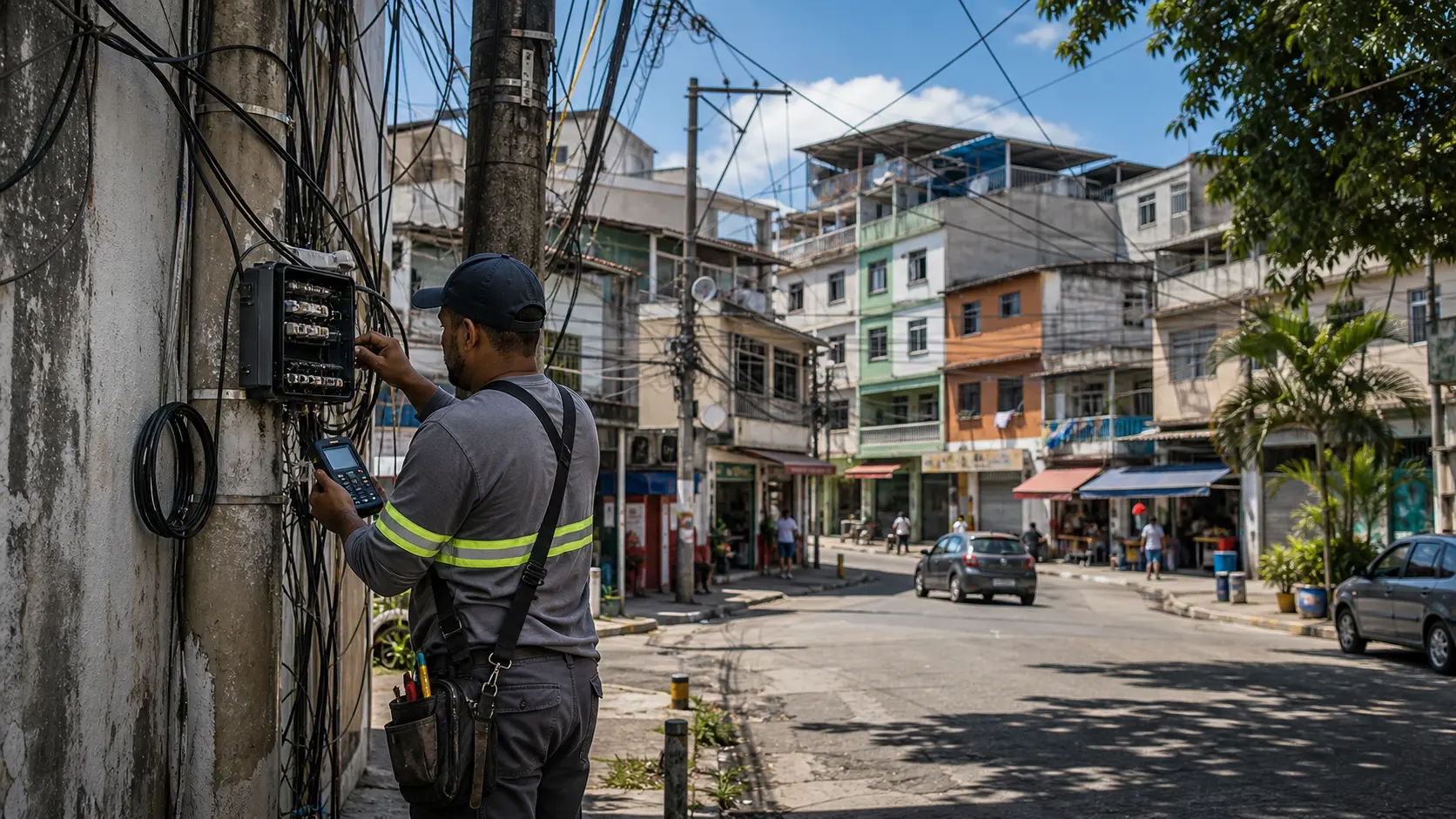
Top Connect Tecnologia Shows the Local Price of Staying Useful in Brazil's Fibre Rush
Top Connect Tecnologia is not just another small Brazilian internet provider. It is the Itaitinga, Ceara company behind the Agility Telecom local operation, a useful neighbourhood connectivity business whose survival depends on density, support discipline, public-sector trust…

Europe and Middle East Regional ISP
Trivon Networks and the true price of running an ISP inside the sanctions wall
Trivon Networks and the true price of running an ISP inside the sanctions wall intelligence summary explains the development, the public evidence available to readers, the organisations involved, the regional context, market exposure, and the infrastructure consequences that may…

Latin America and Caribbean Regional ISP
Ubannet Shows the Harder Economics of Neighbourhood Fibre After the Easy Build
Ubannet Internet e Informatica is a useful case in Brazil's post-boom regional broadband market: a Timbauba-born provider with real network resources, visible local market share and a broader technology-service identity, but also a business whose economics now depend more on…