
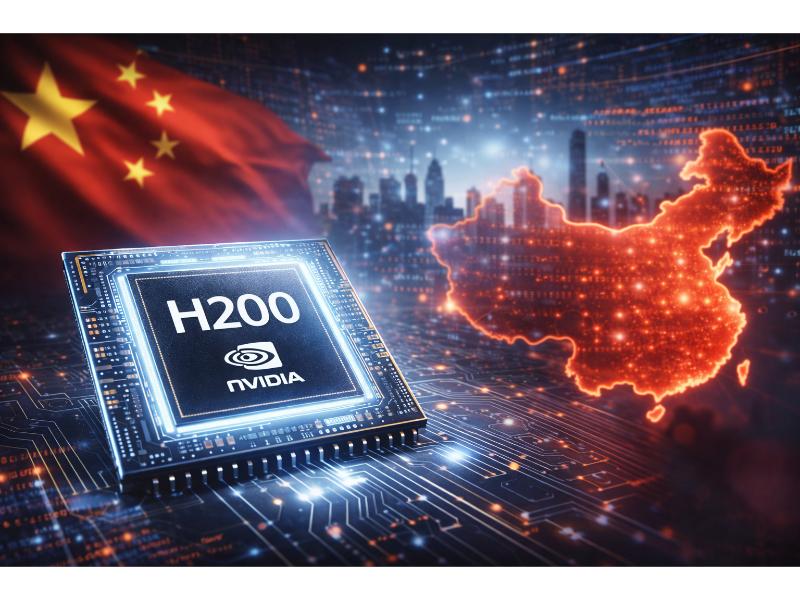
- China has told some technology firms they may procure Nvidia’s H200 AI chips only under special conditions, such as research or defined necessity.
- The move may reflect Beijing’s desire to shield domestic AI development and manage uncertainty amid U.S.–China export controls.
What happened:china imposes qualification criteria on h200 chip orders
The Chinese government has informed select domestic technology companies that they may purchase Nvidia’s H200 artificial intelligence chips only in narrowly defined special circumstances, according to a report by The Information that was corroborated by Reuters. Under the new guidance, purchases would be permissible for situations such as university‑led research or specific development projects, but not open market sales to all firms.
The directive reportedly instructs companies to proceed only when acquisition is “necessary”, but does not clearly define that term, leading to uncertainty among potential buyers. The information follows reports that earlier in January Beijing asked some firms to halt orders for H200 chips pending clarification of policy intentions.
Nvidia’s high‑performance chips are sought after for advanced AI workloads, particularly in data centres and large‑scale model training. But they sit at the centre of a larger U.S.–China technology standoff, with U.S. export controls having previously limited shipments of Nvidia’s most advanced chips to China over concerns they could enhance military or sensitive capabilities.
The announcement came without detailed government explanation, and neither Nvidia nor the Chinese authorities have publicly clarified the criteria that firms must meet to qualify for chip purchases.
Why it’s important
China’s new restrictions on Nvidia AI chip purchases highlight a broader trend in which governments are deploying selective access policies as part of strategic technology management. By limiting high‑end chip access to specific conditions, Beijing appears intent on maintaining regulatory control over how foreign semiconductor technology is integrated into local ecosystems.
A possible motive may be to protect and nurture China’s domestic AI and semiconductor industries. Chinese firms such as Huawei and Cambricon have been pushing their own AI chips as alternatives to Nvidia’s offerings, and limiting foreign competition could accelerate adoption of local technology.
However, the “special circumstances” approach introduces ambiguity for companies seeking to plan hardware procurement and could slow research or commercial projects languishing in policy interpretation. Without a clear definition of necessity or transparent approval mechanisms, firms risk administrative delays or misaligned expectations.
Analysts also point to wider geopolitical dynamics. Nvidia’s chips remain critical for cutting‑edge AI research worldwide, yet Beijing’s cautious stance may reflect a desire to avoid dependence on foreign technology that could be restricted by U.S. export policy in the future.
There are questions about the net benefit of such restrictions. While they may support domestic strategic aims, they could also constrain innovation by restricting access to world‑class hardware, potentially disadvantaging Chinese researchers relative to global peers.
This development will be watched closely by AI firms, policymakers and global semiconductor stakeholders as it may signal how nations balance security, innovation and industrial policy in an era of intensified technological competition.
Also read: US clears Nvidia chip exports to China: A volatile turn in global AI supply
Also read: China bars ByteDance from using Nvidia chips in new data centres