
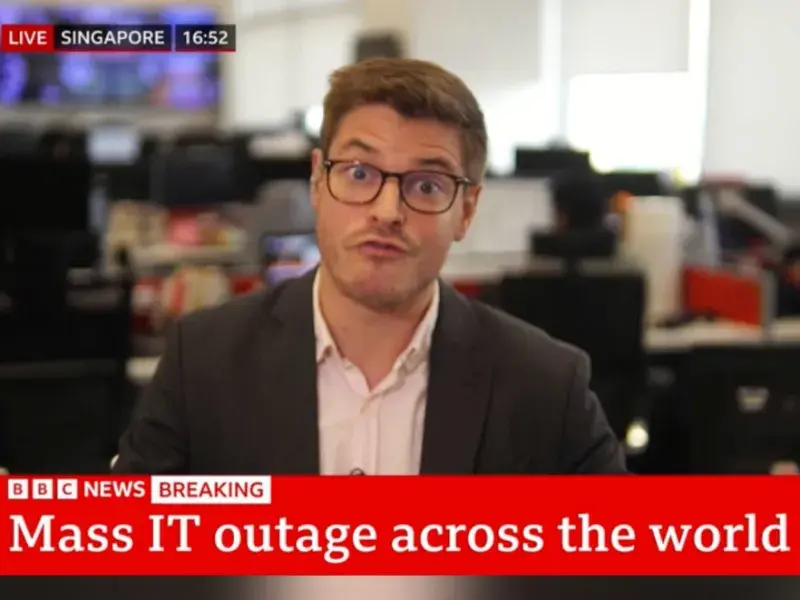
At 04:09 UTC on July 19, 2024, a routine software update slipped out of CrowdStrike's servers and landed on millions of Windows machines at once. By breakfast, the world's departure boards were blank, its news anchors were silent, and its cash registers had frozen — all because one file told a planet's worth of computers to stop working.
- The blast radius: airlines, banks, broadcasters, hospitals and emergency services across the globe, all stumbling at the same moment.
- The suspect: CrowdStrike, the cybersecurity firm whose Falcon sensor update pushed the infamous "blue screen of death" onto Windows PCs.
- The lesson: when the whole world runs on the same software, one bad line of code becomes a global event.
OUR TAKE
Call it the butterfly effect with a blue screen. One update, pushed from one company, and suddenly the world's airports, banks and intelligence teams were all reading from the same script: we'll be right back. Sydney, Berlin and Edinburgh dissolved into chaos, passengers buzzing like ants on a hot pan as the departure boards went dark. The banks went quiet — which is precisely the moment you start worrying about your money. Even the news went dark, with Sky News off the air, information itself held hostage by a software patch.
And the culprit? CrowdStrike, a firm whose entire business is keeping you safe, somehow bricking the very machines it was built to protect. Technology is a double-edged sword; this was the day the blade turned. The lesson isn't that software fails — it's that we've wired the whole world through a handful of choke points and called it resilience. Hope, as ever, is not infrastructure.
–Miurio huang, BTW reporter
What happened: one update, a planet of blue screens
The scale was the story. In an event with no modern precedent, a single IT failure rippled across airlines, media, banks and healthcare at once, grinding operations to a halt from Sydney to Madrid.
Air travel took the first hit. At Sydney Airport, flights were grounded as information screens went blank and carriers including Jetstar and Virgin Australia wrestled with check-in and boarding. United Airlines halted flights; Delta and American Airlines issued a global ground stop, stranding thousands. Berlin Airport blamed a "technical fault," Edinburgh's departure boards failed and travellers missed flights, and Spain's airports fell back to manual systems to keep moving. At Gatwick, barcodes stopped scanning, so boarding passes were checked by hand while security searches carried on as normal.
“A third party software outage is impacting computer systems worldwide, including at United.
While we work to restore those systems, we are holding all aircraft at their departure airports. Flights already airborne are continuing to their destinations.”
United Airlines
The banking sector wasn't spared. Several leading banks reported disruptions, though details stayed scarce as institutions focused on containing the damage rather than explaining it.
Media outlets took heavy hits. Sky News in the UK went off air, unable to broadcast live. Australia's Telstra Group also stumbled, with issues traced back to the global problems affecting CrowdStrike and Microsoft. The BBC's channel for children and teenagers, CBBC, had been down since earlier that morning, displaying a message pointing viewers to BBC iPlayer. Other BBC channels, including BBC One and CBeebies, kept running, while ITV and Channel 4 were unaffected.
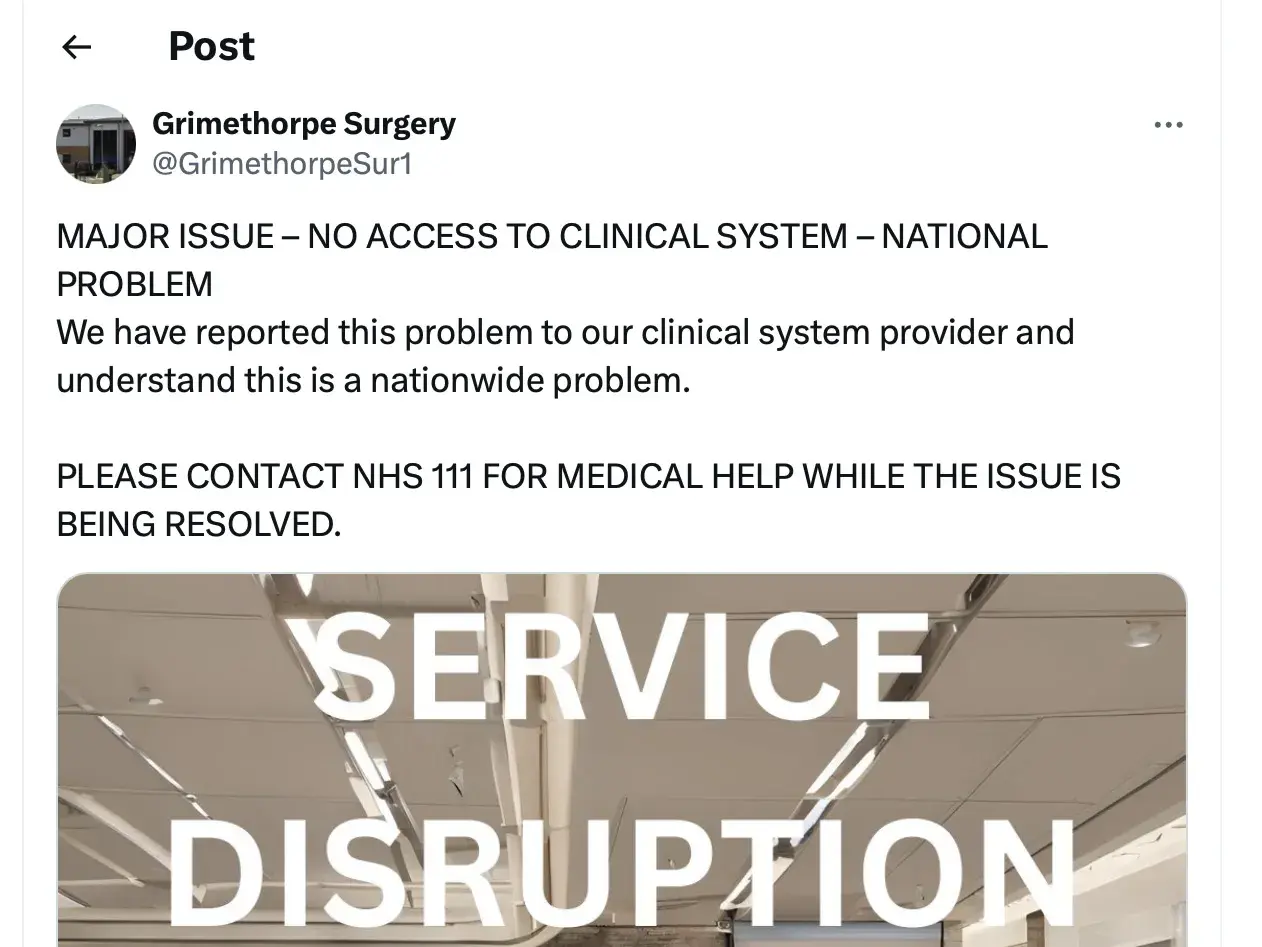
Healthcare services in the UK felt it too. Multiple reports pointed to problems with EMIS Web, the system GPs use to manage appointments, run consultations, and update, store and share patient records. Clinics such as Grimethorpe Surgery in Barnsley, Church Lane Surgery in Brighouse, Central Lakes Medical Group in Ambleside, and Solihull Healthcare Partnership in the West Midlands reported being locked out of the system, disrupting bookings and access to records.
Then came the finger-pointing. Reports named cybersecurity company CrowdStrike as a likely cause — the firm, known for its antivirus software, allegedly shipped an update that bricked Windows devices and threw up the notorious "blue screen of death." Whether that update was the direct trigger of the global outage or merely a coincidental parallel event was, at the time, still being pieced together.
Also read: VinFast decides to postpone its EV plant in US
Also read: Google to enhance Paris Olympics broadcast with AI for US viewers
Why it matters: the world's single point of failure
Strip away the chaos and the outage asks an uncomfortable question: how much of modern life can one vendor's update switch off? The answer, on July 19, was: almost all of it, almost everywhere, almost instantly.
Aviation showed the dependency most starkly. Grounding flights at major airports didn't just inconvenience passengers — it strained safety margins and operational efficiency, with schedules thrown into disarray and revenue bleeding out by the hour.
Banking showed the fragility of trust. Delays in transactions ripple through businesses and households alike, and in a world where digital banking is simply banking, an outage like this quietly erodes the confidence the whole system runs on.
Media showed how fast information can vanish. When broadcasters can't go live, the public loses its real-time picture of events — an information blackout at the exact moment people need to know what's happening.
Emergency services showed the stakes. Alaska's 911 systems were affected, a reminder that IT resilience is not a back-office concern but, in the worst case, a matter of life and death.
And the money added up. Delayed flights cost airlines and passengers alike; disrupted payments hit businesses such as the UK bakery chain Gail's with immediate revenue losses and longer-term reputational damage.
But the real indictment is concentration. The world didn't fail in a thousand different ways — it failed in one, everywhere at once. A single update, distributed to millions of machines on the same software stack, turned a technical hiccup into a global event. That is the price of efficiency: the same choke points that make modern infrastructure cheap and fast make it brittle and exposed.
Accountability, meanwhile, moved slower than the outage. As Microsoft worked on mitigation, CrowdStrike had yet to respond to inquiries — leaving a gap between what broke and who would answer for it. If a routine update can blue-screen the planet, the questions that follow are not optional: who tested it, who signed off, and who pays when it fails.
This was a stark reminder of the fragility of an interconnected digital world — and a call for better contingency planning, stricter release discipline, and genuine international coordination on cybersecurity. As we lean harder on technology, its resilience stops being a technical challenge and becomes a societal one.
The blue screen has cleared. The question it asked — how much of the world can one update switch off? — is still waiting for an answer.




