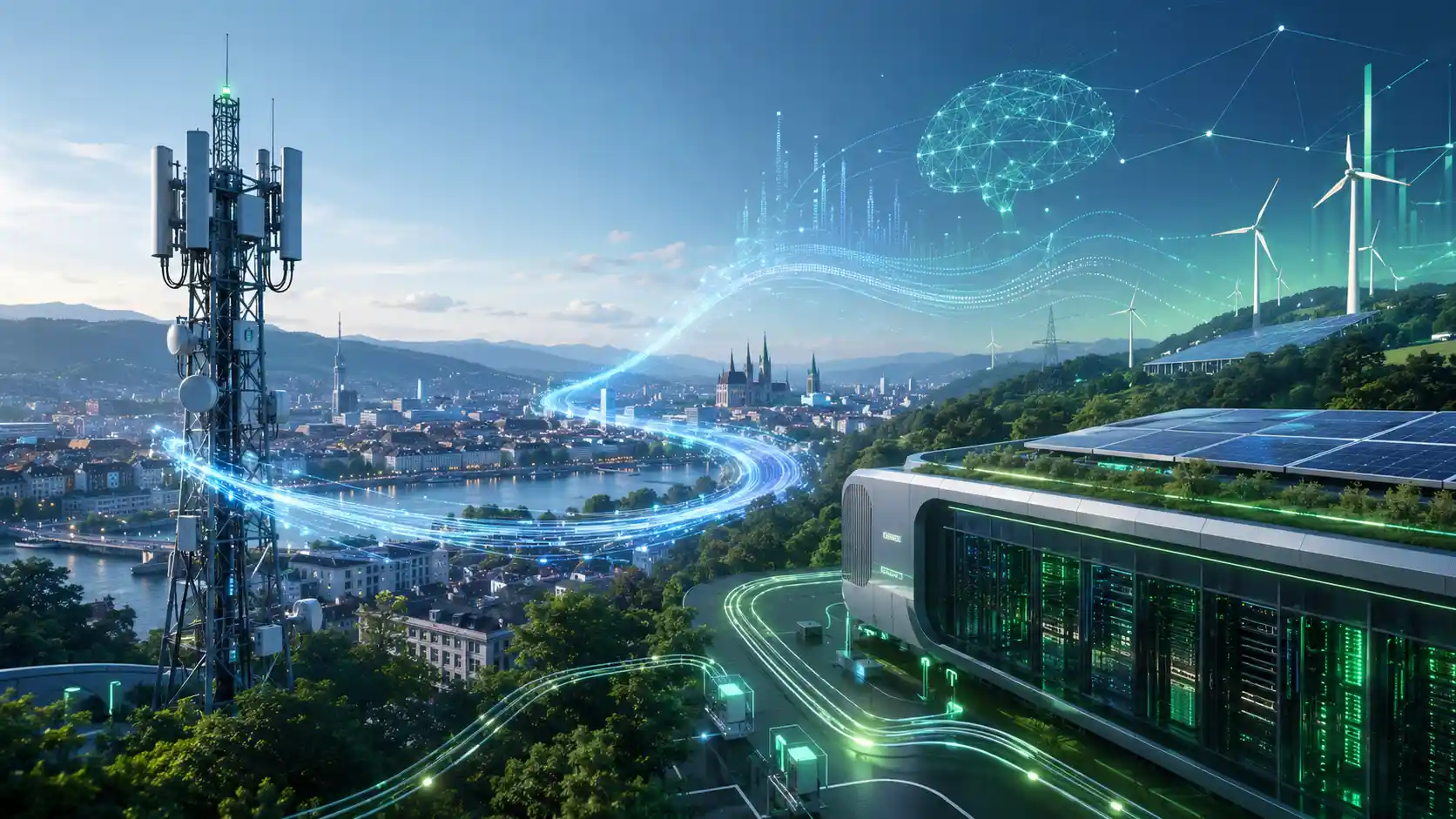
Telefónica says total energy consumption fell 12% between 2015 and 2025 while data traffic rose twelvefold. The company reports that energy use per petabyte of traffic is now 29 MWh, 92% below its 2015 level. The signal for telecom operators is that fibre migration, 5G rollout, automation and AI-supported infrastructure management are becoming operating-cost tools as well as sustainability measures.
- Traffic rose twelvefold while energy intensity fell 92% since 2015
- Fibre, 5G and AI are turning efficiency into cost control
The fact
Telefónica says its total energy consumption fell 12% between 2015 and 2025, even as data traffic across its networks increased twelvefold. The Spanish operator now uses 29 MWh of energy per petabyte of traffic, 92% below its 2015 level. It links the improvement to fibre migration, 5G rollout, automation, AI-supported infrastructure management, renewable energy use in main markets and legacy network switch-offs.
The Assessment
The signal is that telecoms energy efficiency is moving from ESG messaging into core network economics. Telefónica is using fibre, 5G and intelligent operations to absorb traffic growth without matching energy growth. That matters for operators facing power-price volatility, heavier data demand and regulatory pressure on emissions. It also strengthens the case for retiring copper and older mobile infrastructure where energy costs are becoming harder to justify.
What to Watch
Watch whether Telefónica reaches its 95% energy-intensity improvement target by 2030, and whether Scope 3 cuts begin to reshape supplier selection, equipment replacement and procurement rules.
Signal Brief
- Signal: Telefónica cuts energy use by 12% despite traffic surge
- Region: Europe & Middle East
- Market Class: Global National Telecom Trends
Market Context
- The event shows how telecom operators can decouple traffic growth from energy growth through network modernisation and intelligent operations.
- Operational relevance: Medium
- Time Horizon: Multi-year
Member Briefing
Deeper Trend Context
Sign in with the right membership level to unlock the full briefing and source notes.
Only for Strategic Circle
Strategic Circle
Open to all readers. Unlock trend briefings after joining and signing in.
Join Strategic CircleOnly for Leadership Alliance
Leadership Alliance
For operators, investors, and policy teams that need relationship evidence, failure paths, and source notes. Sign in to unlock.
Join Leadership AllianceSnapshot
Category
Global National Telecom TrendsEuropean telecommunications operator providing fixed, mobile and digital connectivity services
Region
Europe & Middle EastContent Type
EventPrimary Domain
MarketTopic
OperationsImpact
MediumThe event shows how telecom operators can decouple traffic growth from energy growth through network modernisation and intelligent operations.
Confidence
High confidence (90%)Confidence score guide
Several public sources