
- CAPIF 4 highlights Central Asia’s growing focus on smart cities, and routing security
- Experts discuss how AI and satellite networks are reshaping infrastructure and connectivity
What happened: Almaty meeting brings together to tackle connectivity, security, and innovation
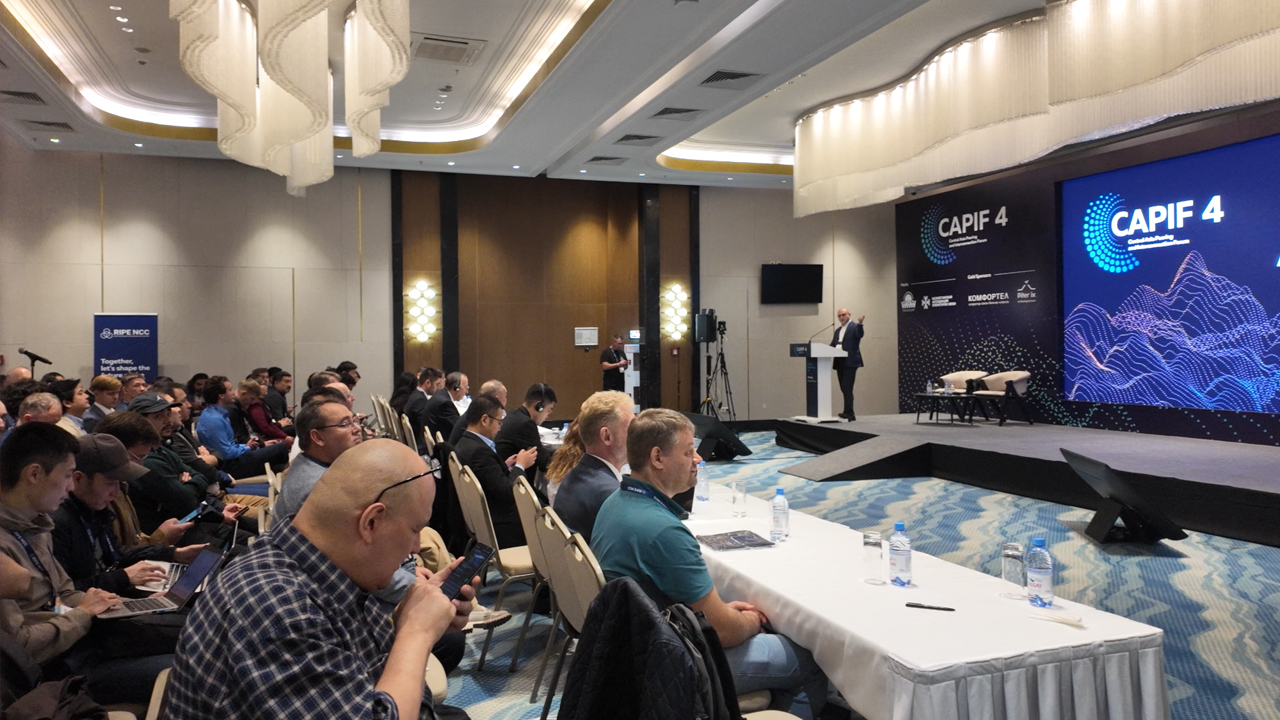
The Central Asia Peering and Interconnection Forum (CAPIF 4) took place on 25–26 September 2025 at the Swissôtel Wellness Resort Alatau in Almaty, Kazakhstan. The event was hosted by the RIPE NCC and brought together network operators, regulators, and technology leaders from across the region.
The forum opened with a session on “IPv6: The Network for the AI Era,” led by the Kazakhstan IPv6 Council. Speakers from Huawei, NIDA, and the Internet Association of Kazakhstan examined how IPv6 supports AI-driven traffic management, IoT, smart cities, and predictive analytics. Technical discussions looked at addressing, routing, and deployment practices across multiple industries.
Later, the Next Generation session presented Kazakhstan’s national IPv6 white paper and outlined the country’s ambition to become a regional digital leader. High-level officials, including Olzhas Kabenov from the Ministry of Artificial Intelligence and Digital Development, stressed IPv6 as a strategic backbone for future growth.
Sessions also explored connectivity trends in Central Asia, regional measurement tools, and backbone developments in Russia and CIS. The second day turned to space Internet, with experts from DE-CIX, Cloudflare, and Eutelsat OneWeb discussing how IXPs and datacentres will support next-generation satellite networks.
Also Read: RIPE will increase membership fees by up to 22% in 2025
Also Read: RIPE 90: Lisbon hosts global internet infrastructure dialogue
Why it’s important
Central Asia is now in a new era of Internet development. The ballooning amount of data consumed, cloud services, and AI applications are straining networks that still rely heavily on a small number of upstream providers. This set-up, now, gives the region slightly-elevated risk exposure to outages, routing leaks and increasing transit costs.
There is inconsistent routing security in the region. More widespread RPKI adoption and better routing hygiene can mitigate hijacks and inadvertent leaks. The gatherings also helped the operators agree on common standards and training, which will bolster resilience in the face of external threats.
Satellite and space Internet are getting more important, too. Serving remote and underserved regions, such networks can bridge gaps in coverage that fiber alone can’t address. The conversations demonstrated how IXPs and data centres can ground this new architecture in the local market, helping to minimize latency and maximize regional traffic exchanges.
At the end of the day, CAPIF 4 highlighted that a coordinated effort among governments, operators, and communities is the way forward. The event was a testament to an emerging desire in Asia to establish secure, state-of-the-art, interconnected networks that drive economic growth and innovation.