
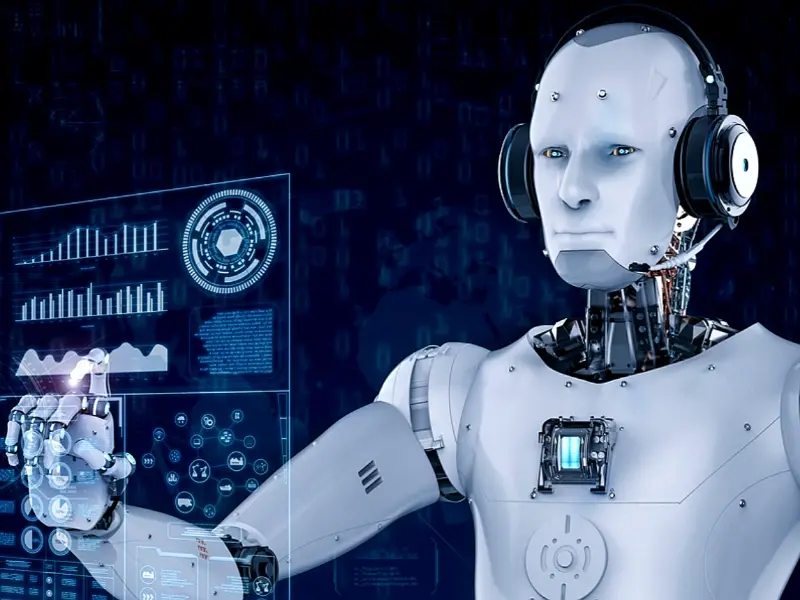
- Figure AI, founded in 2022 by Brett Adcock and headquartered in Sunnyvale, California, is pioneering the development of autonomous humanoid robots with its flagship Figure 01, aimed at transforming manufacturing and logistics industries by addressing labour shortages and enhancing supply chain efficiency.
- Founded in 2014 as Halodi Robotics, 1X Technologies aims to integrate robots into labour-intensive industries. Key developments include the Revo1 motor and EVE prototypes. Their focus now includes finding practical applications for their robots in security, logistics, and healthcare.
- Telexistence corporation was founded in January 2017 and is dedicated to the design, manufacture, manipulation, application and promotion of robots in all potential fields.
Companies like Figure AI, 1X Technologies, and Telexistence are leading the charge in developing advanced humanoid robots and AI-powered robotic arms. These innovations are set to transform a variety of industries, from manufacturing and logistics to retail, enhancing productivity and reshaping human-machine collaboration.
Also read: Who invented the humanoid robot?
1. Figure AI
Figure AI is a leading artificial intelligence robotics company founded in 2022 by Brett Adcock, focused on developing the first commercially viable autonomous humanoid robots designed to diversify applications in the manufacturing, logistics, warehousing and retail industries. Headquartered in Sunnyvale, California, in the heart of Silicon Valley – the San Francisco Bay Area – the company is at the forefront of technological innovation and development.
The company’s flagship product, the Figure 01 humanoid robot, is designed to perform a wide range of tasks, demonstrating the fusion of human-like dexterity with advanced AI technology. This groundbreaking approach is designed not only to address labour shortages and perform unwanted or unsafe jobs, but also to significantly improve the efficiency of global supply chain operations.
By early 2024, Figure AI has managed to attract significant investment to fund its ambitious project. The company has now raised $850 million, demonstrating the strong confidence of the investment community. One notable funding round was a $500 million investment led by Microsoft and OpenAI, potentially valuing the Figure at nearly $1.9 billion. This reflects high expectations and belief in Figure’s AI capabilities to revolutionise the field with its autonomous humanoid robots.
In addition to its groundbreaking products, Figure AI’s executive team brings together senior professionals with deep expertise. Founder and CEO Brett Adcock has a successful track record in the tech startup space, having previously founded Vettery and Archer Aviation.
The company’s CTO, Dr. Jerry Pratt, is a pre-eminent figure in the field of robotics, with more than two decades of humanoid robotics experience, further reinforcing the company’s leadership in advancing autonomous humanoid technology. Figure AI’s business model revolves around bringing autonomous humanoid technology to life.
Figure AI’s business model revolves around deploying humanoid robots into real-world applications, focusing first on warehouse solutions. This strategic focus on automating structured, repetitive and often dangerous tasks marks a potentially industry-changing transformation in the way the industry operates, aiming to improve productivity and safety.
As Figure AI continues to develop and expand its capabilities, it represents a major leap forward in integrating AI and robotics into the workforce, not only promising to reshape the industry but also paving the way for future innovations in autonomous humanoid technology.
Also read: Are robots better pilots than people?
2. 1X technologies
Originally known as Halodi Robotics, 1X Technologies was founded in 2014 in the Norwegian capital Oslo. Bernt Øivind Børnich, the company’s CEO, founded the company to realise a new solution: universal robots that can work alongside humans.
The company’s vision is to meet the world’s labour needs. Most humanoid robotics companies mention that their ultimate goal is to enable working alongside humans, which is an influential funding mantra in the start-up phase of the industry.
In the funding stage, this goal may be easily accepted, but in the actual commercialisation stage of getting on the ground, or relying on humanoid robots to make money, there is a need to find a specific business entry point or pilot project to confirm the capabilities of humanoid robots. However, so far, 1X has yet to come up with a specific humanoid robot on the ground project.
Here’s a timeline of 1X’s founding:
2014: 1X The company, originally known as Halodi Robotics, was founded in Norway in 2014.
2018: Developed Revo1, the world’s highest torque-to-weight ratio drive servo motor. The machine and drive technology is patented and commercialised, and Revo1 is tailored for low-reduction ratio robotics and flexible machinery.
2019: Opening of the first office outside of Norway in California, a global team collaborating around the world daily. Locations in Norway, California, and Canada, with more than 23 employees from 11 different countries. Also launches EVE, the robot predecessor to the Wheeled Robot.
2020: Announce partnership with Everon by ADT Commercial to deploy 150–250 robots for nighttime guarding in commercial buildings in the US.
2022: Collaboration with Open AI to develop AI models for robots.
2023: Started development of two humanoid robot prototypes called EVE (wheeled foot) and NEO (bipedal), received $23.5M in Series A2 funding led by Open AI, and plans for the future.
2024: Firstly, to indoor security in 1 year. Security companies, replacing human security guards.
2029: Within 5 years, we hope that robots will be deployed in logistics, medical and healthcare scenarios. But now I do not think of which specific link can be done, perhaps in the assembly line to move boxes.
3. Telexistence
Founded in 2017 and headquartered in Tokyo, Telexistence develops AI-powered robotic arms for the retail and logistics industry. In 2022, the company deployed robots in 300 FamilyMart convenience stores across Japan.
Telexistence’s concept was first introduced in 1980 by its chairman, Dr Susumu Tachi, with the vision of “advancing a robotics revolution that can benefit all of humanity”, based on a combination of human + artificial skills that enables robotic arms to “grasp any item from anywhere”.
The cockpit and agent are connected via wired LAN (local area network), Wi-Fi or 5G networks, with ultra-low latency technology to ensure data transfer. The company claims that the arm is “low-cost, mass-producible, and capable of achieving accuracy and stability for continuous operation”. In addition, the arm’s operating system is easy to use and reduces the problems that can be caused by long periods of remote operation.
To ensure a flat organisational structure and agile business operations, Telexistence members always adhere to five key principles: Systematic innovator of scale, freedom and responsibility, move fast deliver first, begin with the end to be the end, begin with the end and interdependence.