
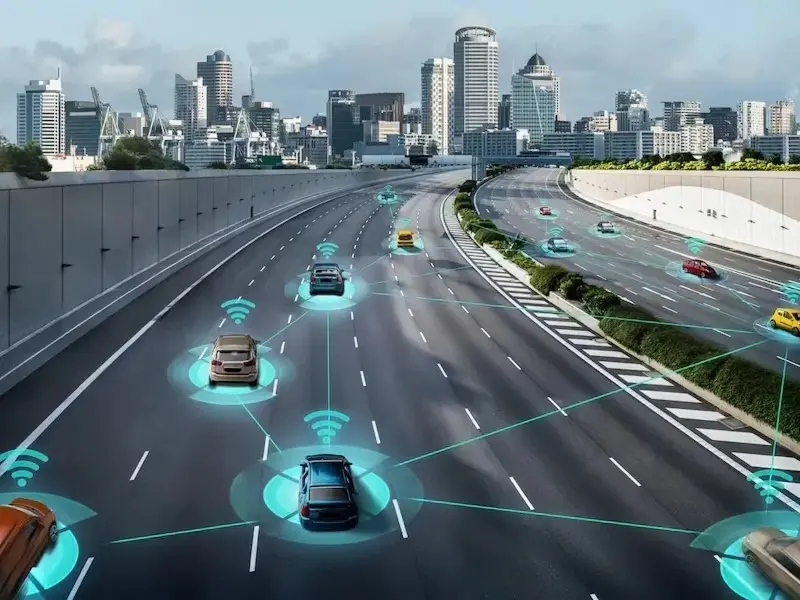
- While autonomous vehicles promise heightened safety, ethical concerns arise from the programming of driving algorithms and training methodologies.
- Ethical dilemmas arise when considering how these vehicles should navigate no-win situations in accidents, prompting questions about prioritisation and decision-making algorithms.
- Determining accountability in accidents involving autonomous vehicles is complex, requiring careful consideration of legal and ethical factors.
As self-driving cars inch closer to mainstream adoption, a spectrum of ethical quandaries emerges, casting a shadow over the horizon. The evolution of autonomous vehicle technology has brought forth an array of intricate ethical dilemmas that demand meticulous examination and resolution.
1. Technical reliability: The safety paradox
Autonomous vehicles are often touted as safer alternatives to human-driven cars, owing to their precision and consistency. However, ethical scrutiny arises from the programming of driving algorithms and the training methods employed.
While AI-driven vehicles eliminate human errors such as distraction and fatigue, ethical questions arise regarding the decision-making process during high-stakes maneuvers.
2. Accident programming: The no-win scenario
When a human driver is involved in an accident, their response is not typically calculated; rather, it is instinctive and sometimes unpredictable. Unlike humans, algorithms cannot make instinctive decisions; every decision made by an autonomous vehicle must be intentionally programmed and trained into it.
Thus, one of the most challenging ethical dilemmas regarding self-driving cars arises: how should a vehicle respond in an accident, particularly in a no-win scenario?
For instance, if an autonomous vehicle faces a crash where there is a significant chance of injury, how should the algorithm prioritise? Should it prioritise saving the occupants, pedestrians, or other drivers? What if the occupants are safe, but the car must choose between hitting two pedestrians?
Also read: How is AI used in autonomous vehicles?
3. Responsibility and liability: Who bears the burden?
The issue of accountability looms large in the realm of autonomous vehicles, posing challenges for determining responsibility in the event of accidents and collisions.
In the absence of human drivers, questions arise regarding liability—should responsibility fall on the car owner, the manufacturer, or the software developers?
Government intervention may be necessary to establish regulatory frameworks that delineate liability and accountability in autonomous vehicle accidents.
4. Deciding the ethical compass: Engineers, governments, or society?
Determining the ethical framework guiding self-driving cars involves navigating complex questions of moral responsibility and decision-making authority.
Ethical considerations in autonomous vehicles are typically determined by engineers during the development phase, raising questions about who holds the authority to dictate ethical standards.
Societal input is crucial in shaping the ethical landscape of autonomous vehicles, prompting debates over whether governments or independent bodies should oversee ethical guidelines.
Also read: What are some ethical considerations when using generative AI?
5. Impartial decision-making: Prioritising human life
Advocates for autonomous vehicles argue for impartial decision-making algorithms that prioritise human life above all else, irrespective of demographic factors.
The ethical imperative for self-driving cars is to minimise harm and prioritise the preservation of human life in accident scenarios, regardless of age, gender, or other parameters.
Fairness and equity dictate that self-driving algorithms should be programmed to prioritise the course of action that minimises overall harm and maximises safety for all parties involved.
6. Societal impact: Job displacement and security risks
Beyond ethical considerations in decision-making algorithms, the widespread adoption of autonomous vehicles raises broader societal concerns.
he automation of transportation poses significant challenges, including job displacement for drivers without adequate compensation or alternative employment opportunities.
The proliferation of self-driving technology also heightens concerns over cybersecurity risks, as vehicles become vulnerable to hacking and remote manipulation by malicious actors.