
Institution Profiling / Internet infrastructure institution

WTO members signal progress on draft e-commerce deal

WTO members signal progress on draft e-commerce deal is tracked as a internet infrastructure institution within the internet infrastructure ecosystem.

WTO members signal progress on draft e-commerce deal
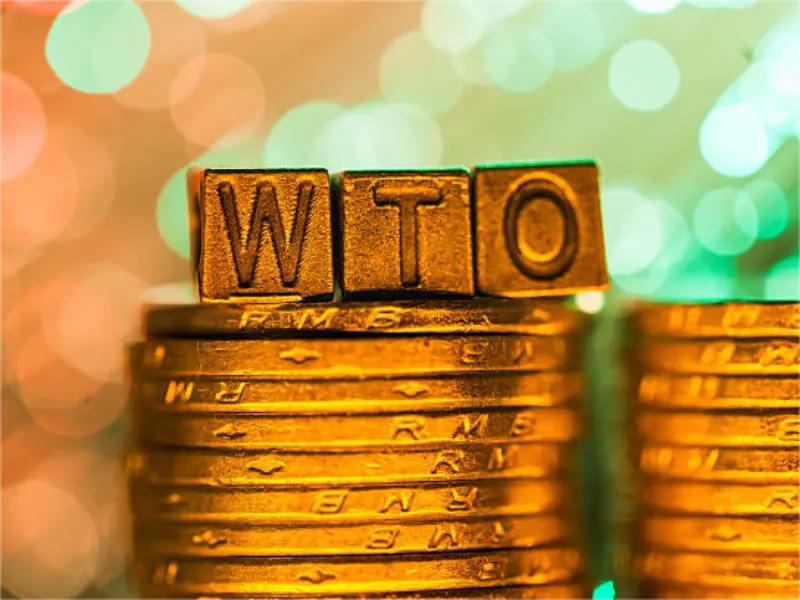
Caption: WTO members signal progress on draft e-commerce deal visual context for BTW intelligence coverage. · Source context: Existing article media was retained or restored as the subject-specific visual basis. · Relevance reason: WTO members signal progress on draft e-commerce deal is the primary subject or event subject; the image supports the article's market reading. · Image provenance: Existing curated article image retained because it is subject- or event-specific and not a generic pool placeholder.

Sources

Public references used for this article.

External references will appear here after editorial citation review.

CategoryInstitution

WTO members signal progress on draft e-commerce deal is tracked as a internet infrastructure institution within the internet infrastructure ecosystem.

RegionAfrica

WTO members signal progress on draft e-commerce deal has public-source relevance to network operations, governance, dependency mapping, or market structure.

Signal FocusInternet infrastructure institution

WTO members signal progress on draft e-commerce deal has public-source relevance to network operations, governance, dependency mapping, or market structure.

Content TypeProfile

WTO members signal progress on draft e-commerce deal is tracked as a internet infrastructure institution within the internet infrastructure ecosystem.

Primary DomainSecurity

Public-source signals support medium-impact monitoring for infrastructure visibility and dependency analysis.

TopicInternet infrastructure institution

WTO members signal progress on draft e-commerce deal is profiled by BTW Media because published evidence links it to internet infrastructure, governance, operational dependencies, or market visibility.

ImpactMedium

Public-source signals support medium-impact monitoring for infrastructure visibility and dependency analysis.

Confidence?Confidence Grade
0.90–1.00AHigh — direct sources
0.75–0.89A/BStrong
0.55–0.74B/CMedium
0.35–0.54C/DWeak–medium
0.10–0.34DWeak signal
0.00–0.09DInternal monitoring
Limited confidence (72%)

Several public sources

WTO members signal progress on draft e-commerce deal is profiled by BTW Media because published evidence links it to internet infrastructure, governance, operational dependencies, or market visibility.

  • WTO approached breakthrough on draft e-commerce deal to ban digital trade tariffs, including major economies such as US, China.
  • Controversial pact advanced despite concerns over privacy, big tech dominance and potential national security threats.

OUR TAKE
Members of the WTO, including some of the world’s largest economies such as the US, China, Japan, the UK and the European Union, have made progress in formulating a draft agreement on e-commerce that aims to ban tariffs on digital transactions. This initiative reflects a burgeoning shift towards the digital economy, with digital transactions growing twice as fast as physical trade. However, key players such as India and South Africa are conspicuously absent from the agreement, which points to ongoing concerns about the digital divide between developing and developed countries. In my view, while the pact signals progress, the exclusion of key developing economies could raise questions about its broad applicability and fairness in addressing global digital trade disparities.
Heidi Luo, BTW reporter

What happened

Members of the World Trade Organization (WTO) have reached a preliminary agreement on a draft e-commerce pact that would permanently ban tariffs on digital transactions.

The draft, finalised after five years of intense negotiations, represents a major step towards regulating the fast-growing digital trade sector, which is growing at twice the rate of physical goods trade.

91 countries agreed to the terms of the draft during a week of negotiations in Geneva, including economic heavyweights such as the US, China, Japan, the UK and the European Union.

But notable absentees included India and South Africa, two countries that have in the past expressed reservations about global trade rules that they say favour developed nations over emerging economies.

Despite the broad agreement, a footnote in the document highlights that the proposal does not yet have the support of all parties, with 11 WTO members, including the US, Brazil and Turkey, abstaining at this stage.

Also read: TikTok targets Spain, Ireland to revive European e-commerce push

Also read: China’s e-commerce superpower: Wacky viral videos and care-free influencers

Why it’s important

The agreement builds on a temporary moratorium first agreed by all 164 WTO members and recently extended for another two years at a ministerial meeting in the United Arab Emirates in March.

This moratorium has so far prevented the imposition of tariffs on electronic transmissions, helping to fuel the growth of digital goods and services worldwide. The new draft aims to make these tariff bans permanent, providing a long-term framework for international digital trade.

The current tariff-free environment has greatly benefited major US tech companies such as Amazon and Netflix, as well as many traditional businesses involved in data collection and e-commerce across international markets.

However, this growth has not come without concern. Various countries have raised concerns about issues such as privacy, the dominance of large technology companies, cybersecurity vulnerabilities and national security risks.

In the US, the draft is seen as a step in the right direction, but still needs significant refinement. “The current draft “falls short” and requires further negotiation, particularly on security exceptions,” said Maria Pagan, the Biden administration’s representative to the WTO.

Meanwhile, economic estimates by the OECD put the value of digital trade, defined as transactions ordered or delivered digitally, at around $4 trillion, nearly half of all global services exports.

Jake Colvin, president of the National Foreign Trade Council in Washington, praised the WTO’s efforts but criticised the United States for its lack of leadership. “Other countries will step into a leadership vacuum when the United States steps back,” he said.

At A Glance

  • Name: WTO members signal progress on draft e-commerce deal
  • Type: Internet infrastructure institution
  • Base: Africa
  • Profile focus: Institution

What It Does

  • Public records support monitoring of its role, services, and key relationships.

Why It Matters

  • Public-source signals support medium-impact monitoring for infrastructure visibility and dependency analysis.
  • Operational criticality: Medium
  • Time horizon: Next quarter

What To Watch

  • Monitoring focuses on verified service continuity, governance changes, and relationship signals.
NowMedium priority

Track verified source updates, role changes, and current public evidence.

QuarterMedium policy sensitivity

Public-source signals support medium-impact monitoring for infrastructure visibility and dependency analysis.

YearNext quarter outlook

Longer-term relevance depends on verified operating, policy, and relationship changes.

Member Briefing

Deeper Profile Context

Login is required to unlock the full profile briefing and source notes.

Only for Strategy Circle

Strategic Circle Access

Open to all readers. Unlock profile briefings after joining and logging in.

Join Strategic Circle

Only for Leadership Alliance

Leadership Alliance Access

For owners and management of IP-holding companies. Login required to unlock.

Join Leadership Alliance
← BackAll Companies