
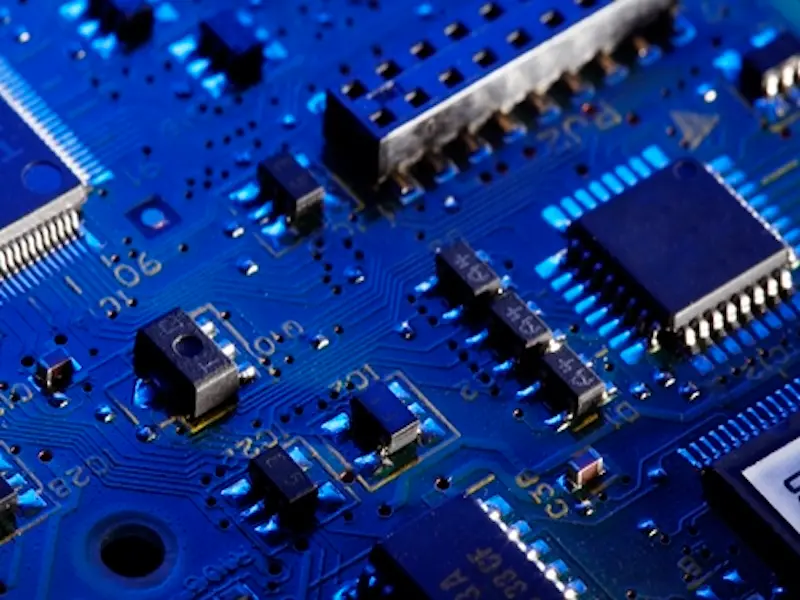
- Silicon is often hailed as the cornerstone of modern electronics, serving as the foundation for a vast array of devices, from smartphones to computers.
- As the demand for more advanced technology grows, silicon will likely continue to evolve, adapting to meet future challenges and ensuring its position at the heart of innovation in the semiconductor industry.
Understanding semiconductors
To appreciate why silicon stands out as a semiconductor, we must first understand what semiconductors are. These materials exhibit electrical conductivity between that of conductors (like metals) and insulators (like rubber). This unique characteristic allows semiconductors to control the flow of electricity, which is crucial for creating various electronic components, including diodes, transistors, and integrated circuits. The ability to manipulate electrical conductivity through a process called doping—where impurities are introduced into the semiconductor—enhances their functionality, allowing for a wide range of applications.
Key properties of silicon
Band gap: One of the primary reasons silicon excels as a semiconductor is its band gap, which measures around 1.1 electron volts (eV). This band gap allows silicon to conduct electricity at room temperature while remaining an insulator at lower temperatures. The band gap is essential for forming p-n junctions—crucial components in diodes and transistors—which enable the control of current flow.
Thermal stability: Silicon is known for its impressive thermal stability. It can operate effectively at elevated temperatures, making it suitable for high-performance applications. This stability ensures that devices maintain functionality across a broad temperature range, which is particularly important in sectors like automotive and aerospace, where environmental conditions can vary significantly.
Electron mobility: While silicon has moderate electron mobility compared to alternatives like gallium arsenide, it strikes an excellent balance between performance and manufacturability. This property allows for efficient current flow, ensuring that silicon-based devices can perform optimally in a variety of applications, from computing to telecommunications.
Natural abundance: Silicon is the second most abundant element in the Earth’s crust, primarily found in silica (silicon dioxide). This abundance results in lower costs for silicon-based products compared to other semiconductor materials, making it an economically advantageous choice for mass production in consumer electronics.
Chemical properties: Silicon forms a stable oxide layer (silicon dioxide) when exposed to air, which is beneficial in semiconductor fabrication. This oxide layer acts as an insulator and can be used to create MOSFETs (Metal-Oxide-Semiconductor Field-Effect Transistors), which are foundational components in integrated circuits.
Also read: Black Myth: Wukong leads the trend of semiconductor chip industry
Also read: Semiconductor body calls for EU ‘Chips Envoy’, more support
Manufacturing advantages
Silicon’s properties are complemented by a robust and well-established manufacturing infrastructure. The semiconductor industry has developed sophisticated techniques for silicon wafer fabrication, including:
Czochralski process: This technique allows for the growth of high-purity silicon crystals. A seed crystal is dipped into molten silicon, which is then pulled upwards slowly, forming a large single crystal that can be sliced into thin wafers.
Photolithography: This essential process in semiconductor fabrication enables the precise etching of circuit patterns on silicon wafers. Using light to transfer geometric patterns, photolithography is critical for the miniaturisation of electronic components.
Doping techniques: The ability to introduce controlled impurities into silicon allows manufacturers to tailor its electrical properties. Techniques like ion implantation and diffusion enable the precise control needed for various applications, enhancing silicon’s versatility in device fabrication.
Technological relevance
Silicon’s adaptability ensures its continued relevance as technology evolves. The development of silicon-based technologies, particularly CMOS (Complementary Metal-Oxide-Semiconductor), has revolutionised the electronics landscape by enabling the miniaturisation of components and significant increases in processing power. The integration of billions of transistors onto a single chip has facilitated the growth of compact, powerful devices that dominate the market today.
Moreover, silicon is at the forefront of emerging fields such as silicon photonics, which combines optical and electronic functionalities on a single chip. This innovation promises to enhance data transmission speeds and efficiency, catering to the ever-increasing demand for faster communication networks.
In addition, research into quantum computing is exploring silicon’s potential to realise qubits, the fundamental units of quantum information. The inherent properties of silicon, combined with existing manufacturing techniques, position it as an attractive candidate for the next generation of computing technology.