

- 5G is the fifth generation of wireless technology, offering faster speeds, lower latency, and higher connectivity than its predecessor, 4G.
- The rollout of 5G is expanding globally, with significant progress in North America, Europe, and Asia, driving innovations like smart cities and autonomous vehicles.
The advent of 5G technology marks a significant leap forward in the evolution of mobile networks. As the fifth generation of wireless technology, 5G promises to revolutionize how we connect, communicate, and interact with digital services. From blazing-fast internet speeds to enabling the Internet of Things (IoT), 5G is expected to transform industries, enhance user experiences, and lay the foundation for future innovations.
In this article, we’ll explore the key aspects of 5G, its benefits, how it works, and how it will impact various sectors. We’ll also delve into related technologies and concepts such as 5G coverage, 5G vs. 4G, 5G-enabled devices, and the future of 5G networks.
Also read: MediaTek launches Dimensity 8400 5G chipset with GenAI features
Also read: Telcos unlock revenue with network APIs for 5G
What is 5G?
5G stands for the fifth generation of wireless technology, succeeding 4G LTE (Long-Term Evolution). It is designed to provide faster internet speeds, higher bandwidth, and lower latency, enabling a host of new applications and services that were not possible with previous generations of mobile technology. The goal of 5G is to deliver ultra-reliable, low-latency communication (URLLC) for a wide variety of industries and use cases.
The 5G network is built to meet the demands of an increasingly connected world. It is expected to support the growing number of devices, services, and applications that require fast, reliable, and real-time data transmission. As Hans Vestberg, CEO of Verizon, puts it, “5G is the foundation for a truly connected world where virtually everything can be linked to the internet, from cars and homes to entire cities.” He goes on to explain, “The true impact of 5G will come not only from its speed but from its ability to enable technologies that were previously unimaginable.”
5G is not just about speed – it’s about creating a new ecosystem for connectivity. With massive MIMO (Multiple Input, Multiple Output), network slicing, and edge computing, 5G networks are able to handle millions of connected devices and provide support for real-time, high-bandwidth applications such as augmented reality (AR), virtual reality (VR), and autonomous vehicles. According to Neil Mawston, Executive Director at Strategy Analytics, “5G will be the backbone of an entirely new wave of innovation, particularly in industries like healthcare, manufacturing, and smart cities. It’s about supporting the massive number of devices and real-time applications that will drive future economic growth.”
5G is the foundation for a truly connected world where virtually everything can be linked to the internet, from cars and homes to entire cities.
Hans Vestberg, CEO of Verizon
Also read: Vodafone and Google boost upload speeds on Pixel devices with advanced 5G tech
Also read: Eutelsat expands OneWeb constellation with new 5G satellites
How does 5G work?
5G relies on a combination of advanced technologies to deliver its benefits. Here are some of the key elements that enable 5G to function:
1. High-frequency spectrum (millimeter waves)
One of the major differences between 5G and previous generations is its use of millimeter waves (24 GHz and higher frequency bands). These high-frequency bands allow 5G to transmit much larger amounts of data at faster speeds. However, higher frequencies are less effective over long distances, which is why 5G networks use small cell technology to maintain a strong signal in urban areas.
2. Massive MIMO (multiple input, multiple output)
5G networks also rely on massive MIMO technology. MIMO involves the use of multiple antennas on both the transmitter and receiver to improve signal quality and data throughput. By adding more antennas, 5G can serve many more users simultaneously without compromising speed.
3. Network slicing
Another crucial feature of 5G is network slicing. This allows operators to create virtual networks tailored to specific needs, such as ultra-low latency for autonomous vehicles or high-bandwidth for HD video streaming. Each slice is optimized for a particular use case, ensuring that different services can coexist without interference.
4. Edge computing
5G supports edge computing, which involves processing data closer to the user instead of relying on centralized data centers. This reduces latency and improves the overall performance of applications that require real-time processing, such as augmented reality (AR) and virtual reality (VR).
Also read: Verizon launches 5G Private Network with Enterprise AI
Also read: Vodafone and Ericsson launch private 5G network for Cimpor
5G vs. 4G: What’s the difference?
When comparing 5G to its predecessor 4G, the differences are striking. While 4G brought us mobile internet speeds fast enough for HD video streaming, social media, and gaming, 5G takes things to the next level. Here’s how they stack up:
1. Speed and bandwidth
- 4G: Maximum speeds of around 1 Gbps (Gigabit per second) under ideal conditions.
- 5G: Speeds can reach up to 10 Gbps, offering up to 100 times faster speeds than 4G. This allows for seamless 4K/8K video streaming, faster downloads, and enhanced gaming experiences. Qualcomm’s CEO Cristiano Amon emphasizes that “5G will enable users to download entire movies in seconds, revolutionizing the entertainment industry with ultra-high-definition content and new immersive experiences.”
2. Latency
- 4G: Latency (the time it takes for data to travel from the sender to the receiver) is typically around 30-50 milliseconds.
- 5G: Latency can drop as low as 1 millisecond, making it ideal for applications that require real-time communication, such as autonomous vehicles, remote surgeries, and industrial automation. Ginni Rometty, former CEO of IBM, explains, “5G will be the critical infrastructure for the next wave of innovation, particularly in industries like healthcare and autonomous vehicles, where real-time decisions are essential.”
3. Capacity and connectivity
- 4G: Designed to support thousands of devices per square kilometer.
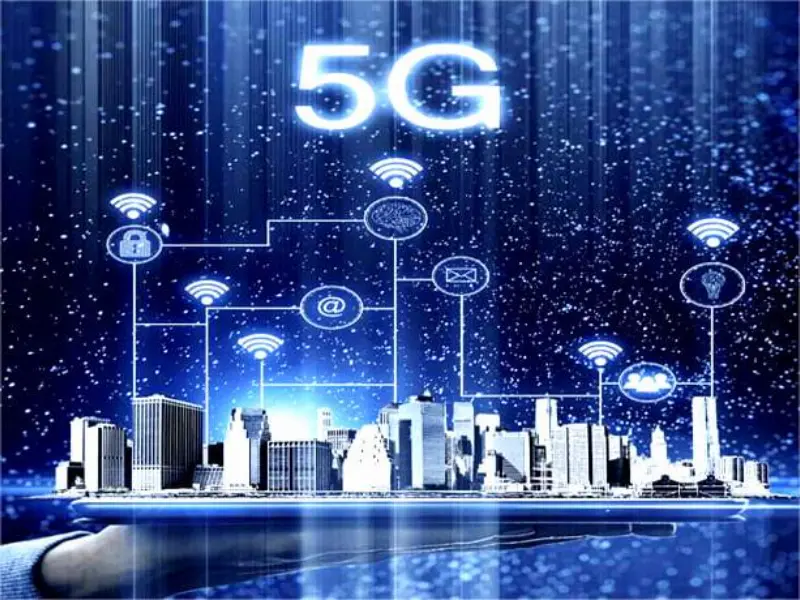
- 5G: Designed to support up to 1 million devices per square kilometer, enabling the Internet of Things (IoT) and facilitating smart cities, connected factories, and the deployment of smart devices. Neil Mawston, Executive Director at Strategy Analytics, notes, “5G’s ability to connect a million devices in a single square kilometer will power the growth of IoT, transforming cities into smart environments with real-time data monitoring and automation at scale.”
5G will be the critical infrastructure for the next wave of innovation, particularly in industries like healthcare and autonomous vehicles, where real-time decisions are essential.
Ginni Rometty, former CEO of IBM
Also read: Telia brings 5G to 99% of Norway’s population
Also read: Telia claims to be first to deliver nationwide 5G coverage in Norway
The benefits of 5G
1. Faster speeds and improved connectivity
The most obvious benefit of 5G is its speed. Users can expect faster download and upload speeds, with greater bandwidth and less congestion on the network. This is particularly useful for data-heavy applications like HD video streaming, cloud gaming, and downloading large files in seconds.
2. Lower latency
With lower latency, 5G enables near-instantaneous communication between devices. This is a game-changer for applications such as autonomous vehicles, where delays of even a few milliseconds could lead to accidents, and for real-time communication in fields like telemedicine and live video conferencing.
3. Massive connectivity
5G supports a massive increase in device connectivity, which is crucial for the IoT. From smart homes and wearable devices to industrial equipment and sensors, 5G can handle the billions of connected devices that will drive the next generation of smart technologies.
4. Enhanced reliability and security
5G networks are designed to be more reliable and secure than their predecessors. By using technologies such as network slicing, 5G can offer more reliable connections for critical services like healthcare, transportation, and finance.
5. Enabling new technologies
With its ultra-fast speeds and low latency, 5G is the foundation for emerging technologies such as augmented reality (AR), virtual reality (VR), smart cities, smart factories, and autonomous vehicles. These innovations will be able to operate seamlessly, thanks to the capabilities of 5G.
5G coverage: When will it be available?
5G coverage is expanding rapidly, but it’s not yet available everywhere. Early adopters in urban centers and select regions have access to 5G networks, while rural and remote areas may have to wait longer for full coverage. The rollout of 5G is a gradual process, with mobile carriers around the world deploying 5G infrastructure in stages. As Ginni Rometty, former CEO of IBM, highlights, “The deployment of 5G is not just a technological upgrade; it’s a fundamental shift in how we think about connectivity on a global scale.”
In many regions, 5G is being deployed in sub-6 GHz bands, which provide broad coverage but not as high speeds as millimeter-wave bands. However, millimeter-wave deployment is increasing in urban centers and high-density areas, offering super-fast speeds but requiring a denser network of small cells. “While sub-6 GHz 5G provides essential nationwide coverage, the true power of 5G will be unlocked through millimeter-wave technology, which enables the high-speed, low-latency experience needed for emerging applications like augmented reality and autonomous vehicles,” explains Hans Vestberg, CEO of Verizon.
Global 5G deployment
- North America: The United States and Canada have made significant progress in the deployment of 5G networks, with major carriers like Verizon, AT&T, and T-Mobile leading the charge.
- Europe: The European Union has set ambitious goals for 5G rollout, with countries like Germany, the UK, and France already offering 5G services in select cities.
- Asia: Countries like China, South Korea, and Japan are leading the way in 5G deployment, with South Korea being one of the first to launch nationwide 5G coverage.
While sub-6 GHz 5G provides essential nationwide coverage, the true power of 5G will be unlocked through millimeter-wave technology, which enables the high-speed, low-latency experience needed for emerging applications like augmented reality and autonomous vehicles.
Hans Vestberg, CEO of Verizon
The future of 5G: What’s next?
The future of 5G is exciting, with ongoing developments in 6G and beyond already in the works. Here are a few key trends to watch:
1. Network evolution to 6G
As 5G matures, the next generation of wireless technology, 6G, is already being developed. 6G is expected to offer even faster speeds (up to 1 Tbps) and more advanced features, such as intelligent networks, advanced AI, and quantum computing integration. 6G will likely be the technology that powers the next phase of innovations, such as holographic communication and ultra-immersive virtual environments.
2. Smart cities and connected infrastructure
5G will play a crucial role in the development of smart cities. With the ability to connect billions of devices and sensors in real-time, cities will become more efficient, sustainable, and responsive. Smart traffic management, connected public services, and real-time energy monitoring are just a few examples of what 5G will enable.
3. IoT growth
As the IoT expands, 5G will be the backbone supporting billions of interconnected devices. From wearables to smart home systems, the possibilities are endless. 5G will enable faster, more reliable communication between devices, opening up new possibilities for automation and real-time data analysis.
FAQ
5G is the fifth generation of mobile network technology, offering faster speeds, lower latency, and the ability to connect more devices simultaneously compared to 4G. While 4G supports mobile internet, 5G enables applications like smart cities, autonomous vehicles, and augmented reality with ultra-low latency and high-speed data transfer.
5G coverage is expanding globally, but availability varies by region. Major cities in countries like the US, UK, South Korea, and China already have access to 5G, but rural and remote areas may see slower rollout. Mobile carriers are gradually deploying 5G networks, with full nationwide coverage expected in the coming years.
5G can offer speeds up to 10 Gbps, which is up to 100 times faster than 4G, which maxes out at around 1 Gbps. This enables faster downloads, smooth 4K/8K streaming, and lag-free gaming, as well as the ability to handle a massive number of connected devices simultaneously.
The main benefits of 5G include significantly faster internet speeds, ultra-low latency (as low as 1 millisecond), and the capacity to support millions of devices in a small area. These improvements will enable innovations in industries like healthcare, manufacturing, smart cities, and autonomous vehicles.
Some challenges include the need for dense infrastructure, especially for high-speed millimeter-wave 5G, which requires more cell towers and small cells. Additionally, there are concerns about the cost of deploying 5G networks and regulatory issues related to spectrum allocation. Despite these challenges, the long-term benefits of 5G are expected to outweigh the obstacles.