
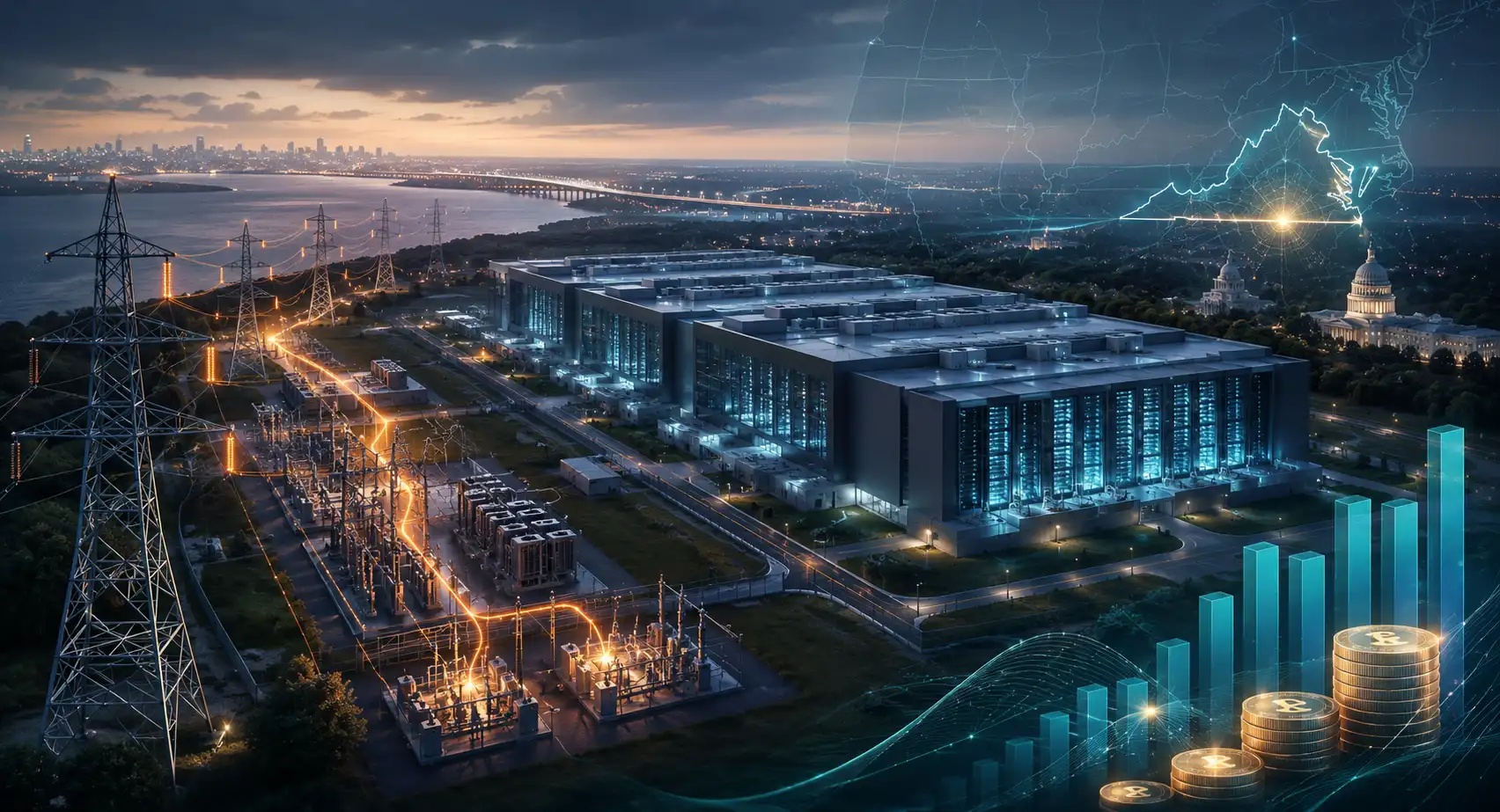
Virginia lawmakers approved a $0.011 per kWh electricity consumption tax on data centres from 1 July 2026. The measure covers utility supply, competitive retail power, and self-generated electricity while preserving equipment tax relief. The signal is that large-load power use is becoming a policy exposure for AI-era infrastructure.
Approves state budget legislation and tax measures affecting data centre electricity consumption in Virginia.
North America is the jurisdictional context visible in the evidence.
Approves state budget legislation and tax measures affecting data centre electricity consumption in Virginia.
The tax turns data centre electricity consumption into a direct fiscal policy variable in a major AI and cloud infrastructure hub.
The tax turns data centre electricity consumption into a direct fiscal policy variable in a major AI and cloud infrastructure hub.
Virginia is the largest US data centre market, and state policy changes there can influence data centre infrastructure economics and energy regulation elsewhere.
The tax turns data centre electricity consumption into a direct fiscal policy variable in a major AI and cloud infrastructure hub.
Published reporting
• Virginia's new data centre levy starts 1 July 2026, targeting all power sources
• The tax signals how states are treating data centre power demand as a fiscal liability
The fact
Virginia lawmakers have approved budget legislation introducing a new levy on data centre electricity consumption from 1 July 2026. The tax covers utility supply, competitive retail power, and self-generated electricity, including behind-the-meter generation. It is projected to raise $600m annually, with excess annual collections above that threshold returned proportionally to operators. The bill keeps equipment sales tax relief but excludes data centres from certain large-load rate benefits. The exact per-kWh rate remains unclear in publicly available sources.
The Assessment
Virginia is not turning against data centres; it is making their power load more directly taxable. That matters because the state remains the industry's largest US hub while testing a model that preserves investment incentives but recovers more public revenue from electricity demand. The near-term effect is likely to be higher marginal project costs rather than a market exit. The wider signal is that large-load power use is becoming a policy risk for AI-era infrastructure.
What to Watch
The governor's decision, the State Corporation Commission's rules within 60 days, and whether the tax shifts new project economics or prompts other states to consider similar measures.
Signal Brief
- Signal: Virginia passes first data centre power tax
- Signal Type: Data Centre Electricity TAX
- Region: North America
- Market Class: Case File
Operating Surface
- Published sources should identify the affected parties, operating surface, and market exposure before this trend map is treated as complete.
Market Context
- The tax turns data centre electricity consumption into a direct fiscal policy variable in a major AI and cloud infrastructure hub.
- Operational relevance: Medium
- Time Horizon: Next quarter
What To Watch
- Watch for official statements, regulatory updates, customer or partner exposure, and follow-up disclosures.
Member Briefing
Deeper Trend Context
Sign in with the right membership level to unlock the full briefing and source notes.
Only for Strategic Circle
Strategic Circle
Open to all readers. Unlock trend briefings after joining and signing in.
Join Strategic CircleOnly for Leadership Alliance
Leadership Alliance
For operators, investors, and policy teams that need relationship evidence, failure paths, and source notes. Sign in to unlock.
Join Leadership Alliance