
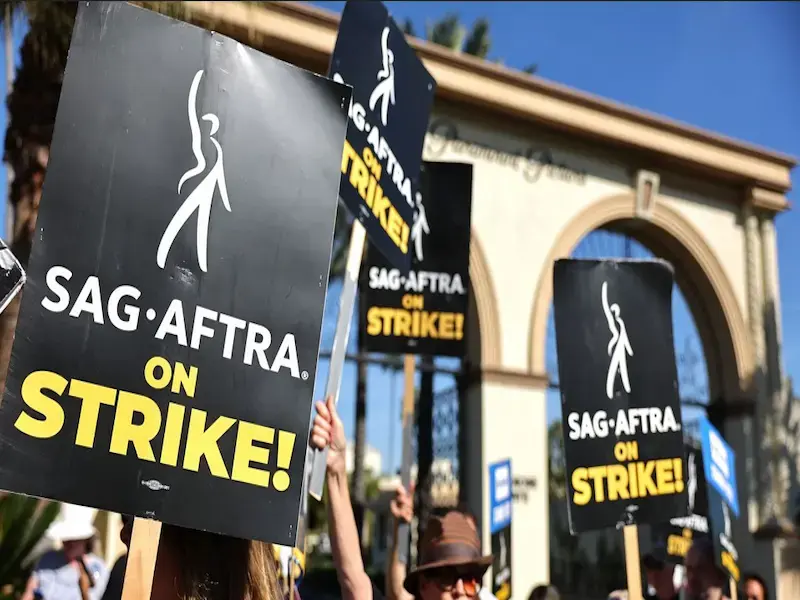
- The SAG-AFTRA union said a preliminary agreement with record labels requires consent and compensation before the release of songs that use digital reproductions of artists’ voices.
- Apart from AI protection, other major improvements are raised minimums, improvements in health and retirement benefits, and an uptick in the portion of streaming revenue covered by contributions.
- In a statement on its website, the Screen Actors Guild-American Federation of Television and Radio Artists (SAG-AFTRA) said the agreement is for five years, from 2021 to 2026.
US entertainment union Screen Actors Guild-American Federation of Television and Radio Artists (Sag-Aftra) has reached a tentative agreement with major record labels such as Warner Music Group and Sony Music Entertainment that includes raising the minimum wage and preventing the use of artificial intelligence.
The groundbreaking agreement
The deal covers the five years from 2021 to 2026 and has been unanimously approved by the executive committee of SAG-AFTRA, which represents roughly 160,000 actors and other media professionals, the union said in a statement on its website.
Effective immediately upon ratification, the artificial intelligence guidelines stipulate that the terms “artist,” “singer” and “royalty artist” solely refer to humans.
Consent, as well as minimum compensation standards and detailed usage specifications, must be explicitly obtained before the release of recordings that are digitally reproduced using the artist’s voice.
Apart from AI protection, other major contractual enhancements include higher minimums, improved health and retirement benefits, and an increase in the portion of streaming income covered by contributions.
Also read: Should dead children be given an AI ‘afterlife’?
AI affects the artist’s work
Artists such as Beyoncé feel strongly opposed to this issue.
Earlier this year, during a press conference for Cowboy Carter, Beyoncé made a surprise statement against the growing presence of artificial intelligence in music.
“The joy of creating music is that there are no rules,” said Beyoncé. “The more I see the world evolving the more I felt a deeper connection to purity. With artificial intelligence and digital filters and programming, I wanted to go back to real instruments.”
Artificial intelligence has become a big issue in the entertainment industry, and this agreement could go some way to protecting the intellectual property of artists.
According to Duncan Crabtree-Ireland, SAG-AFTRA National Executive Director and Chief Negotiator, “This agreement ensures that our members are protected. While technology can enhance the creative process, the essence of music must always be rooted in genuine human expression and experience.”