
Institution Profiling / Internet infrastructure institution

US court rejects challenges to FCC approval of SpaceX satellites

US court rejects challenges to FCC approval of SpaceX satellites is tracked as a internet infrastructure institution within the internet infrastructure ecosystem.

US court rejects challenges to FCC approval of SpaceX satellites
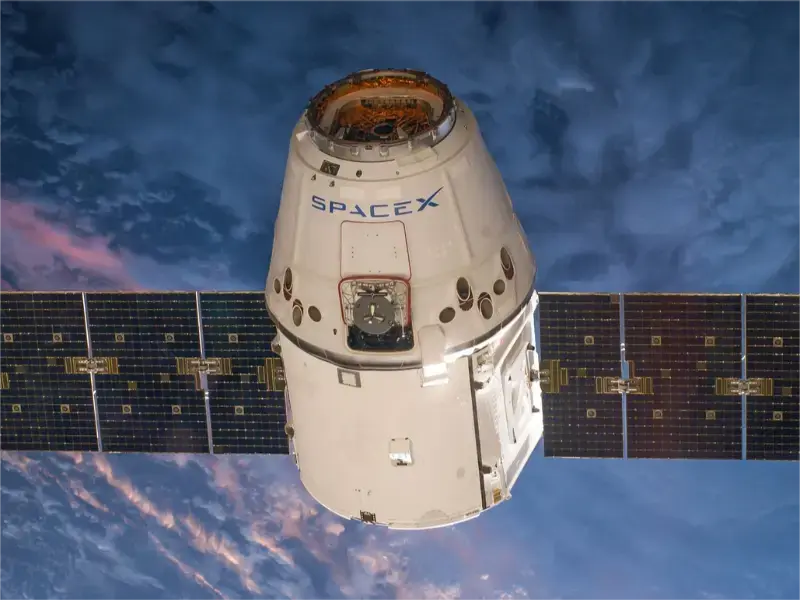
Caption: US court rejects challenges to FCC approval of SpaceX satellites visual context for BTW intelligence coverage. · Source context: Existing article media was retained or restored as the subject-specific visual basis. · Relevance reason: US court rejects challenges to FCC approval of SpaceX satellites is the primary subject or event subject; the image supports the article's governance reading. · Image provenance: Existing curated article image retained because it is subject- or event-specific and not a generic pool placeholder.

Sources

Public references used for this article.

CategoryInstitution

US court rejects challenges to FCC approval of SpaceX satellites is tracked as a internet infrastructure institution within the internet infrastructure ecosystem.

RegionGlobal

US court rejects challenges to FCC approval of SpaceX satellites has public-source relevance to network operations, governance, dependency mapping, or market structure.

Signal FocusInternet infrastructure institution

US court rejects challenges to FCC approval of SpaceX satellites has public-source relevance to network operations, governance, dependency mapping, or market structure.

Content TypeProfile

US court rejects challenges to FCC approval of SpaceX satellites is tracked as a internet infrastructure institution within the internet infrastructure ecosystem.

Primary DomainGovernance

Public-source signals support medium-impact monitoring for infrastructure visibility and dependency analysis.

TopicInternet infrastructure institution

US court rejects challenges to FCC approval of SpaceX satellites is profiled by BTW Media because published evidence links it to internet infrastructure, governance, operational dependencies, or market visibility.

ImpactMedium

Public-source signals support medium-impact monitoring for infrastructure visibility and dependency analysis.

Confidence?Confidence Grade
0.90–1.00AHigh — direct sources
0.75–0.89A/BStrong
0.55–0.74B/CMedium
0.35–0.54C/DWeak–medium
0.10–0.34DWeak signal
0.00–0.09DInternal monitoring
Limited confidence (80%)

Several public sources

US court rejects challenges to FCC approval of SpaceX satellites is profiled by BTW Media because published evidence links it to internet infrastructure, governance, operational dependencies, or market visibility.

  • A U.S. appeals court supports SpaceX’s plan to deploy thousands of Starlink satellites.
  • SpaceX and T-Mobile partner to ensure uninterrupted mobile service in disaster zones and remote areas.

OUR TAKE
A U.S. appeals court recently upheld the FCC’s approval of SpaceX’s expansion of its Starlink satellite network, which will significantly improve global internet access by deploying up to 29,988 satellites. The decision marks a significant victory for SpaceX over the objections of DISH Network and environmental groups concerned about potential interference and environmental impacts. The ruling upholds the FCC’s authority and sets the stage for major improvements in global connectivity, particularly in remote and disaster-prone areas. Meanwhile, SpaceX’s collaboration with T-Mobile promises to revolutionise mobile communications by maintaining connectivity even in extreme disaster scenarios.
–Heidi Luo, BTW reporter

What happened

A U.S. appeals court on Friday upheld the Federal Communications Commission’s (FCC) decision to approve SpaceX’s plan to deploy thousands of Starlink satellites to provide space-based broadband internet service. The confirmation allows SpaceX to proceed with its ambitious Gen2 Starlink project, which aims to launch up to 29,988 satellites to improve internet access worldwide.

The decision comes despite objections from DISH Network and a coalition of amateur astronomers and environmentalists who raised concerns about potential signal interference and environmental impacts. The court’s ruling affirmed that the FCC acted within its legal authority in granting the permits, which include authorisations for 4,425 first-generation satellites so far and an additional 7,500 in 2022.

This continued legal and regulatory support paves the way for SpaceX to significantly expand its satellite constellation, which promises to improve global connectivity and bridge the digital divide.

Also read: SpaceX secures $1.8B to develop covert US spy satellite network

Also read: Apple Partners with SpaceX to Supercharge iPhone SOS

Why it’s important

Starlink satellites have become increasingly important in emergency situations as they provide vital internet services to disaster-affected regions. One notable example is in Ukraine, where Starlink maintained internet connectivity after the conflict disrupted traditional satellite operations, and helped support essential communications and infrastructure. According to Mykhailo Fedorov, Ukraine’s Minister of Digital Affairs, some 15,000 people in Ukraine rely on Starlink’s internet service every day.

In addition, the technology partnership between SpaceX and T-Mobile, announced shortly after the court’s decision, aims to leverage Starlink’s capabilities to eliminate mobile dead zones. This initiative will use Starlink’s second-generation satellites combined with T-Mobile’s bandwidth to ensure connectivity in remote and disaster-stricken areas. The partnership promises to keep mobile phones working even when traditional cell towers are compromised.

Elon Musk highlighted the resilience of this technology, which he explained can maintain communications even in the face of severe natural disasters. He said that mobile phones would continue to function, which would ensure uninterrupted communications, even if an entire region lost connectivity due to events such as hurricanes, floods or fires, or if all traditional cell towers were destroyed.

At A Glance

  • Name: US court rejects challenges to FCC approval of SpaceX satellites
  • Type: Internet infrastructure institution
  • Base: Global
  • Profile focus: Institution

What It Does

  • Public records support monitoring of its role, services, and key relationships.

Why It Matters

  • Public-source signals support medium-impact monitoring for infrastructure visibility and dependency analysis.
  • Operational criticality: Medium
  • Time horizon: Next quarter

What To Watch

  • Monitoring focuses on verified service continuity, governance changes, and relationship signals.
NowMedium priority

Track verified source updates, role changes, and current public evidence.

QuarterMedium policy sensitivity

Public-source signals support medium-impact monitoring for infrastructure visibility and dependency analysis.

YearNext quarter outlook

Longer-term relevance depends on verified operating, policy, and relationship changes.

Member Briefing

Deeper Profile Context

Login is required to unlock the full profile briefing and source notes.

Only for Strategy Circle

Strategic Circle Access

Open to all readers. Unlock profile briefings after joining and logging in.

Join Strategic Circle

Only for Leadership Alliance

Leadership Alliance Access

For owners and management of IP-holding companies. Login required to unlock.

Join Leadership Alliance
← BackAll Companies