
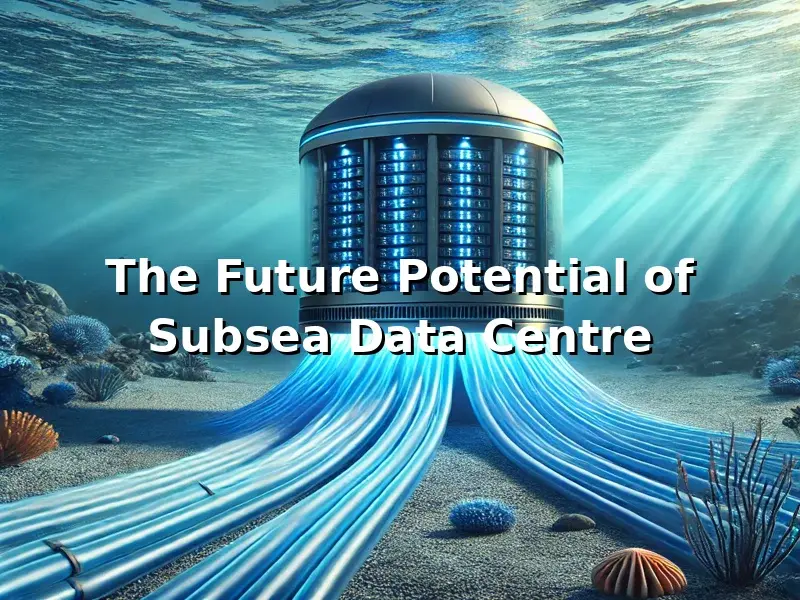
- Underwater data centres can reduce cooling energy consumption by up to 90%, significantly cutting cost and carbon emissions while leveraging seawater for natural cooling.
- Despite their efficiency and environmental benefits, widespread adoption is hindered by high initial investment, maintenance challenges, and regulatory uncertainties.
As the digital world expands, so does the demand for data storage and processing. Every click, search, and streamed video requires power-intensive data centres to function. The problem? Traditional data centres consume vast amounts of energy, generate significant heat, and rely on inefficient cooling systems that strain power grids and contribute to global carbon emissions.
A revolutionary alternative is emerging: underwater data centres. By harnessing the natural cooling properties of the ocean, these submerged data hubs could significantly cut energy consumption, lower costs, and reduce environmental impact. But if this solution is so promising, why hasn’t the industry fully embraced it?
How do underwater data centres work?
Underwater data centres are sealed, pressure-resistant capsules that sit on the ocean floor. These structures house computer servers and networking equipment just like traditional data centres, but with one crucial difference—they use seawater as a natural cooling mechanism instead of energy-intensive air conditioning systems.
This concept has already been tested in the real world. Microsoft’s Project Natick, a prototype underwater data centre deployed off the coast of Scotland, operated for two years with remarkable success. The experiment found that underwater data centres were eight times more reliable than land-based counterparts, thanks to the stable, controlled conditions underwater.
How much energy can underwater data centres save?
One of the biggest challenges of traditional data centres is cooling. Cooling alone accounts for up to 40% of a data centre’s total energy consumption. To put that into perspective, global data centres consume around 200 terawatt-hours of electricity annually—more than some entire countries.
By leveraging the ocean’s naturally cold temperatures, underwater data centres can reduce cooling energy use by up to 90%. This translates into massive energy savings and a significant reduction in carbon emissions. With large-scale adoption, underwater data centres could save billions of kilowatt-hours per year, helping countries meet sustainability targets and reduce reliance on fossil fuels.
The environmental impact: A step toward sustainable tech
Beyond energy efficiency, underwater data centres offer an environmentally friendly alternative to traditional land-based infrastructure.
Key Environmental Benefits:
- Reduced Land Use – Unlike conventional data centers that require vast real estate, underwater data centres free up valuable land for other uses.
- Minimal Carbon Footprint – By cutting cooling energy demands, they significantly reduce greenhouse gas emissions.
- Potential for Renewable Energy Integration – Future designs could be powered by offshore wind, tidal, or wave energy, making them even more sustainable.
- Low Impact on Marine Life – Sealed and silent, these units produce minimal noise and heat pollution. Some studies even suggest they could serve as artificial reefs, encouraging marine biodiversity.
However, critics argue that deploying large-scale underwater data centres could disrupt ocean ecosystems. While research suggests the impact is minimal, more long-term studies are needed to fully understand the potential consequences.
If this works, why aren’t we doing it?
Despite the promising benefits, underwater data centres face several challenges that have slowed their adoption:
1. High Initial Investment
Deploying and maintaining underwater data centres requires significant upfront costs. While long-term savings on cooling and land use make them financially attractive, the initial capital expenditure remains a barrier for many companies.
2. Maintenance and Repairs
One of the biggest concerns is hardware servicing. Unlike traditional data centres, where technicians can replace faulty parts quickly, underwater units require robotic maintenance or retrieval operations, which are still in the early stages of development. However, Microsoft’s Project Natick showed that underwater servers actually had fewer failures than land-based data centres, suggesting that better environmental conditions could lead to less frequent maintenance.
3. Regulatory and Legal Hurdles
The placement of underwater data centres involves marine regulations, environmental approvals, and geopolitical considerations. Many governments lack clear policies for deploying commercial underwater data centres, slowing down large-scale adoption.
4. Public and Industry Skepticism
As with any new technology, adoption takes time. Many companies are hesitant to invest in unproven solutions until they see large-scale success stories.
A future worth exploring
Despite these challenges, the potential of underwater data centres is undeniable. With ongoing advancements in robotics, AI-driven monitoring, and sustainable ocean infrastructure, the barriers to adoption are steadily being addressed.
The real question is: Why are we still relying on outdated, energy-intensive cooling methods when a more efficient, sustainable alternative exists?
Major tech companies and governments should invest in further research and pilot programs to refine this technology. If underwater data centres can deliver on their promise, they could reshape the future of cloud computing, offering a greener, more efficient way to power our digital world.
So, what do you think? Is the tech industry ready to take the plunge, or will it keep clinging to outdated land-based infrastructure?