
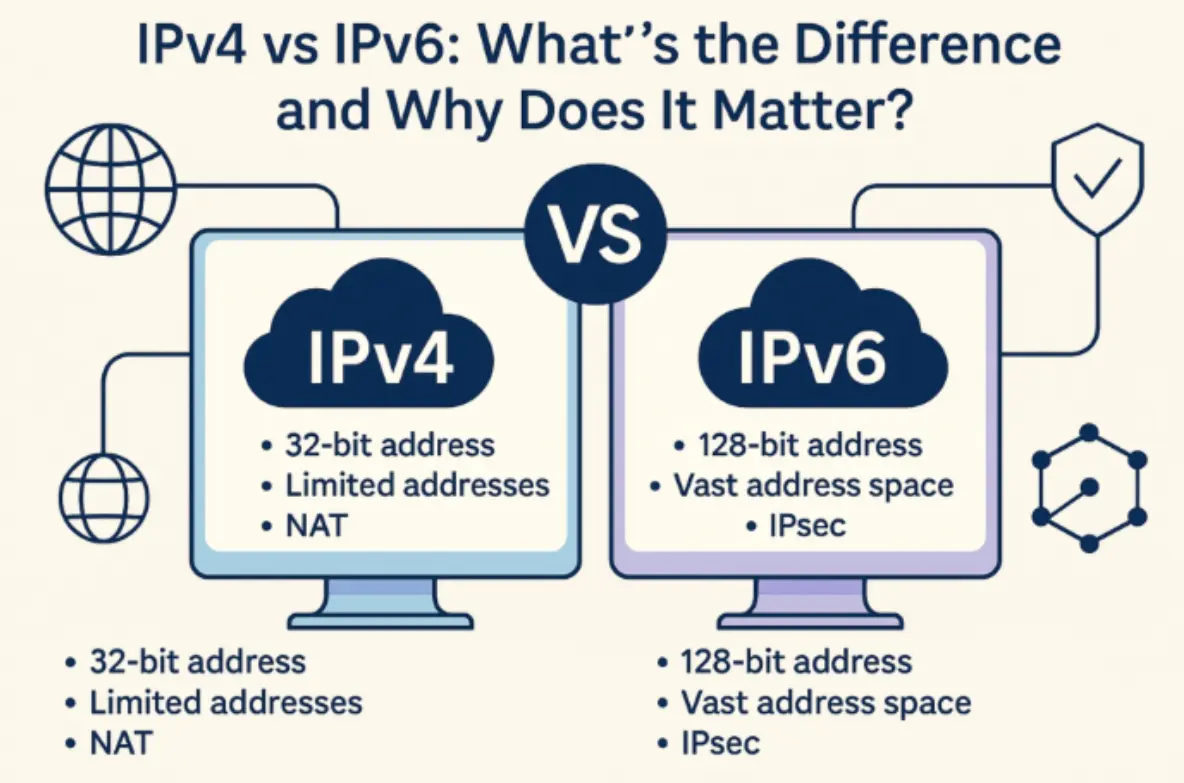
I pulled up Google’s IPv6 adoption tracker this morning. Sixty percent. That’s the milestone we’ve been waiting for—sixty percent of users now access Google services over IPv6. The transition is happening.

But here’s what the headline doesn’t tell you: 52.8% still rely on IPv4 [^2]. These aren’t mutually exclusive numbers. They’re the same users, on the same devices, depending on both protocols simultaneously. We’re not transitioning—we’re straddling.

## The Numbers Tell a Story

Google’s tracker shows 60% IPv6 adoption as of early 2026 [^1](https://www.google.com/intl/en/ipv6/statistics.html). 52.8% of Google users still access services over IPv4 [^2](https://www.google.com/intl/en/ipv6/statistics.html). Geoff Huston warns the age of a universally connected Internet may be waning [^3](https://www.potaroo.net).
## What I’ve Learned From the Inside

Geoff Huston’s been warning about this for years. I interviewed him last month, and his outlook hasn’t softened: “The age of a universally connected Internet may be waning,” he told me. “We’re heading toward fragmented networks with varying interoperability.”

That’s not a transition. That’s a balkanization.

The dual-stack present—where networks run both IPv4 and IPv6 simultaneously—works. But it’s expensive, complex, and fragile. Every NAT gateway, every translation layer, every workaround is technical debt accumulating interest.
## The Human Element

A network engineer friend of mine has a saying: “IPv6 is the future, and it always will be.” He’s been hearing that for twenty years.

But here’s what he’s also seeing: dual-stack costs are climbing. Every translation layer adds latency. Every NAT gateway adds complexity. His company budgets $200,000 annually just for IPv4-IPv6 coexistence infrastructure.

“That’s not transition cost,” he told me. “That’s permanent tax on doing business.”

## Strategic Implications

The implications extend beyond individual balance sheets. the ipv4-ipv6 dual-stack equilibrium is unsustainable long-term. This requires fundamental shifts in how organizations approach digital infrastructure:

**For CFOs:** IPv4 addresses need to appear on asset registers with explicit market values. Annual impairment testing should reflect realistic replacement costs, not theoretical obsolescence.

**For CTOs:** Utilization tracking needs to become as rigorous as capacity planning for compute or storage. Quarterly audits should identify idle resources and reclamation opportunities.

**For Legal Teams:** Lease agreements need explicit renewal terms, exit cooperation requirements, and RIR compliance warranties. Generic templates won’t suffice.

**For Board Members:** IP asset strategy should be part of enterprise risk oversight. A single lease expiration can disrupt more revenue than a data center outage.

## Looking Ahead

Where does this leave us? I see three scenarios for the next three to five years:

**Base Case:** IPv4 leasing continues growing as organizations recognize the flexibility benefits. Prices stabilize in the $15-$25 range, reflecting operational value rather than speculation. Dual-stack becomes standard practice for enterprises.

**Bull Case:** IPv6 adoption accelerates faster than expected, driven by regulatory mandates or carrier defaults. IPv4 demand declines, but prices remain supported by legacy dependencies. Leasing yields compress to 8-10%.

**Bear Case:** Fragmentation accelerates. RIR policies diverge further. Cross-border transfers become harder. IPv4 holders in favorable jurisdictions gain strategic advantages. The globally interoperable internet becomes a patchwork of regional networks.

My base case probability: 60%. Bull case: 20%. Bear case: 20%.

The organizations that thrive will be those that prepare for all three.
## My Take

**My Take:** I’ve covered internet infrastructure for over a decade. I’ve seen technologies rise and fall, markets boom and bust, predictions proved right and wrong.

The IPv4 story stands out for one reason: it’s not about technology. It’s about governance, economics, and human behavior. The protocol is thirty years old. The market dynamics are brand new.

Analysis of Google IPv6 statistics, February 2026

What I’ve learned from reporting this story: the executives who understand IPv4 as digital capital—not IT overhead—will have a meaningful advantage. The ones who don’t will learn the hard way.

Your move.

*The author has covered internet infrastructure and digital markets since 2015. Contact: [editor@btw.media](mailto:editor@btw.media)*

**Footnotes:**

[^1] Google’s tracker shows 60% IPv6 adoption as of early 2026. Source: https://www.google.com/intl/en/ipv6/statistics.html
[^2] 52.8% of Google users still access services over IPv4. Source: https://www.google.com/intl/en/ipv6/statistics.html
[^3] Geoff Huston warns the age of a universally connected Internet may be waning. Source: https://www.potaroo.net