
- TAWAL’s shared Open RAN setup claims up to 60% cost savings compared to typical single-operator models
- Model aims to simplify rollout, reduce hardware duplication, and enable flexible spectrum use
What happened: TAWAL introduces shared Open RAN for multi-operator use
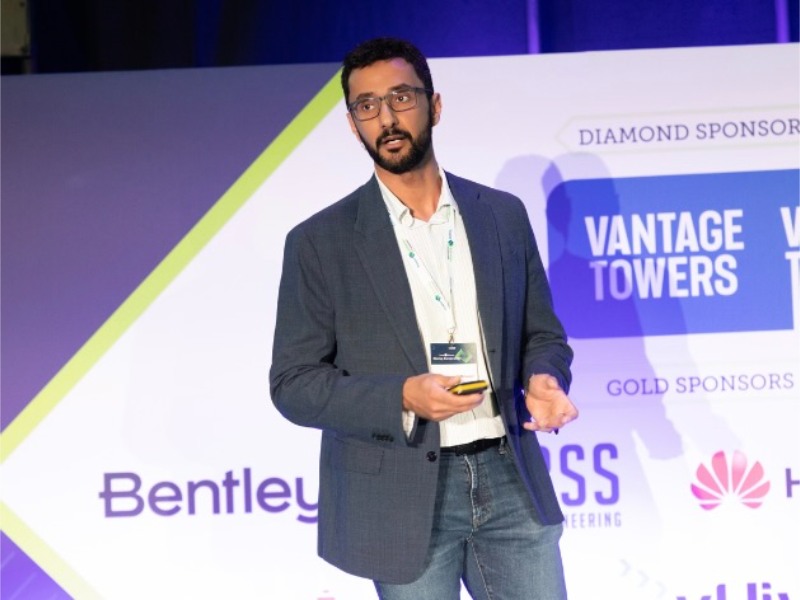
Saudi tower infrastructure company TAWAL has unveiled what it claims to be the world’s first shared Open RAN deployment on a single chassis, supporting multiple mobile network operators (MNOs) from one tower. Presented at TowerXchange Meetup Europe 2025, the case study highlights how TAWAL is tackling rising network deployment costs and the growing challenge of multi-vendor integration.
Built in partnership with Nokia, the system hosts three operators: two share the same chassis and virtualised compute under an active sharing agreement, while a third runs independently on a separate virtual machine. According to chief commercial officer Abdulrahman Al Moaiqel, the model delivers 40–60% cost reductions compared to typical Open RAN setups.
Crucially, each operator retains full control over software, network features, and propagation strategies. TAWAL’s approach borrows from cloud hyperscalers—offering compute and radio as a service while letting MNOs use vendors of their choice, such as Mavenir or Rakuten.
Also read: ZTE and TAWAL deepen partnership
Also read: Tech giants accused of using unauthorised YouTube transcripts to train AI models
Why it’s important
TAWAL’s model attempts to overcome a major friction point in Open RAN adoption: interoperability challenges. While Open RAN was originally pitched as a cost-saving, flexible alternative to traditional telecom infrastructure, real-world implementations have proven complex and expensive due to the difficulty of integrating equipment from multiple vendors.
By consolidating infrastructure and offering a hosted environment, TAWAL reduces hardware duplication and promotes space and energy efficiency. The firm is even exploring shared mmWave deployments, where one 800 MHz radio dynamically serves multiple operators, potentially removing the need for costly spectrum auctions.
The initiative has already earned national R&D recognition and is being tested for private networks and greenfield sites, where economic and regulatory conditions are more favourable. While challenges remain—especially with regulatory lag and operators’ desire for differentiation—TAWAL’s project could serve as a blueprint for scalable, shared Open RAN models in dense urban markets.