
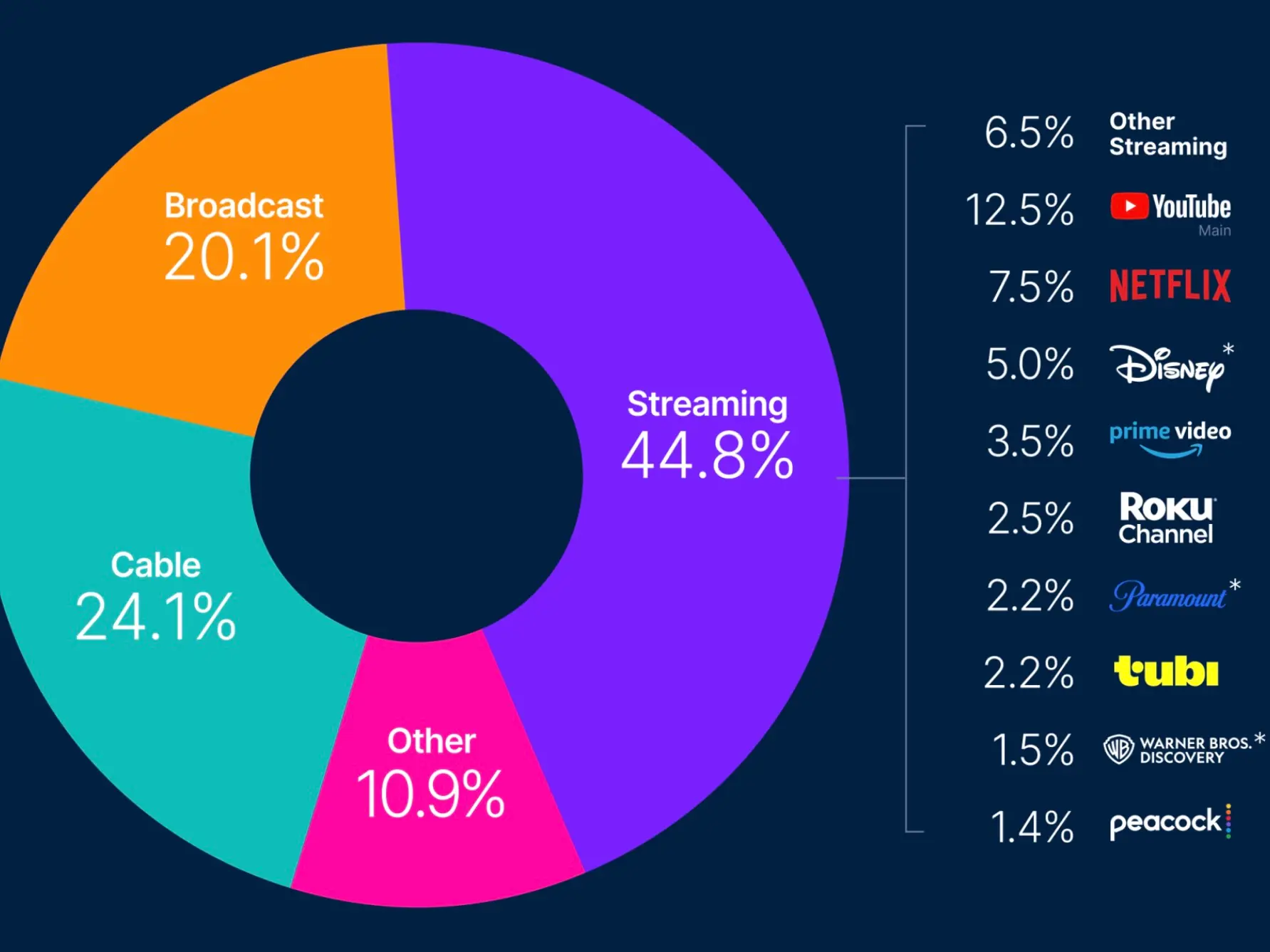
- Streaming accounted for 44.8% of U.S. TV viewing in May, overtaking cable and broadcast combined.
- YouTube led with 12.5%, while Pluto TV, Tubi, and Roku Channel made up 5.7% combined.
What happened: streaming leads US TV use
In May 2025, streaming platforms for the first time surpassed both broadcast and cable television in the United States, capturing 44.8% of total TV viewership. Nielsen’s latest The Gauge report revealed that YouTube led with 12.5%, followed by Netflix with 7.6%, and Hulu and Prime Video also contributed significantly. Cable accounted for 24%, while broadcast slipped to 20%, showing a historic decline for traditional formats.
This shift reflects deeper trends in technology and consumer behavior. The widespread adoption of smart TVs, mobile streaming apps, and personalized recommendation systems has enabled users to consume content on their own terms. FAST (free ad-supported streaming TV) platforms like Pluto TV, Tubi, and The Roku Channel now reach diverse audiences with curated, cost-free content. Younger viewers increasingly default to digital-first platforms like YouTube and TikTok, while even older generations are embracing streaming for its flexibility, convenience, and broader content variety.
Also Read: S&P lowers Warner Bros Discovery outlook to ‘negative’ on cable TV decline
Also Read: Netflix forecasts $44B revenue for 2025
Why it is important
Streaming’s dominance represents more than just a ratings milestone—it signals a restructuring of TV economics. Advertisers are shifting investment away from linear networks to digital platforms with higher targeting precision and engagement metrics. FAST platforms benefit from low cost per reach, making them attractive to budget-conscious brands. Traditional broadcasters are under pressure to build hybrid or streaming-first ad strategies to compete.
This transition also reshapes power dynamics in global content production. Streaming services, backed by tech giants, now influence commissioning decisions, genre trends, and even global narratives. Regional stories that appeal to niche audiences can gain international traction through algorithm-driven recommendations. This weakens the cultural gatekeeping power once held by traditional broadcasters.
Finally, the metrics of success are changing. Instead of overnight ratings, platforms prioritize watch time, user retention, and completion rates. This alters how shows are developed, released, and renewed. Content now competes not just for attention, but for time spent—and streaming platforms are built to win that battle.