
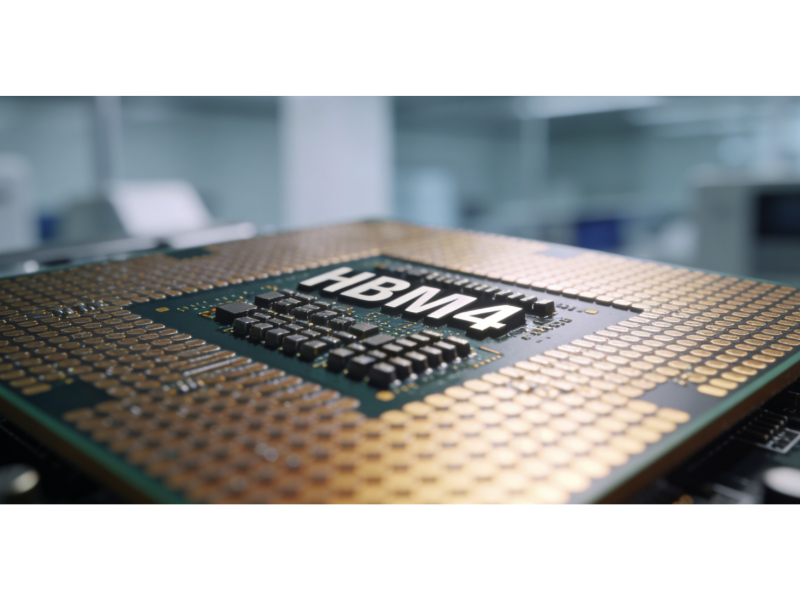
- Samsung Electronics reports strong customer feedback on its next-generation high-bandwidth memory (HBM4) and advances discussions on supply to major AI chip customers
- Analysts note that while HBM4 development marks progress, broader market dynamics and competition with rivals such as SK Hynix may moderate Samsung’s gains in 2026
What happened: HBM4 development and customer response
Samsung Electronics highlighted progress in its next-generation high-bandwidth memory (HBM) chips, known as HBM4, in a New Year address to investors and the market. Samsung’s co-CEO and head of the semiconductor division, Jun Young-hyun, said customers have praised the competitiveness of the new memory technology, signalling confidence from key clients. According to the report, customers even declared “Samsung is back” in the memory race, underlining revived interest in the Korean company’s HBM4 products.
The company is in discussions over supplying HBM4 chips to Nvidia, a leading developer of artificial intelligence chips, as Samsung seeks to narrow the competitive gap with rivals in high-performance memory.
The context for this development is a broader memory market where HBM technology is crucial for AI and high-performance computing applications, but where Samsung has lagged in previous generations of products compared with competitors such as SK Hynix. According to industry sources, SK Hynix holds a dominant share of the HBM4 supply negotiations with Nvidia, with Samsung expected to take the second-largest volume.
Also Read: Samsung and KT validate AI-RAN on commercial networks, boosting 6G prospects
Also Read: Samsung honoured for AI and security breakthroughs at CES 2026
Why it’s important
The progress with HBM4 technology matters because high-bandwidth memory is a key component in AI accelerators and high-performance computing systems. As artificial intelligence workloads grow, demand for memory that can handle large data flows quickly has driven chipmakers to prioritise HBM development. Samsung’s focus on HBM4 could enhance its positioning in this segment, where performance and supply reliability are critical for customers such as Nvidia and major cloud service providers.
However, observers caution that customer praise and ongoing discussions do not necessarily translate into immediate market dominance. SK Hynix’s established position and finalised supply agreements for HBM4 with Nvidia suggest Samsung will face stiff competition through 2026. Additionally, broader economic factors, including rising global tariffs and component costs, were highlighted by Samsung’s leadership as challenges that could affect chip supply chains and pricing pressures in the year ahead.
There are also questions about how quickly next-generation products can be certified and scaled to full mass production. While mass production plans for HBM4 are expected in 2026, performance optimisation and certification with major customers remain ongoing processes. In this context, industry watchers will be looking for concrete supply agreements and volume commitments as clearer indicators of Samsung’s ability to compete in the high-bandwidth memory market.