
Institution Profiling / Internet infrastructure institution

Russia to allow crypto payments in international trade to counter sanctions

Russia to allow crypto payments in international trade to counter sanctions is tracked as a internet infrastructure institution within the internet infrastructure ecosystem.

Russia to allow crypto payments in international trade to counter sanctions
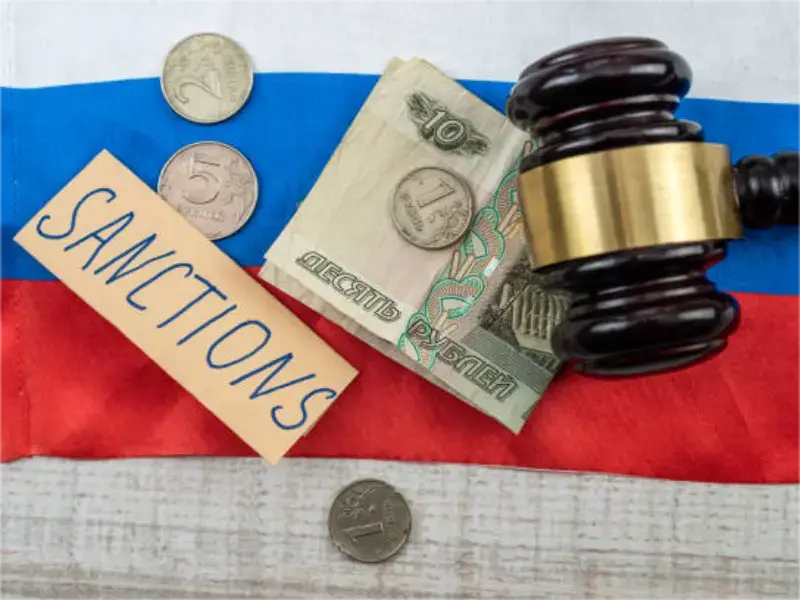
Caption: Russia to allow crypto payments in international trade to counter sanctions visual context for BTW intelligence coverage. · Source context: Existing article media was retained or restored as the subject-specific visual basis. · Relevance reason: Russia to allow crypto payments in international trade to counter sanctions is the primary subject or event subject; the image supports the article's governance reading. · Image provenance: Existing curated article image retained because it is subject- or event-specific and not a generic pool placeholder.

Sources

Public references used for this article.

CategoryInstitution

Russia to allow crypto payments in international trade to counter sanctions is tracked as a internet infrastructure institution within the internet infrastructure ecosystem.

RegionAsia Pacific

Russia to allow crypto payments in international trade to counter sanctions has public-source relevance to network operations, governance, dependency mapping, or market structure.

Signal FocusInternet infrastructure institution

Russia to allow crypto payments in international trade to counter sanctions has public-source relevance to network operations, governance, dependency mapping, or market structure.

Content TypeProfile

Russia to allow crypto payments in international trade to counter sanctions is tracked as a internet infrastructure institution within the internet infrastructure ecosystem.

Primary DomainGovernance

Public-source signals support medium-impact monitoring for infrastructure visibility and dependency analysis.

TopicInternet infrastructure institution

Russia to allow crypto payments in international trade to counter sanctions is profiled by BTW Media because published evidence links it to internet infrastructure, governance, operational dependencies, or market visibility.

ImpactMedium

Public-source signals support medium-impact monitoring for infrastructure visibility and dependency analysis.

Confidence?Confidence Grade
0.90–1.00AHigh — direct sources
0.75–0.89A/BStrong
0.55–0.74B/CMedium
0.35–0.54C/DWeak–medium
0.10–0.34DWeak signal
0.00–0.09DInternal monitoring
Limited confidence (80%)

Several public sources

Russia to allow crypto payments in international trade to counter sanctions is profiled by BTW Media because published evidence links it to internet infrastructure, governance, operational dependencies, or market visibility.

  • Russian lawmakers have passed a law allowing the use of cryptocurrencies in international transactions to mitigate the impact of sanctions.
  • The first cryptocurrency transactions under the new law are expected before the end of the year, Russian Central Bank Governor Elvira Nabiullina announced.

OUR TAKE
Russian lawmakers have just passed a law allowing companies to use cryptocurrencies for international trade. The new move, which comes into effect in September, is aimed at circumventing tough Western sanctions. Elvira Nabiullina, head of Russia’s central bank, says they’re preparing to start crypto transactions by the end of the year. Why this big change? Russian businesses have struggled with slow international payments, especially with countries like China, India and the UAE, due to payment delays and
regulatory pressure from Western banks. This has hit Russia’s imports hard, prompting them to shake things up with this new crypto strategy.
–Heidi Luo, BTW reporter

What happened

Russian lawmakers have officially passed a bill that will allow companies to use cryptocurrencies for international trade, in a bid to circumvent Western sanctions.

The new legislation, which will come into force in September, paves the way for companies to conduct crypto transactions by the end of the year, according to Elvira Nabiullina, the governor of the Russian Central Bank.

“We are making a historic decision in the financial sphere,” the head of the Duma lower house of parliament, Anatoly Aksakov, told lawmakers.

The introduction of the law is a move to address the delays Russian businesses have been facing in international payments, particularly with key trading partners such as China, India and the United Arab Emirates.

The slowdown has been made worse by increased scrutiny by Western banks under regulatory pressure, affecting Russia’s ability to import and its overall economic interactions.

Also read: Russia weighs risk of embracing crypto for international payments

Also read: North Korea hacked $3bn in crypto says leaked UN document

Why it’s important

To facilitate this transition, the Central Bank of Russia has been tasked with creating an ‘experimental’ infrastructure specifically for cryptocurrency payments. This infrastructure aims to minimise Russia’s reliance on conventional financial systems and protect its trade activities from external sanctions.

According to the Central Bank, payment delays have become a major challenge for the Russian economy, leading to an 8% decline in Russian imports in the second quarter of 2024.

Despite Russia’s efforts to adopt the currencies of its trading partners and create an alternative payment system within the BRICS countries, many transactions are still in US dollars and euros and are processed through the international SWIFT system.

This situation leaves banks in trading partner countries vulnerable to secondary sanctions, prompting them to strengthen their compliance measures.

“The risks of secondary sanctions have increased. They make it difficult to pay for imports, and this affects a wide range of goods,” Nabiullina said, stressing that payment delays have led to longer supply chains and rising costs.

At A Glance

  • Name: Russia to allow crypto payments in international trade to counter sanctions
  • Type: Internet infrastructure institution
  • Base: Asia Pacific
  • Profile focus: Institution

What It Does

  • Public records support monitoring of its role, services, and key relationships.

Why It Matters

  • Public-source signals support medium-impact monitoring for infrastructure visibility and dependency analysis.
  • Operational criticality: Medium
  • Time horizon: Next quarter

What To Watch

  • Monitoring focuses on verified service continuity, governance changes, and relationship signals.
NowMedium priority

Track verified source updates, role changes, and current public evidence.

QuarterMedium policy sensitivity

Public-source signals support medium-impact monitoring for infrastructure visibility and dependency analysis.

YearNext quarter outlook

Longer-term relevance depends on verified operating, policy, and relationship changes.

Member Briefing

Deeper Profile Context

Login is required to unlock the full profile briefing and source notes.

Only for Strategy Circle

Strategic Circle Access

Open to all readers. Unlock profile briefings after joining and logging in.

Join Strategic Circle

Only for Leadership Alliance

Leadership Alliance Access

For owners and management of IP-holding companies. Login required to unlock.

Join Leadership Alliance
← BackAll Companies