
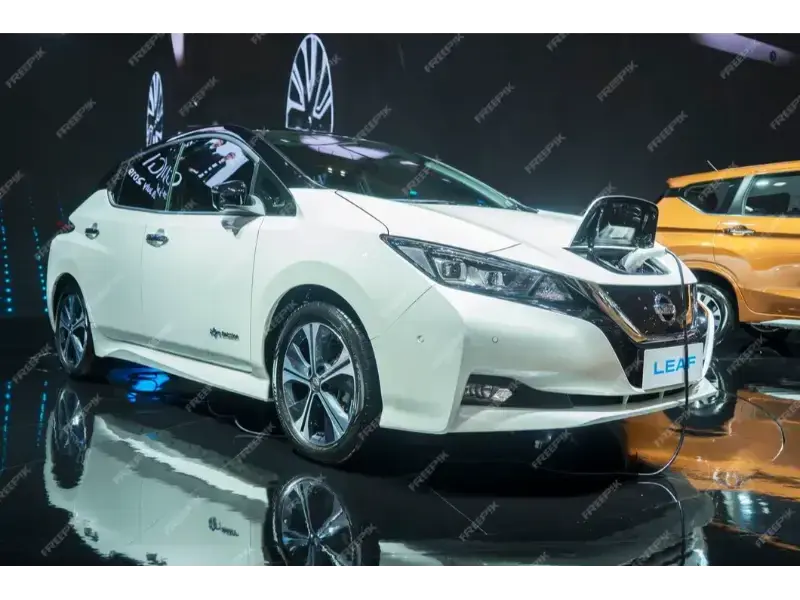
- Nissan plans to launch 30 new models, including 16 electric models, over the next three years, increasing global sales by 1 million
- Increase profitability by improving cost competitiveness through cost cutting, productivity and partner expansion
Nissan announced a business plan called “The Arc” on Monday, March 25th local time. This plan is positioned as a bridge between Nissan NEXT’s corporate transformation plan (from fiscal year 2020 to fiscal year 2023) and Nissan’s ambitious 2030 vision (Nissan’s long-term vision), with 30 cars to be launched by 2030, 16 of which will be electric, and production costs will be reduced to increase profitability.
The “Arc”plan
On 25 March, Japanese automaker Nissan Motor announced its medium-term plan for the period ending March 2027 (FY2026). Nissan said it plans to increase sales by another 1 million vehicles by the end of FY2026, launch 30 new models by FY2026, of which 16 will be electric and 14 will be combustion-engine models, and achieve cost parity between electric and fuel vehicles by FY2030. The company’s goal is to bring cost parity between electric and internal combustion vehicles by FY2030.
And to achieve an operating margin of at least 6 per cent over that period through the introduction of dozens of new models, including more cost-effective electric vehicles, and through partnerships.
Also read:Nissan announces $1.25 billion UK move for new electric Qashqai and Juke models
Cutting costs to improve profitability
Expansion of strategic partnerships is also written into the new management plan, with President Makoto Uchida stating at a briefing in Atsugi, Kanagawa Prefecture, “New partners will be sought in Japan and the United States.” Nissan announced on 15 March that it would begin exploring cooperation with Honda in areas such as EVs, and that it was also considering further expansion of its partners. In the expanding global EV market driven by the trend of decarbonisation, Tesla in the US and BYD in China are leading the way.
Nissan is launching an offensive to improve cost competitiveness by increasing production efficiency and expanding partnerships. The company proposes 34 EVs to be launched by FY2030, an upward revision from the previous 27. Uchida said it “will build a strong lineup of goods”. It also launched a comprehensive cooperation on electric vehicle business, including joint procurement, co-development of power platforms, and commonisation of spare parts, etc. Nissan and Honda hope to achieve cost reduction through resource integration, and enhance their competitiveness against electric vehicle products.
In particular, Nissan stressed that by fiscal year 2030, it will reduce the cost of next-generation pure electric models by 30%, achieve cost parity between pure electric models and fuel models, and enhance the competitiveness of pure electric vehicle products. Nissan said that by adopting a “family” development model, after the development of the main family model, the development cost of the subsequent model can be reduced by 50%, changes in interior and exterior components can be reduced by 70%, and the development cycle can be shortened by four months.
By adopting modular manufacturing, production lines will be shortened and the production time for a single vehicle will be reduced by 20 per cent.
Also read:Nissan is Going All-Electric in Europe: It’s Waving Petrol Goodbye by 2030
‘The Arc’ plan demonstrates our path to the future. It demonstrates our continued progress and ability to respond to changing market conditions.” Makoto Uchida, President and Chief Executive Officer of Nissan, said, “This plan will allow us to go further and faster in driving brand value and competitiveness. In the face of extreme market volatility, Nissan is taking decisive action guided by the new plan to ensure sustainable growth and profitability.