
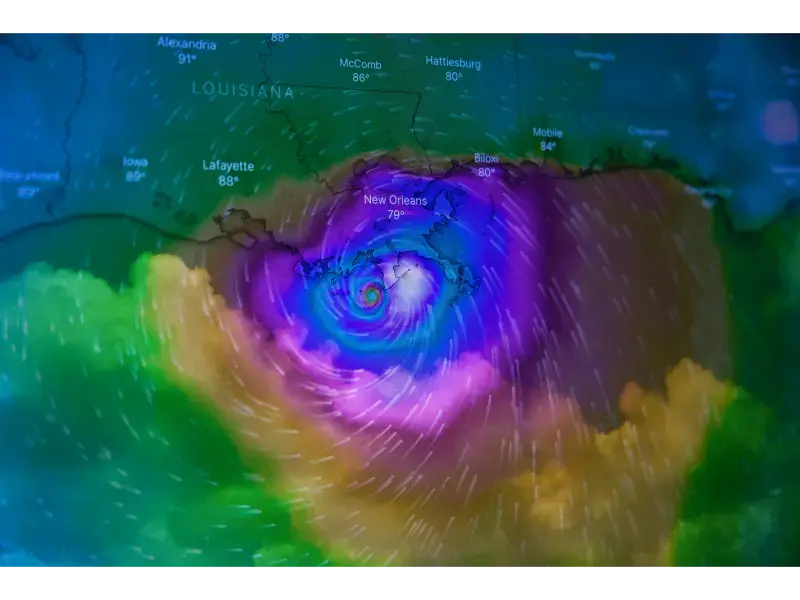
- Jua, a Swiss startup that is using large AI models, wants to build a large “physical” model of what is essentially the natural world.
- Multiple large companies led the seed round, including 468 Capital and Green Generation Fund, Promus Ventures, Kadmos Capital, and others.
- Jua is confident that its product will be better than Google’s GraphCast, Nvidia’s FourCastNet, and Huawei’s Pangu.
A grand vision
Now, a Swiss startup called Jua is using large-scale AI models in an ambitious effort to build a new frontier for real-world applications of AI.It raised $16 million to build a large “physical” model of what is essentially the natural world.The company is still in its very early stages.Its first application will be to model and predict weather and climate patterns, starting with how they relate to actors in the energy industry. The company says this will be rolled out in the coming weeks. Other industries the company plans to target with its model include agriculture, insurance, transportation and government.
468 Capital and Green Generation Fund with Promus Ventures, Kadmos Capital, Flix Mobility founders and Session co-led the Zurich-based startup’s seed funding round.
Andreas Brenner is the CEO of Jua, Inc., which he co-founded with Marvin Gabler, CTO. The increasing “volatility” of climate change and geopolitics, he said, has made organisations working in the physical world – whether in industrial areas such as energy, agriculture or elsewhere – in need of more accurate modelling and forecasting.According to the U.S. National Centers for Environmental Information, 2023 was a peak year for climate disasters, causing tens of billions of dollars in damage: it was this status quo that prompted organizations to develop appropriate planning tools,Not to mention to market analysts and others to use these data to provide better forecasting tool.
Also read: Inside the Black Box: Demystifying AI Models
Not a new idea
In a way, this is not a new problem – even technologists are already solving it with AI. Google’s DeepMind division developed GraphCast; Nvidia has FourCastNet; Huawei has Pangu, which created a flurry of interest last year when it launched a weather component. There are also ongoing projects to build AI models based on weather data to study other natural phenomena, as highlighted in this report last week by a team trying to bring new understanding to bird migration patterns.
There are additional reasons why Jua thinks its model is better than others because it can absorb more information and is larger – it claims to be 20 times larger than GraphCast.Second, weather considers a starting point for a broader set of physical questions, answers, and challenges.