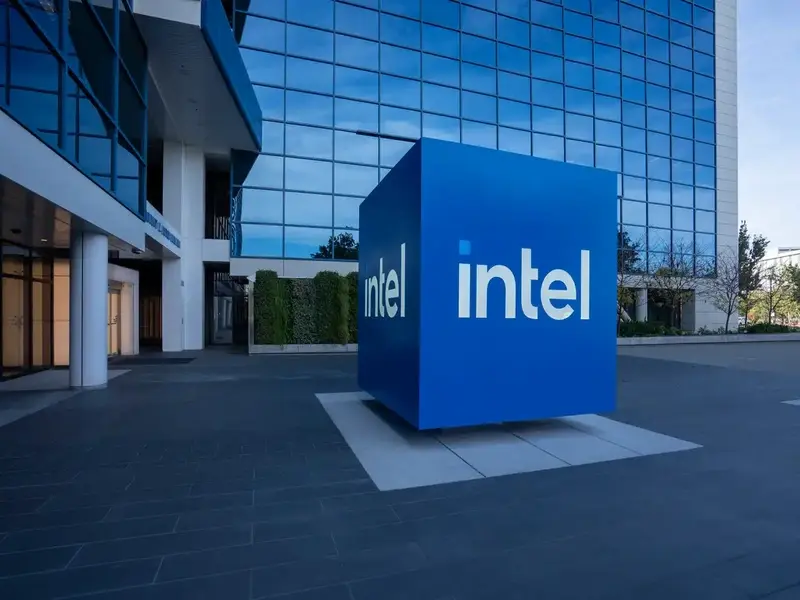
Intel reports $821M loss, despite modest Q1 performance is profiled by BTW Media because published evidence links it to internet infrastructure, governance, operational dependencies, or market visibility.
Intel reports $821M loss, despite modest Q1 performance is tracked as a internet infrastructure institution within the internet infrastructure ecosystem.
Intel reports $821M loss, despite modest Q1 performance has public-source relevance to network operations, governance, dependency mapping, or market structure.
Intel reports $821M loss, despite modest Q1 performance is tracked as a internet infrastructure institution within the internet infrastructure ecosystem.
Public-source signals support medium-impact monitoring for infrastructure visibility and dependency analysis.
Intel reports $821M loss, despite modest Q1 performance is profiled by BTW Media because published evidence links it to internet infrastructure, governance, operational dependencies, or market visibility.
Public-source signals support medium-impact monitoring for infrastructure visibility and dependency analysis.
| 0.90–1.00 | A | High — direct sources |
| 0.75–0.89 | A/B | Strong |
| 0.55–0.74 | B/C | Medium |
| 0.35–0.54 | C/D | Weak–medium |
| 0.10–0.34 | D | Weak signal |
| 0.00–0.09 | D | Internal monitoring |
Several public sources
- Intel posts a significant $821m loss in Q1, raising concerns about long-term recovery.
- Despite a modest uptick in revenue, Intel’s deeper financial issues persist, highlighting ongoing challenges.
What happened: Intel’s Q1 performance shows modest revenue growth, but the company faces ongoing financial struggles
Intel‘s Q1 earnings report shows a modest revenue increase, but the company is still grappling with significant financial losses. The tech giant reported a net loss of $821 million for the first quarter, despite generating $11.7 billion in revenue, a slight improvement from the same period in 2023. This performance, while better than analysts had initially anticipated, masks underlying difficulties within Intel’s operations. Despite attempts to streamline costs and invest in new areas, the loss highlights the ongoing struggles the company faces in its transition away from the highly competitive semiconductor market.
Intel’s CEO, Pat Gelsinger, has outlined a roadmap to re-establish the company’s leadership in the chip-making sector, including substantial investments in new technologies such as artificial intelligence (AI) and advanced manufacturing processes. However, these efforts are yet to yield the kind of turnaround that investors and analysts were hoping for.
Also read: Intel to cut 20% of staff under new CEO strategy
Also read: Intel offloads Altera to Silver Lake in $8.75B deal
Why it is important
Intel’s continued financial challenges are a critical indicator of the broader issues facing the semiconductor industry. The company’s struggles reflect the tightening of margins across the tech sector, with rising production costs and stiff competition from rivals such as AMD and Nvidia, which have cornered parts of the high-performance computing market. Intel’s push to re-establish dominance in AI and next-generation chips has been slower than anticipated, with the company continuing to lose market share in certain key segments.
This is also important as Intel’s difficulties could affect global supply chains, as the company remains a crucial player in both consumer and industrial chip production. As Gelsinger pushes for a shift towards innovation, his success—or failure—will have a lasting impact on the industry at large. The company’s performance will undoubtedly be closely watched in the upcoming quarters as it seeks to prove that its strategic changes can reverse its fortune.

At A Glance
- Name: Intel reports $821M loss, despite modest Q1 performance
- Type: Internet infrastructure institution
- Base: Global
- Profile focus: Institution
What It Does
- Public records support monitoring of its role, services, and key relationships.
Why It Matters
- Public-source signals support medium-impact monitoring for infrastructure visibility and dependency analysis.
- Operational criticality: Medium
- Time horizon: Next quarter
What To Watch
- Monitoring focuses on verified service continuity, governance changes, and relationship signals.
Track verified source updates, role changes, and current public evidence.
Public-source signals support medium-impact monitoring for infrastructure visibility and dependency analysis.
Longer-term relevance depends on verified operating, policy, and relationship changes.
Member Briefing
Deeper Profile Context
Login is required to unlock the full profile briefing and source notes.
Only for Strategy Circle
Strategic Circle Access
Open to all readers. Unlock profile briefings after joining and logging in.
Join Strategic CircleOnly for Leadership Alliance
Leadership Alliance Access
For owners and management of IP-holding companies. Login required to unlock.
Join Leadership Alliance