
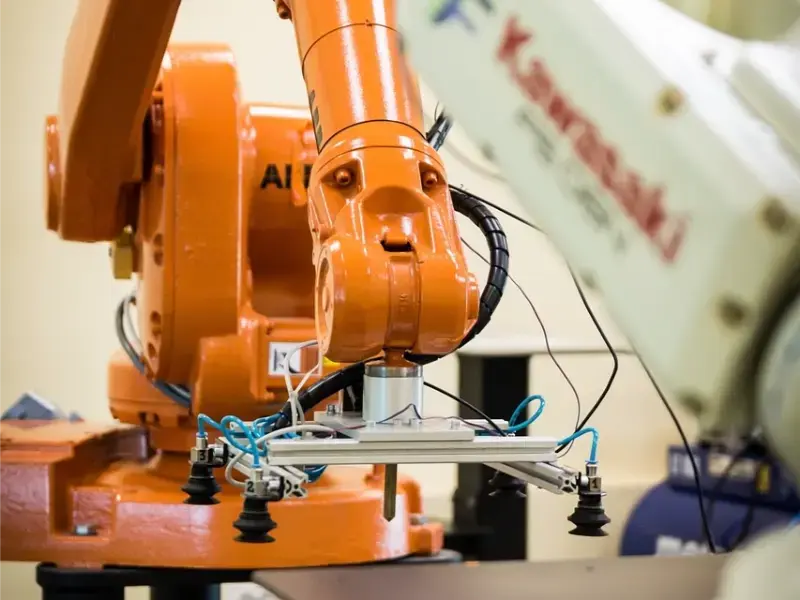
- Hugging Face’s new tutorial simplifies AI robotics, expanding on the LeRobot platform and introducing the enhanced Koch v1.1 robotic arm for easier development.
- This tutorial arrives at a pivotal moment for AI and robotics, with Hugging Face’s open-source model advancing accessibility and innovation.
OUR TAKE
Hugging Face’s open-source approach is a key factor in democratising AI-powered robotics. By making advanced tools and models accessible to a broader audience, they’re fostering collaboration and enabling developers, researchers, and companies to contribute to and benefit from these advancements. This openness not only accelerates progress but also ensures that the benefits of AI and automation are more widely distributed, rather than concentrated in the hands of a few tech giants.
-Tacy Ding, BTW reporter
What happened
Hugging Face, a leader in open-source AI, has made a major leap towards making affordable robotics accessible to everyone with the release of a comprehensive tutorial. This guide walks developers through creating and training their own AI-powered robots.
The tutorial, published recently, builds on the company’s LeRobot platform introduced in May, signifying a key advancement in integrating artificial intelligence with the physical world.
The tutorial guides developers through the process of training neural networks to analyse camera feeds and translate them into motor functions, similar to how a Large Language Model (LLM) processes text.
“You will learn how to train a neural network to directly predict the next motor rotations straight from camera images,” explained Rémi Cadene, Principal Research Scientist at Hugging Face.
Central to this initiative is the Koch v1.1, an affordable robotic arm designed by Jess Moss. This updated version builds on Alexander Koch’s original design, featuring a streamlined assembly process and improved capabilities.
Also read: Celebrated AI Startup Hugging Face Secures $235M Funding from Tech Giants
Also read: The future of work: Robotics, AI, and automation
Why it’s important
The release of this tutorial is timely as AI and robotics continue to evolve. With industries increasingly turning to automation, integrating AI with physical systems represents a key technological advancement. The ability to train robots for autonomous tasks using visual inputs could significantly impact sectors such as manufacturing and healthcare.
This push for democratising robotics technology raises important questions about work, privacy, and ethics. Hugging Face’s open-source approach ensures these advancements are accessible beyond large corporations, fostering innovation and diverse applications.
The new tutorial is not merely a technical guide but a strategic roadmap for AI and robotics. By reducing entry barriers and promoting collaboration, Hugging Face is making AI-driven robotics more accessible. As this technology matures, it has the potential to transform industries and redefine human-machine interactions. Hugging Face’s initiative marks a crucial step toward democratising robotics and AI.