
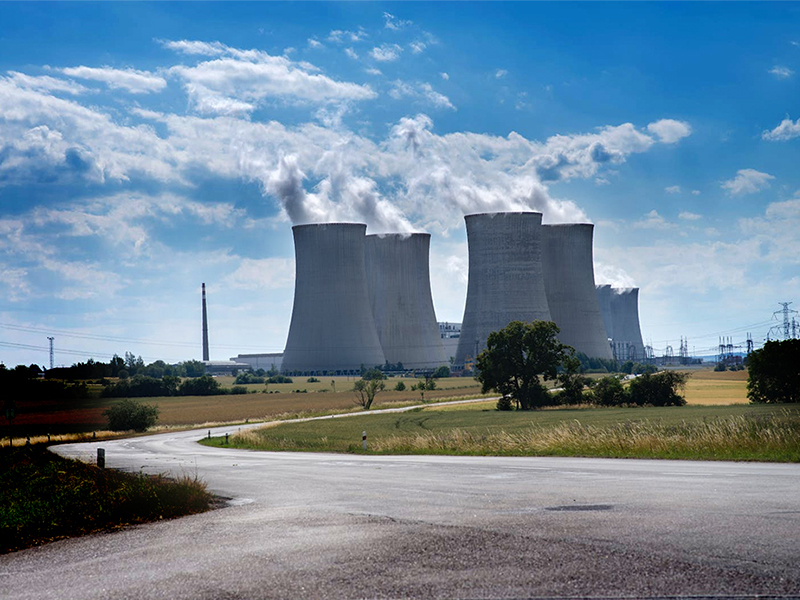
In an era focused on sustainable energy solutions, three of the world’s largest tech companies—Amazon, Microsoft, and Google—are betting big on nuclear power. Their recent deals to power AI systems with nuclear energy promise to reshape the tech industry’s environmental footprint. Yet, behind these ambitious investments lies a fundamental question: Is nuclear energy truly the best solution?
While it may help reduce emissions, nuclear’s risks—economic challenges, regulatory hurdles, and public perception—pose significant obstacles, leaving many to wonder whether this is a calculated risk or a gamble too far.
The deals that could change everything
Amazon, Microsoft, and Google are no strangers to bold moves. Their recent pivot toward nuclear energy—specifically small modular reactors (SMRs)—has sparked both excitement and concern. Announced within the past month, these deals mark a shift in tech’s approach to energy, with nuclear now positioned as a potential alternative to wind and solar. Microsoft has partnered with energy companies to revive the infamous Three Mile Island plant, while Amazon and Google are investing in SMR technology. Designed to be compact and closer to existing power grids, SMRs promise shorter construction times and faster deployment, helping tech giants race toward net-zero emissions by 2030. “Nuclear is a safe source of carbon-free energy,” said Matt Garman, CEO of Amazon Web Services. “Our agreements will encourage new nuclear technologies that will generate energy for decades to come.”
Yet, the technology has its own set of challenges. Maksim Sonin, a fellow at Stanford University, remarked that while SMRs, with power capacities up to 300 megawatts per unit, are an emerging clean energy solution, “technical, social, safety, and other issues can create roadblocks at any stage of commercialization.”
Technical, social, safety, and other issues can create roadblocks at any stage of commercialization.
Maksim Sonin, Stanford University fellow
Economic viability
Nuclear power’s appeal as a clean energy source is frequently overshadowed by its economic hurdles. The cost of building new nuclear reactors is staggering, with projects regularly facing delays and budget overruns, sometimes amounting to billions of dollars. Take the infamous Vogtle nuclear plant in Georgia, USA, which was supposed to be a model for next-generation nuclear energy. Initially budgeted at $14 billion, the project’s cost has ballooned to over $30 billion and remains incomplete.
With construction delays stretching over nearly 15 years, Vogtle has become a case study in the nuclear industry’s struggle to manage large-scale projects efficiently. For investors, such setbacks make nuclear initiatives seem risky compared to the comparatively swift progress of renewables like wind and solar.
The International Renewable Energy Agency (IRENA) reports that, as of 2023, the global weighted average levelised cost of electricity (LCOE) from solar photovoltaic (PV) generation is 56% cheaper than fossil fuels. This represents a dramatic shift from 2010 when solar PV was 414% more expensive than traditional fuels. Nuclear power, however, remains capital-intensive and high-risk.
Although renewables may be more economically viable, their intermittent nature is a limiting factor.
“While solar and wind energy costs have dropped between 70% to 90% over the past decade, they’re intermittent—only available about 25% to 35% of the time,” says Sonin. “In contrast, nuclear plants have over 90% availability but are complex and take longer to develop and operate,” he explains, emphasising nuclear’s extended timelines despite its reliable output. Other renewable technologies, such as large-scale battery storage, offer promising advancements. Companies like Tesla have invested heavily in battery innovations to tackle energy storage, one of the primary challenges of wind and solar power.
For John Berman, Founder and Chief Investment Officer at Berman Capital Group LLC, renewables aren’t necessarily the main alternative to nuclear. “I think the alternative to nuclear energy is not renewables but actually natural gas,” Berman argues, pointing out that renewables, while beneficial in specific contexts—especially sunny areas—aren’t capable of fully meeting data centres’ energy demands. “Natural gas already accounts for over 40% of U.S. power generation, and tech companies are relying on it for data centres,” he explains.
Berman is also optimistic about technologies such as those by Net Power Inc., which employ oxy-combustion in natural gas generation to capture nearly all CO₂ emissions. For Berman, these advancements offer promising pathways to reduced emissions without the high costs associated with large-scale grid updates required for renewables.
I think the alternative to nuclear energy is not renewables but actually natural gas
John Berman, Founder and Chief Investment Officer at Berman Capital Group LLC
Social acceptance and regulation
For many, the mention of nuclear energy immediately brings to mind events like Chernobyl in 1986 and Fukushima in 2011, both of which profoundly shaped public attitudes toward the industry. On March 11, 2011, a magnitude 9.0 earthquake off Japan’s coast triggered a tsunami, leading to fuel meltdowns in three reactors at Fukushima Daiichi. By mid-April, Japanese regulators had raised the meltdowns’ severity to Level 7 on the International Atomic Energy Agency’s scale, placing it in the same category as Chernobyl.
While no deaths were directly linked to radiation exposure, radioactive materials released into the environment made parts of the evacuation zone initially said to be potentially uninhabitable for decades. These incidents left an indelible mark, with media portrayals often intensifying the public’s fearful view of nuclear energy.
Sonin emphasized that the commercialization of deep-tech advancements in nuclear will be anything but swift. “Deep-tech is never an overnight shift, and nuclear especially,” he said, adding that beside social and safety matters, regulatory procedures alone can stretch beyond five years, diverging in pace and standards across regions like the U.S., U.K., and Europe.
The conversation around nuclear energy commercialisation, regulation, and public sentiment remains complex and cannot be ignored. “Fourth-generation reactor designs utilise different coolants or fuel types and have yet to be tested outside of a laboratory,” Berman noted, highlighting that SMR designs face significant hurdles compared to their third-generation counterparts in terms of regulatory approval. Fourth-generation reactors still require U.S. Nuclear Regulatory Commission (NRC) approval before any commercialisation, while third-generation designs already have that clearance.
Reader Quiz:
Which tech company recently announced plans to invest in SMRs as part of its sustainability strategy?
A) Amazon
B) Facebook
C) Tesla
D) Microsoft
(Answer to be revealed in the following section)
The future of energy innovation
While tech companies like Microsoft and Amazon are diving headfirst into nuclear energy, they might be overlooking the opportunity to double down on safer, more sustainable alternatives like solar, natural gas, and advanced battery storage. These technologies, already on a steady path of innovation, are closing the gap in terms of efficiency and cost. Sonin claims that “nuclear, geothermal, solar, wind, hydrogen, ammonia, and other clean energy sources are not purely competing alternatives but complementary ones. None of them is, or is likely to become, the only winner. They all work best under different factors.
Thus, taking a broad and visionary portfolio perspective can eventually bring the most value and, with time, get more clarity.”
The paradox is clear: while the push for cleaner energy is critical, tech companies’ embrace of nuclear power raises more questions even as it answers them. With unresolved issues like sky-high costs, regulatory concerns, and public perception, nuclear energy is far from the “silver bullet” solution it’s made out to be. Are tech giants making a bold step toward sustainable power, or are they walking straight into an energy trap, entangling themselves in decades of unresolved risks?
In the end, nuclear might offer potential, but it’s no easy fix. With its complexity and costs, we will likely not reap its benefits until after 2030. For the tech world, the real question is whether nuclear power is truly the future or if it’s just another detour on the road to a genuinely sustainable energy landscape.
Quiz Answer:
A) Amazon