
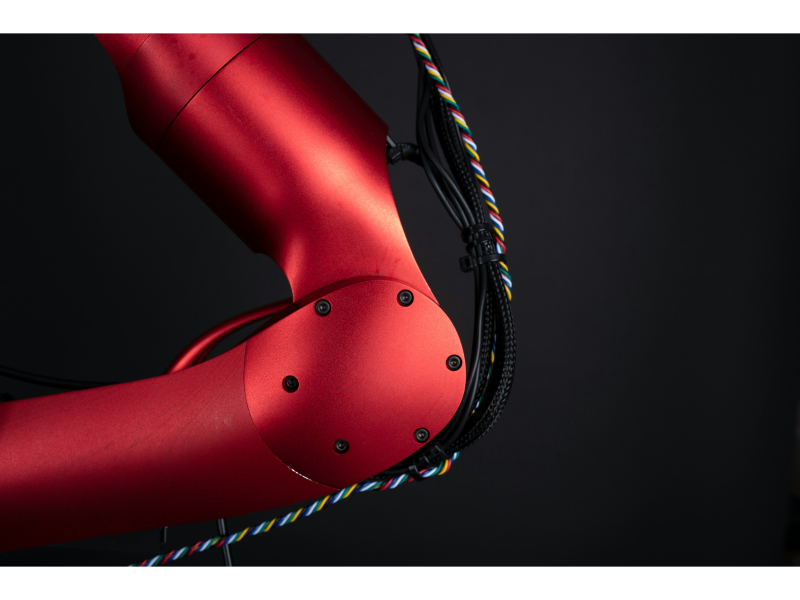
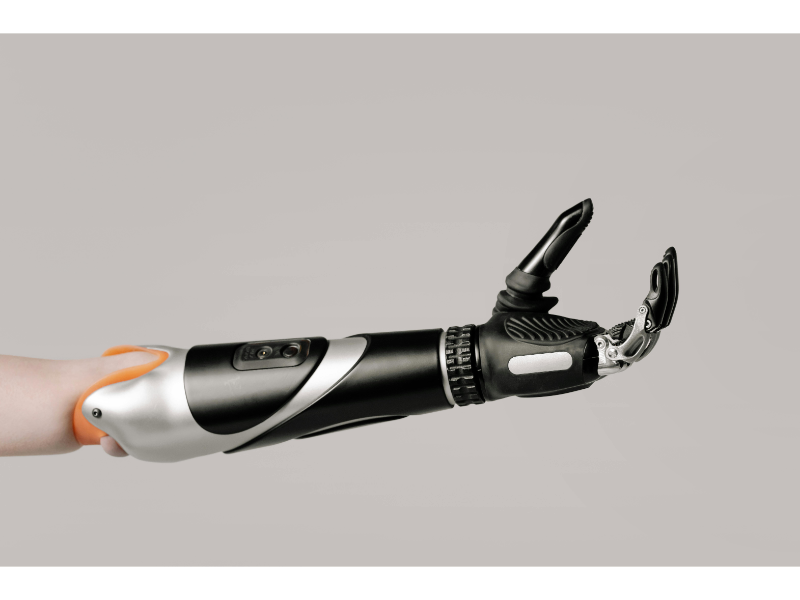
- Prosthesis are the artificial parts of the human body, design to replace the missing part for disability patient to regain motion ability.
- Exoskeletons are wearable devices that support movement and augment the capability of the human body.
- Exoskeletons used in industrial, medical, and military applications.
I remember watching 127 Hours, a movie about a hiker trapped by a boulder in Bluejohn Canyon. To survive, he had to amputate his arm—a truly intense portrayal of resilience and determination. Aron faces excruciating pain and psychological pressure, remaining calm enough to make life-saving decisions. Imagining myself in his place, I’m uncertain I’d have the courage to do the same.
Recently, I read a blog post about a girl who lost her left hand in a car accident. Thanks to prosthetic technology, like Aron, she now has an artificial limb that allows her to perform daily tasks as before.
Prosthetics have existed since wartime, originally designed to restore lost function and help individuals return to normal life. While prosthetics replace missing body parts, exoskeletons support existing body structures.
To understand exoskeletons, it helps to know that unlike endoskeletons (human skeletons), which you might see dressed up during Halloween, exoskeletons are found in animals like arthropods, providing external support and shape.
Exoskeleton technology began in the 1960s in the U.S. for military applications, aiming to boost soldiers’ endurance and carrying capacity. Exoskeletons are wearable devices that enhance human strength, endurance, and mobility. The first model, Hardiman, allowed users to lift up to 1,500 pounds but was bulky and difficult to control. Despite its limitations, Hardiman marked the prototype phase of exoskeleton technology, showcasing its potential for heavy-lifting applications.
From the 1980s onward, with advancements in AI and robotics, exoskeleton technology expanded into medical and industrial fields. The advanced exoskeleton provide external support to reduce physical strain, enabling users to perform demanding tasks more efficiently. These devices are increasingly used in rehabilitation to aid patient mobility and accelerate recovery. Exoskeletons continue to evolve, driven by advancements in robotics and AI, and are reshaping industries by expanding human physical capabilities.
Exoskeletons can be categorized as either passive or active:
- Passive exoskeletons: Use unpowered mechanisms like springs, dampers, or counterbalance forces to support posture or movement.
- Active exoskeletons: Use powered elements like electric motors, pneumatics, or hydraulics to generate force or torque.
Also read: US Army orders next-gen robot mule to haul a literal ton of gear
Pop quiz
Human have exoskeletons.
A. Yes
B. No
C.Both wrong
D.Both correct
Scroll down for answer!
While prosthetics restore independence, exoskeletons act as supportive helpers, offering protection from long-term physical strain. Exoskeleton technology is transforming multiple fields by enhancing human abilities, reducing strain, and improving efficiency. These wearable devices provide external support to assist movement, protect against physical stress, and augment strength and endurance. From healthcare to construction, and even sports, exoskeletons are making significant impacts in various industries.
Exoskeleton application
Healthcare
In healthcare, exoskeletons help patients with mobility impairments regain independence. Rehabilitation facilities use exoskeletons to assist patients with spinal injuries or neurological conditions, aiding them in walking again.
Patients with spinal cord injuries have a higher risk of cardiovascular disease just because it’s harder to get a cardio workout. They can exercise the same as someone else who could go for a walk.
Christina Smith, Sheltering Arms Institute’s therapy services manager
Devices like ReWalk and EksoGT guide the patient’s body during therapy, reinforcing proper movement and accelerating recovery. These exoskeletons also reduce the strain on therapists, who would otherwise physically support patients during exercises. By providing balance, stability, and controlled motion, healthcare exoskeletons help patients regain mobility and confidence.
Construction
Construction is another industry seeing considerable benefits from exoskeletons. Construction workers face constant strain from heavy lifting, repetitive motions, and awkward postures. Exoskeletons relieve this burden by providing extra strength and reducing joint stress. Wearables like the SuitX and Levitate AIRFRAME reduce shoulder and back strain during overhead work, helping workers lift heavier loads safely. This support lowers the risk of injuries and boosts productivity by enabling workers to complete tasks with less fatigue. Construction companies increasingly adopt exoskeletons to protect workers and maintain efficiency. A company called Apogee produces exoskeletons designed for powerlifting support in demanding load-bearing tasks. Its Apogee+ line supports healthcare professionals, aiding hospital staff and rehabilitation workers in assisting patients.
Manufacturing
Manufacturing also utilizes exoskeletons to enhance worker safety and performance. Assembly line workers endure repetitive motions that often lead to musculoskeletal injuries. Exoskeletons, like the Ford-supported EksoVest, support workers’ arms, reducing shoulder fatigue and allowing them to work longer with fewer breaks. Exoskeletons help factories reduce injury rates and boost output. By minimizing the physical toll on workers, exoskeletons enable companies to maintain high productivity levels without compromising employee health.
Agriculture
In agriculture, exoskeletons provide a solution to labor-intensive tasks such as harvesting, pruning, and lifting. These activities place significant strain on farmers, who often work long hours in physically demanding conditions. Exoskeletons alleviate pressure on the lower back and knees, supporting tasks like squatting and lifting. Devices such as the Robo-Mate allow agricultural workers to maintain productivity while reducing injury risks and physical exhaustion. With an aging workforce, agriculture may increasingly rely on exoskeletons to meet labor demands.
Military
The military sector pioneered exoskeleton development, seeking to enhance soldiers’ endurance and strength. Military exoskeletons, such as the Lockheed Martin ONYX, increase load-bearing capacity and help soldiers carry heavy equipment over long distances. These devices also reduce the risk of injuries from prolonged exertion in extreme environments. Military organizations invest in exoskeletons to improve soldiers’ resilience, enabling them to navigate challenging terrains more effectively.
Sports
In sports and athletics, exoskeletons are emerging as training aids and performance enhancers. Athletes use exoskeletons to simulate resistance, building strength and endurance through controlled exercises. In rehabilitation, sports trainers use exoskeletons to help injured athletes recover safely, providing stability and support as they regain muscle function. As technology advances, exoskeletons could enable athletes to train more effectively, recover faster, and potentially improve overall performance.
Emergency response and rescue teams are beginning to adopt exoskeletons to manage physically demanding tasks, like lifting debris and carrying victims. In disaster zones, exoskeletons provide first responders with the extra strength needed to rescue individuals trapped in rubble. Exoskeletons also reduce physical strain during extended rescue missions, helping responders maintain their energy and stamina. These devices help rescue teams reach victims faster and respond more effectively in emergencies.
In summary, exoskeletons are making remarkable contributions across diverse fields. By enhancing human capabilities, they reduce injury risks, improve productivity, and open new possibilities in healthcare, construction, military, sports, agriculture, and rescue operations. As exoskeleton technology continues to advance, its applications will likely expand further, shaping the future of work and human potential.
Also read:8 common types of robots in hybrid automation
The answer is B. No. Humans only have endoskeleton.