
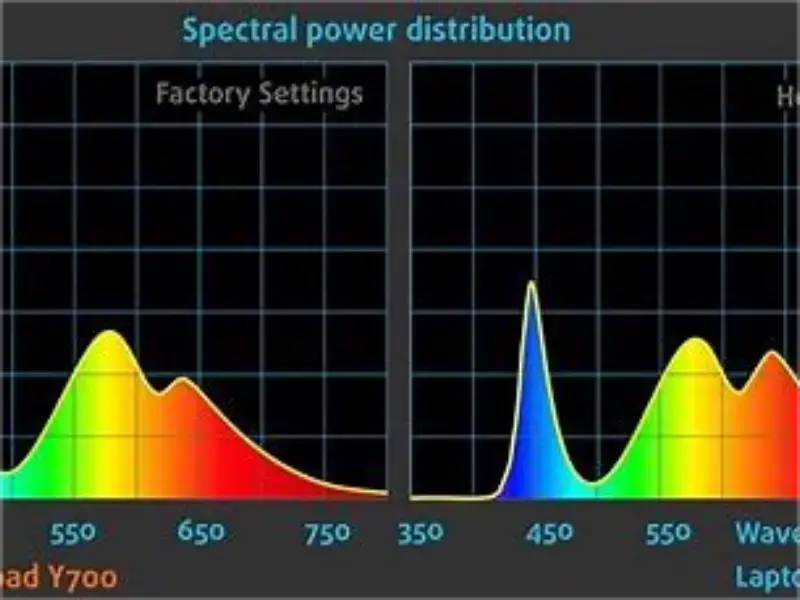
- Spectral power distribution is shown as a curve, with the x-axis indicating wavelength and the y-axis indicating relative light intensity.
- SPD affects daily life by changing the way we perceive colour in natural light and by helping plants grow by adjusting grow lights.
- By optimising SPD in lighting solutions, energy consumption is reduced, minimising environmental impact through reduced power consumption and light pollution.
Spectral Power Distribution (SPD) is a key concept in the science of lighting, describing the distribution of power across the different wavelengths of light emitted by a source. It plays a fundamental role in understanding the colour properties and effects of light in different environments, from natural to artificial.
SPD maps the intensity of light across the visible, infrared and ultraviolet spectrums, providing essential insight into the colour characteristics, efficiency and suitability of a light source for specific applications. This knowledge is vital in many fields, including photography, retail and horticulture, influencing everything from plant growth to consumer behaviour in-store.
Introduction to spectral power distribution
Spectral Power Distribution (SPD) is a fundamental concept in the science of lighting that describes how power is distributed across the different wavelengths of light emitted by a source. SPD is critical to understanding the colour properties and effects of light in different environments, from natural ecosystems to artificial settings in homes and workplaces.
SPD describes the intensity of different wavelengths of light emitted by a light source across the visible spectrum and sometimes beyond (into the infrared and ultraviolet). SPD provides critical information about the performance of a light source, revealing its colour characteristics, efficiency and the potential applications for which it is best suited. Understanding SPD is essential for everything from photography and television to the design of lighting systems for homes and offices.
The science behind SPD
SPD is graphically represented as a curve where the x-axis represents the wavelength of light (typically measured in nanometres) and the y-axis represents the relative intensity of each wavelength. The shape of this curve helps to determine many attributes of the light source, such as colour temperature and colour rendering index, which are crucial in assessing the quality of the light in terms of how accurately it reproduces the colours of various entities.
Also read: Exploring nuclear power plants: Engineering energy solutions
SPD applications in everyday life
The knowledge of SPD has many applications in everyday life. For example, the SPD of sunlight changes throughout the day, affecting everything from how we perceive colours outdoors to how plants grow. In the commercial world, SPD helps to choose the right lighting for retail environments, enhancing the appearance of products and creating an atmosphere that encourages people to shop. In horticulture, SPD also plays a vital role in ensuring that grow lights meet the specific light absorption requirements of different plants.
Advances in lighting technology through SPD
Advances in lighting technology, such as LED innovations, rely heavily on manipulating SPD to create more efficient and pleasing lighting solutions. Engineers adjust the SPD of LEDs to create light that is more pleasing to the human eye and more beneficial to health, simulating sunlight to help regulate circadian rhythms. SPD also enables the development of specialised lighting solutions in the medical field, where precise lighting characteristics can aid therapy and diagnosis.
Also read: How does 5G technology enhance the Internet of things (IoT)?
SPD and its environmental impact
SPD also has a significant impact on the environment. By optimising the SPD of lighting solutions, energy consumption can be reduced, minimising the carbon footprint associated with excessive power consumption. Green lighting technologies focus on mimicking natural light, reducing eye strain and minimising light pollution that disrupts ecosystems. Understanding and optimising the SPD is critical to developing sustainable lighting practices that support both human and environmental health.