
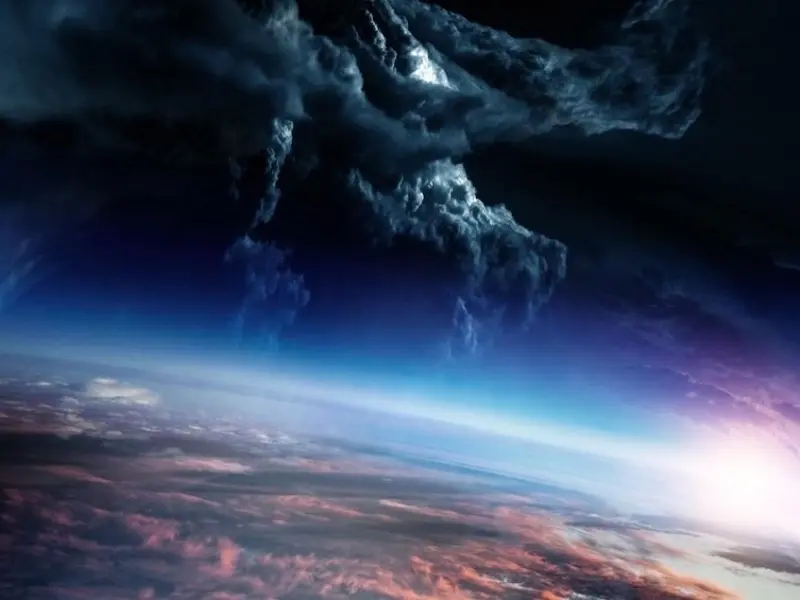
- Around 11,000 satellites have been launched since Sputnik 1 in 1957, and as many as 70,000 more could be put into orbit over the coming decades. This space infrastructure supports many vital systems such as broadband, GPS services, climate monitoring, financial transactions, timing, and crucial military technologies.
- As we move more critical infrastructure into space, we are exposing it to the risks of space weather. The primary source of space weather is the Sun. Despite being 93 million miles (150 million km) away, it can have a profound impact on Earth.
- This space weather relates to the magnetic fields, radiation, particles and matter that are ejected from the Sun. They interact with Earth’s upper atmosphere and surrounding magnetic field to produce a variety of effects.
Welcome to the cosmic ballet of space weather and its intricate dance with satellites orbiting our planet. While we often marvel at the wonders of outer space, the reality is that space weather can have profound effects on the technologies we rely on daily. Space weather can cause extensive damage – particularly solar winds and geomagnetic storms.
In the ultimate cosmic dance between space weather and satellites, the stakes are high, but so too are the rewards. By understanding the intricate interplay between these celestial forces, we can better prepare for the challenges that lie ahead and unlock the full potential of our exploration of the final frontier.
Also read: What is space weather? How does it affect the earth?
Is space weather dangerous?
Space weather can cause extensive damage – particularly solar winds and geomagnetic storms. For instance, in February 2022 SpaceX – owned by billionaire Elon Musk – lost 40 satellites after they were hit by a geomagnetic storm a day after launch, causing them to fall from orbit and burn up.
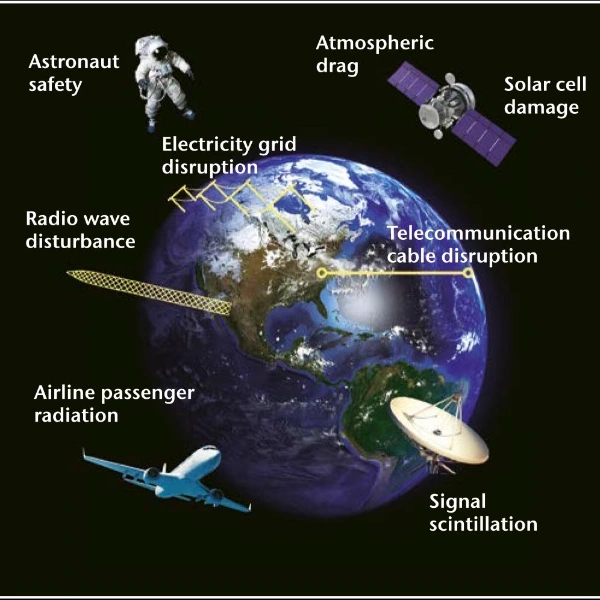
Satellites can also suffer from significant drag because of solar activity. This is due to the effect celestial particles have on the density and temperature of our atmosphere. After a solar storm, the North American Aerospace Defense Command (NORAD) must re-adjust the trajectories and orbits of hundreds of entities to avoid collisions.
Down on the ground, Earth’s magnetic field offers us protection from space weather. But with the potential to impact thousands of vital satellites in orbit, space weather can cause severe disruption to our day-to-day lives.
For instance, a geomagnetic storm that hit Earth in March 1989 – the biggest in the 20th century – caused major disturbance. Satellite operations were crippled, several entities were temporarily “lost” in orbit, while NASA’s Solar Maximum Mission spacecraft “dropped as if it hit a brick wall” because of increased drag. This caused a complete power blackout in Quebec, Canada, and hindered electricity transmission in the U.S., the UK and Sweden.
Impact on satellite
1. Solar storm symphony
At the heart of the cosmic drama lies our Sun, a dynamic celestial entity whose activity ebbs and flows in regular cycles. During periods of heightened activity, the Sun unleashes powerful bursts of energy in the form of solar flares and coronal mass ejections (CMEs). These cosmic tempests can wreak havoc on satellites, generating intense bursts of radiation that can disrupt onboard electronics and even degrade solar panels over time.
2. Navigating magnetic maze
Beyond the dazzling spectacle of solar storms lies the Earth’s magnetic field, a protective shield that envelopes our planet and deflects the onslaught of charged particles from the Sun. However, during geomagnetic storms, this shield can become temporarily weakened, allowing energetic particles to penetrate deeper into the Earth’s atmosphere. For satellites orbiting in low Earth orbit (LEO), this can lead to increased atmospheric drag and orbital decay, necessitating frequent adjustments to maintain their trajectory.
3. Radiation roulette
In the vast expanse of space, satellites are constantly bombarded by cosmic radiation emanating from distant stars and galaxies. While our atmosphere provides some degree of protection for those on the Earth’s surface, satellites in orbit are more vulnerable to these high-energy particles. Over time, exposure to cosmic radiation can degrade sensitive electronic components and increase the risk of malfunctions, posing a significant challenge for long-duration missions beyond the protective confines of Earth’s magnetosphere.
4. Adaptation and resilience
Despite the challenges posed by space weather, satellite operators have developed sophisticated strategies to mitigate its effects and ensure the continued functionality of their spacecraft. From hardened electronics designed to withstand radiation exposure to onboard sensors that provide real-time monitoring of solar activity, these technological safeguards play a crucial role in safeguarding our interconnected world against the whims of the cosmos.
Also read: Should robots go to space instead of humans?
What impact can space weather have on society?
Estimating the socioeconomic impact of geomagnetic storms presents a considerable challenge, with varying reports suggesting outcomes ranging from manageable damage to catastrophic scenarios of prolonged worldwide power outages. Recognising this uncertainty, the UK elevated the risk of “severe space weather” to a medium-to-high likelihood scenario in its National Risk Assessment back in 2011.
In practical terms, even a brief disruption in GPS signals could trigger a domino effect, leading to widespread failures across critical systems such as electrical grids, telecommunications networks, financial markets, healthcare services, and air travel. This potential cascade of failures has become a central focus of anti-terrorism strategies, prompting proactive measures like the 2016 Executive Order issued by President Obama to fortify key U.S. infrastructure against extreme space weather events. These initiatives include the establishment of robust backup networks and the enhancement of monitoring capabilities, actions that have been mirrored by many other nations in subsequent years.
Assessing and managing the risks
The Carrington Event of 1859 stands as the most intense geomagnetic storm in recorded history, igniting widespread auroral displays and causing telegraph systems to catch fire in Europe and North America. However, this event is not unique.
Carbon 14 isotope data from tree rings suggest that similar-sized events occurred around 774 BC, indicating a recurring pattern every few millennia. Additionally, smaller geomagnetic storms, like the one in 1989 that led to power outages in Quebec, have occurred in 1921 and 1960.
In 2012, a Carrington-class storm narrowly missed Earth, prompting researchers to estimate potential damages of USD 0.6 – 2.6 trillion to the U.S. alone if such an event were to impact today. This would result in widespread electrical disruptions, blackouts, and damage to electrical grids, with power restoration estimates ranging from a week to over a year.
Satellite communication and GPS navigation would also suffer significant disruptions, highlighting the critical need for a deep understanding of space and its forces to predict and mitigate such events. Both investment in forecasting capabilities and infrastructure hardening are essential, though costly endeavors, requiring thorough risk assessments and preparation to safeguard vital tech systems. Ultimately, such investments seem increasingly prudent in the face of potentially devastating space weather events.